ຂປລ
The Ministry of Education and Sports (MoES), with support from Australia through the BEQUAL program, is organising a three-day workshop from 13 to 15 May 2026 to advance the development of Teacher Support Pack 15 (TSP 15) on the topic of climate change. The workshop brings together representatives from the Department of Teacher Education (DTE), the Resource Development Core Team (RDCT) from Khangkhai Teacher Training College, and the BEQUAL team to review lesson content, refine sample activities, and transform earlier curriculum mapping and field learning into practical materials for primary teachers.
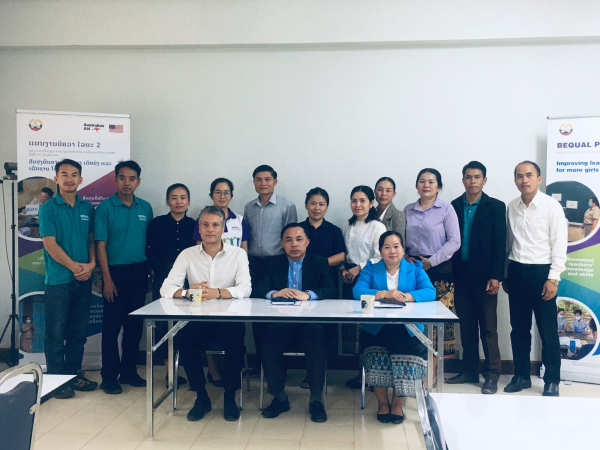
Mr Phetmany Sylathmina, Deputy Director General of DTE shared the objective of the new teacher support resource “This initiative aims to help primary teachers in the Lao PDR integrate climate change and disaster risk reduction into everyday lessons in ways that are practical, meaningful, and closely linked to the national primary curriculum. Climate change is understood not only as a scientific topic but as a social issue that affects the livelihoods, wellbeing, and safety of every learner. The TSP module will focus on both knowledge and action in schools.”
In a separate interview, Mr Michael Currie, First Secretary, Australian Embassy, shared “Australia is pleased to support MoES in this important work through BEQUAL. By strengthening basic education, we are helping equip students with the foundational knowledge and skills they need to face modern challenges with confidence. Climate change is not only an environmental issue, it is a social, economic and safety issue, that affects all of us.”
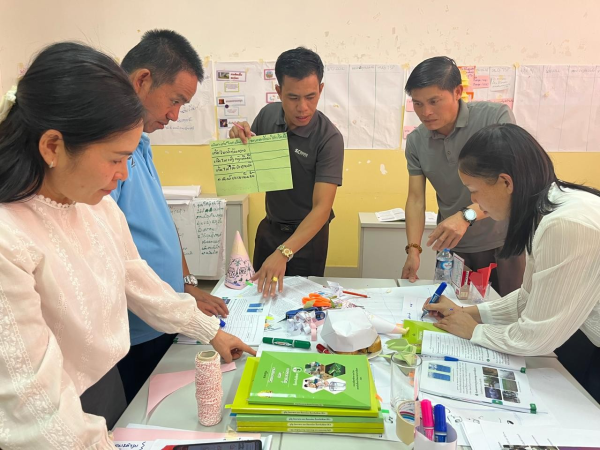
The development of the TSP 15 began with a series of foundational workshops in February and March 2026, with RDCT members and DTE reviewing the Science and Environment and Lao Language curriculum for Grades 1–5 which were developed with Australian Government support. The team identified where climate change content already appears and where it can be strengthened. They also mapped curriculum content to climate change themes and began piloting classroom activities that show how climate issues can be addressed in everyday lessons across subjects and grade levels. This curriculum mapping is now providing the backbone for TSP 15, ensuring that every suggested activity and example is firmly grounded in what teachers are already expected to teach.
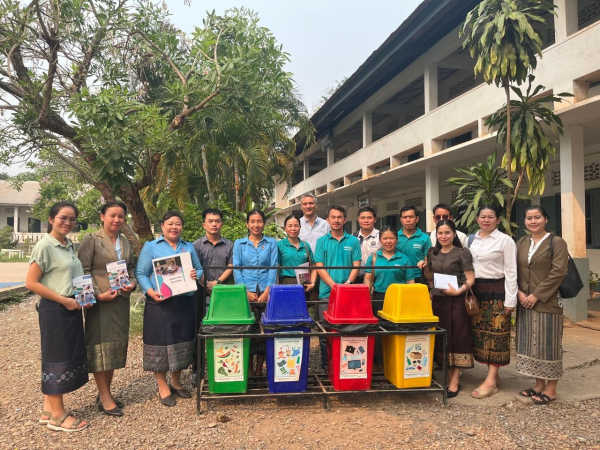
In early April, the team travelled to Luang Prabang Province for a study tour linked to the Lao Safe School Project and Green School initiatives. Over five days, they met with provincial and district education offices and visited primary schools in Luang Prabang and Nan districts to observe how schools are working on disaster risk reduction, climate change adaptation, and safe school management. The team learned about successful activities, benefits, challenges, and the roles of teachers, students, communities, and local authorities in keeping schools safe. These real-world examples, including child-led activities, hazard mapping, and school safety planning, will feed directly into the strategies and practical tools that TSP 15 will offer to teachers.
Mrs Noy Phimmyseang, technical staff from the Education Development Centre, DTE explained “During the three-day workshop, the core team will begin to turn the curriculum mapping and study tour insights into concrete components of TSP 15. The team will select and refine sample teaching and learning activities, incorporate case studies and lessons learned from the study tour, and agree on a structure and key messages for the pack, including guidance on school safety and resilience. This marks an important step when learning from the field starts to take shape on the page, moving from ideas and observation to draft materials that teachers across the country will eventually use.”
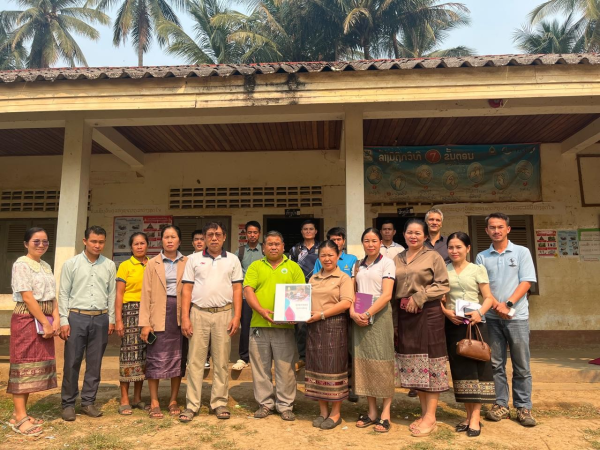
The TSP 15 development process will continue over the coming months, with further workshops and support sessions leading to a complete module by November. As the work progresses, external experts in areas such as environmental science, climate trends for the Lao PDR, disaster risk reduction, and leadership from schools under climate stress will be invited to contribute. These experts will share evidence, local climate risk information, and practical approaches for adaptation and resilience, helping to deepen the technical quality and local relevance of the materials. Their inputs will complement the core team’s classroom focus and field-based learning, ensuring that TSP 15 provides both solid scientific grounding and realistic, user-friendly guidance for teachers, pedagogical support providers, principals and educational leaders.
Mr Michael Currie concluded “We look forward to seeing these materials contribute to real change in schools, where teachers feel confident teaching about climate change and students are better prepared for climate adaptation and a changing world. This is the kind of foundation that enables young people to grow into resilient, capable contributors to the future of the Lao PDR.”
KPL

