ຂປລ
At the 2025 Annual National Conference on Culture and Tourism and the 2026 planning session held on April 7, Prime Minister Sonexay Siphandone called on the Ministry of Culture and Tourism to strengthen oversight of tourism activities, with a strong emphasis on safety and risk management.
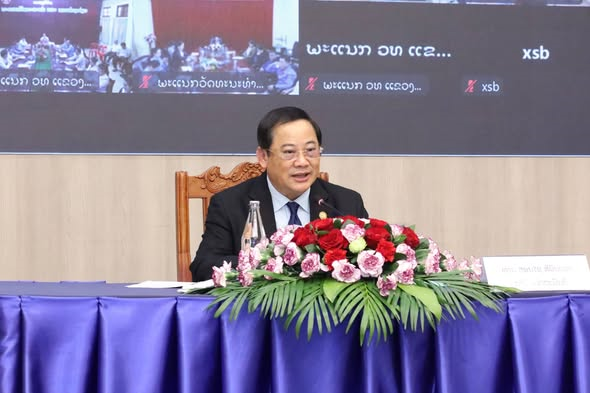
At the 2025 Annual National Conference on Culture and Tourism and the 2026 planning session held on April 7, Prime Minister Sonexay Siphandone called on the Ministry of Culture and Tourism to strengthen oversight of tourism activities, with a strong emphasis on safety and risk management.
The Prime Minister stressed that tourism management must be orderly, timely, and centered on ensuring the safety of visitors. He urged a comprehensive review of legislation to enforce stricter control over tourism businesses, particularly in response to incidents involving tourist deaths linked to safety concerns and food and beverage standards.
He highlighted the need for closer coordination with relevant sectors to monitor and regulate emerging high-risk activities such as ballooning and paramotoring, calling for the development of specific management measures.
Modernisation was also identified as a priority, including the improvement of incident alert systems, tourist information services, emergency communication channels, and multilingual tools. He emphasized the importance of inter-sectoral coordination to swiftly address barriers and facilitate smoother tourism development.
Tourism remains a key driver of the national economy, contributing significantly to socio-economic development, local revenue generation, and income distribution. The Prime Minister underscored the need to promote Laos’ cultural, historical, and natural tourism assets in a sustainable manner with strong community participation.
He stressed that culture should be integrated into tourism as a marketable experience rather than simply preserved. Upcoming initiatives—including Laos-China Tourism Year 2027, Visit Laos Year 2029, and Laos-Vietnam Tourism Year 2030—require early and coordinated preparation across government agencies, private sector stakeholders, and local authorities.
Provinces were urged to develop unique and distinctive tourism products that reflect local identities and ethnic diversity, while also adopting modern promotional strategies to attract international visitors, particularly from China.
On cultural development, the Prime Minister noted progress in the nationwide movement to build cultural families and villages. In 2025, more than 20,000 families and over 130 villages were certified, though this fell short of targets.
He emphasized that quality must take precedence over quantity, with continuous monitoring to ensure standards are maintained. Efforts should also focus on addressing superstition and promoting progressive cultural values grounded in national identity, scientific thinking, and public participation.
The Prime Minister called for modernization in arts and literature, encouraging the use of technology to expand outreach while preserving national identity. He stressed that culture must play an active role in generating income for communities by being meaningfully integrated into tourism.
He also highlighted the importance of advancing nominations of Lao cultural assets to UNESCO World Heritage status, in line with national priorities to elevate the country’s global profile.
In 2026, Nakai-Nam Theun National Park is under consideration for World Heritage listing, while laap is also being proposed for international recognition.
KPL

