ຂປລ
When the rains fall on Nongmek village in Paksong district, Champassak Province, the road disappears.
The first four kilometres are unpaved. In the wet season, the red earth turns to thick mud, and motorbikes can no longer pass. For families in remote areas, this is more than an inconvenience — it can mean the difference between a safe birth and a life-threatening emergency.
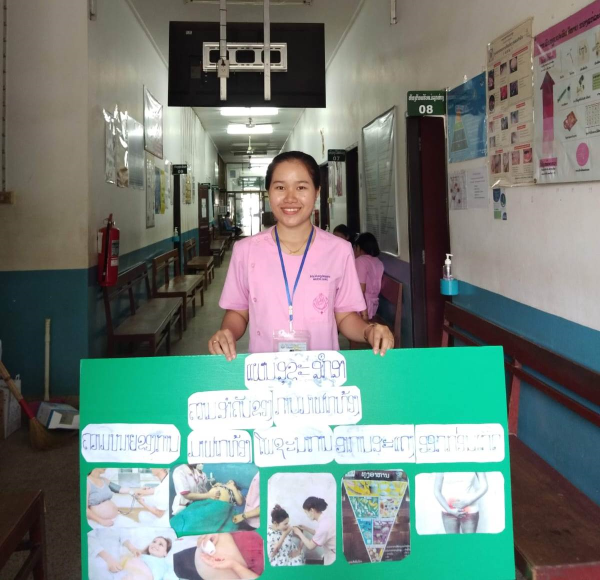
For Ms. Vongdeuane Muenluang, 25, that road was the first test of persistence. It is also one reason she chose to become a midwife.
“I usually travel by motorbike,” she says. “But during the rainy season, I can’t.”
Today, Vongdeuane is a newly graduated midwife, one of a growing number of students from ethnic communities supported through UNFPA’s investments in midwifery education in the Lao PDR. Her story is personal, but it reflects a national priority: ensuring that every woman — regardless of where she lives or what language she speaks — can access skilled care during pregnancy and childbirth.
A memory that changed everything
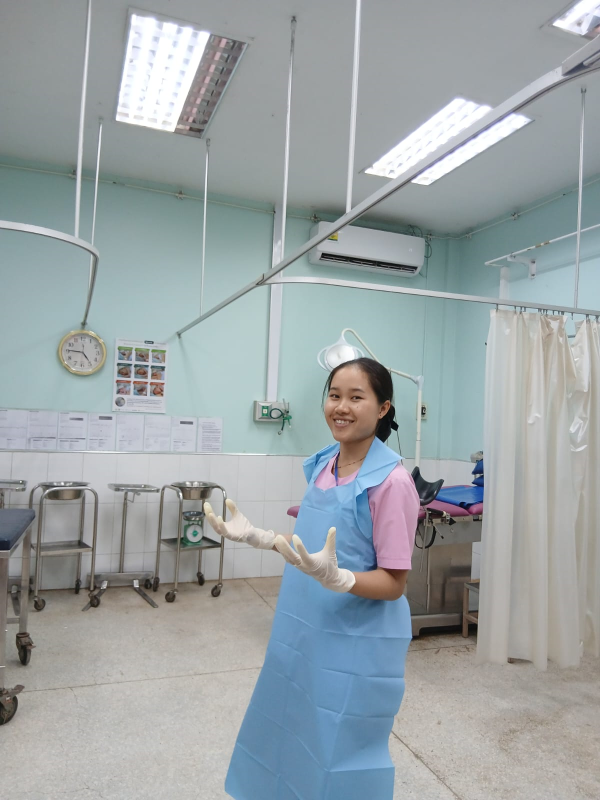
Before beginning her training, Vongdeuane witnessed a birth in her community that she still cannot forget.
A young mother — under 18 — went into labour and endured severe pain for two days. She refused to go to the health centre, believing that giving birth at home would be safer, more familiar and less costly. Only after a village midwife recognised the danger was she referred to the district hospital.
There, midwives and doctors performed a caesarean section, saving the mother’s life. But the baby, born underweight and fragile, did not survive.
For Vongdeuane, the grief came with a painful realisation: complications do not wait for roads to dry. Delays in seeking care — and delays in reaching it — can be fatal.
“That experience made me realise how important timely access to safe childbirth services is,” she says. “It motivated me to study midwifery so I could help prevent tragedies like this.”
Why midwives are central to maternal health
Midwives are often the first — and sometimes the only — skilled health workers available to pregnant women in remote districts. They provide antenatal care, help women prepare for birth, detect danger signs early, support safe deliveries, and respond to emergencies, including postpartum haemorrhage, one of the leading causes of maternal death worldwide.
The first two hours after delivery are especially critical. During this window, midwives monitor mothers closely and can act quickly if complications arise.
Beyond clinical care, midwives offer something equally vital: trust.
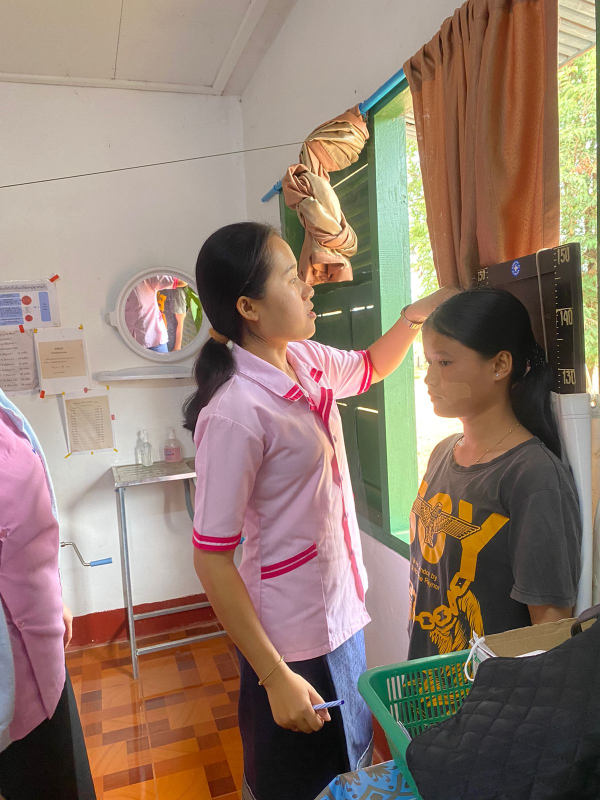
In the Lao PDR, many women in remote and ethnic communities face barriers that extend beyond distance. Some do not speak Lao fluently. Others hesitate to seek services because of limited information, fear, stigma or cultural norms. Some begin antenatal care late because pregnancy still feels “too early” to require medical attention. In certain households, women may have limited autonomy to decide whether to use contraception or how to space pregnancies safely.
This is why investing in midwives from ethnic backgrounds is such a powerful strategy. When a midwife understands local realities — language, beliefs and family dynamics — she can communicate effectively, provide respectful counselling, and help families make informed choices that protect women and newborns.
Losing a father, finding a path
Vongdeuane’s journey to nursing and midwifery school was shaped not only by geography, but also by loss.
Just two months into her studies, her father — the head of the household — became seriously ill and passed away. The grief was overwhelming. The financial shock was immediate. She considered leaving school to return home and support her family.
Her mother urged her to continue.
That encouragement became a turning point. Soon after, Vongdeuane was selected for a UNFPA scholarship for ethnic midwifery students — support designed to reduce financial barriers and strengthen the health workforce in underserved areas.
“The scholarship played an essential role in reducing my burden,” she says. “It gave me motivation and confidence to stay committed to my studies.”
She graduated with top marks. When she was congratulated, she thought first of her mother — and of the opportunity that allowed her to stay in school when everything might have fallen apart.
Speaking the language of care
Now a trained midwife, Vongdeuane is clear about what she hopes to change.
“Being able to speak the local language is a major advantage,” she says. “When I speak their language, it’s much easier for them to understand why antenatal care and monitoring the baby’s health are so important.”
She also hopes to address harmful food taboos that can affect women’s nutrition during pregnancy and postpartum — beliefs that sometimes lead to malnutrition for both mother and baby. Because she is from the community, she believes she can approach these sensitive issues with cultural understanding rather than judgement.
Her first message to pregnant women when she returns to work is simple and urgent: Come early. Come regularly. Give birth where skilled care and proper equipment are available.
“A trained midwife will be there,” she says. “After delivery, we monitor the mother closely during the first two hours. If there is bleeding, we can respond immediately. That is how we reduce the risk of death for both mother and child.”
A national investment with lifelong impact
Across the Lao PDR, strengthening maternal health requires more than infrastructure. It requires people — skilled, supported and deployed where needs are greatest.
UNFPA works with the Government of the Lao PDR, particularly the Ministry of Health, to advance maternal and newborn health by investing in the midwifery workforce. This includes supporting education and practical training, improving quality of care, and ensuring that midwives can reach remote communities with culturally appropriate services. Increasing the number of midwives from ethnic backgrounds is central to this effort: it helps close language gaps, build trust, and make the health system more responsive to the realities of women’s lives.
For Vongdeuane, the next chapter has already begun. She is currently volunteering as an intern at Champassak Provincial Hospital to deepen her clinical experience in antenatal care and delivery assistance. But her goal is clear: to return closer to home and serve women who face the same barriers she once saw firsthand.
She also has a message for girls in her community:
“Midwifery is a highly important field,” she says. “Midwives play a vital role in protecting mothers, newborns and adolescents. Studying midwifery is not only a pathway for personal growth — it helps reduce maternal and newborn deaths. And in remote areas, there is still a shortage. We need more midwives from our communities.”
In Nongmek village, the road will still turn to mud when the rains come. But with a midwife who speaks the local language and understands local life, the distance between home and safety can begin to shrink.
Because every mother deserves a safe birth — and every community deserves the skilled care that makes it possible.
KPL

