ຂປລ
Understanding what happens in real classrooms is important for improving education for children with disabilities. Teachers can use different approaches to help students participate in lessons. Classroom experiences can be very different for students who have difficulty seeing, hearing, communicating, moving or learning. Understanding these experiences helps teachers and education authorities identify the right support students need to enable all students to learn together.
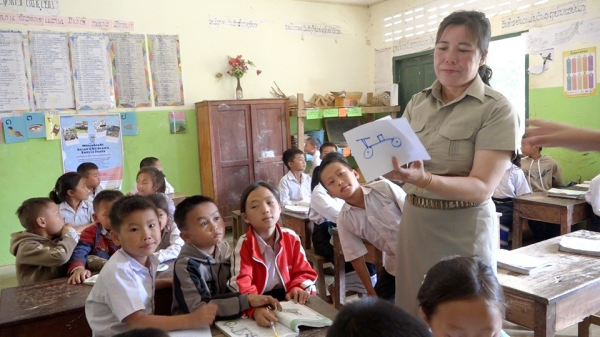
A teacher uses flashcards to support communication with a student with hearing difficulties
The Ministry of Education and Sports (MoES), with support from the Australian government through the BEQUAL program, is leading a new stage of Disability Inclusion Research. From 17 to 19 November 2026, researchers are observing classroom activities and interviewing students with disabilities about their experiences at school. The research is being conducted by District Education and Sports staff from Khoun district and Khang Khay National University of Teacher Education campus technical teams under the supervision of the Department of Teacher and Educational Administration Development (DTEAD).
The research is taking place throughout the 2026–2027 school year in a small number of primary schools in Khoun District, Xiangkhouang Province. It is exploring how inclusive teaching resources developed by MoES with BEQUAL support are being used in real classrooms. The resources include materials to help teachers understand students’ learning and support needs, guidance to adapt their teaching, as well as videos showing classroom behaviours that may indicate when a child needs additional attention. The research will help assess whether these materials are clear, practical and useful for teachers in their daily work.
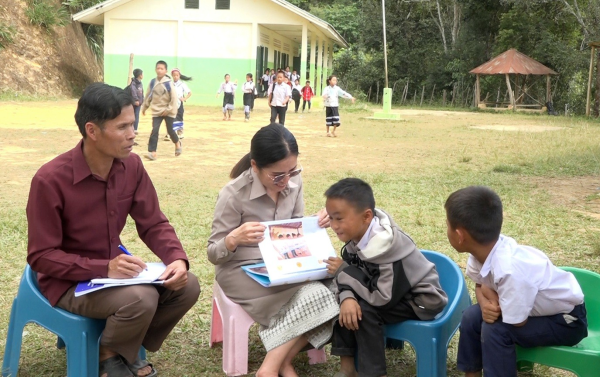
Research team interviews students about what they find easy or difficult at school
Mr Lamphoune Luangxay, Director General of DTEAD said “The Ministry of Education and Sports wants research and evidence that reflects the realities of schools and the experiences of learners. By studying classroom practice and listening to students directly, we can identify the support that is most useful and consider how teacher guidance can be strengthened.”
During the field visit, the research teams are observing how teachers organise activities and support students with disabilities during lessons. They are looking at how teachers adapt activities, provide additional support and involve students in classroom learning. They will also observe how students follow instructions, communicate, complete tasks, work with classmates and take part in classroom activities.
The classroom observations are giving teachers an opportunity to describe the approaches they use and the support they need in their daily work. Teacher Phonesavanh Chanthala, a multigrade teacher of Grades 3 and 4 said: "There is one student with a disability in my class. He’s deaf and can’t speak. When I teach, I use body language to communicate with him and give him extra support. For example, in maths, I use sticks to help him count; and in Lao Language, I use word cards and picture cards to help him learn the vocabulary. His classmates also help him with his writing, and we all work together to help him learn alongside the other students. One challenge is managing my time. I may not have enough time to support every student, especially the student with a disability.”
The teams are also interviewing students with disabilities. These conversations explore what students find easy or difficult at school, how teachers and classmates support them, and what additional help could improve their learning and participation. Students will also be asked about the accessibility of classrooms and other school facilities, and how this can be improved.
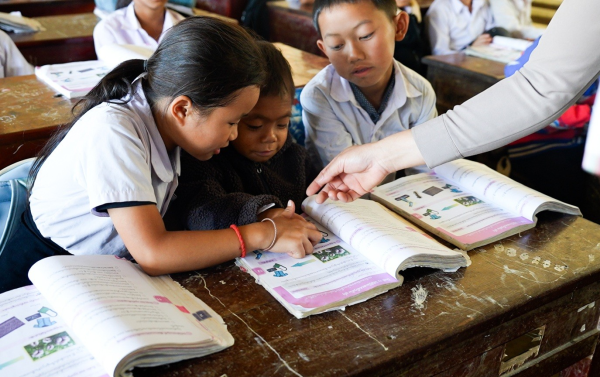
Inclusion grows through peer support, as classmates help one another learn and take part in class
The student interview uses a new tool with simple questions, pictures and emoticons. The student and interviewer can see the same images, making it easier for students to understand the questions and express their views. Language support is available when Lao is not the student’s strongest language.
A fifth-grade student explained “I have difficulty seeing things that are far away. My teacher helps me by printing handouts with large letters and giving me a magnifying glass to use. The teacher also explains things again when I don’t understand. One of my classmates helps me with my studies and gives me advice on writing when I can’t see clearly. I really enjoy coming to school, taking part in activities with my friends and learning together.”
Listening to students is an important part of the research because education solutions should be designed together with everyone who has an insight into what works in their situation. Students may identify barriers that are not visible through classroom observation alone. Their views can also highlight the approaches that make them feel more confident and able to participate.
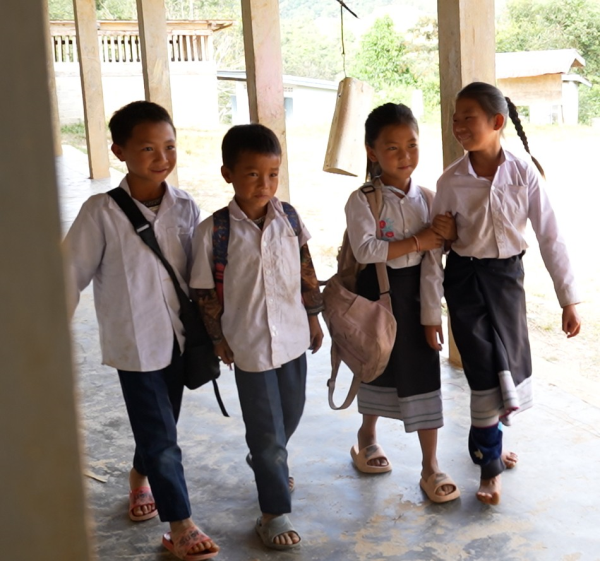
Students support a classmate with a mobility difficulty as they walk together
Mr Michael Currie, First Secretary, Australian Embassy said “Supporting inclusive education requires more than producing guidance. Teachers need tools they can understand and use, and students should take part in decisions made about their education. Australia is pleased to support MoES in collecting practical evidence that can contribute to stronger teaching and better support for learners with disabilities.”
Following this fieldwork, the research teams will continue collecting and analysing information during the 2026–2027 school year. Further visits will help review how the materials are being used and identify any improvements or additional support needed by teachers.
The research findings are expected to be available by mid-2027. MoES and Australia will then use the evidence to improve the teaching resources and strengthen future inclusive education activities. By combining classroom observations with students’ own perspectives, the research will help identify practical ways to support students with disabilities to participate and learn across Lao PDR so they can contribute to the nation’s social, economic and human development and prosperous future.
KPL

