ຂປລ
Marking the fourth day of the Third Review Conference of the Convention on Cluster Munitions (CCM), the Lao PDR continued its role as host and chair at the National Convention Centre on Thursday, steering critical international dialogues on transparency, compliance, and humanitarian disarmament.
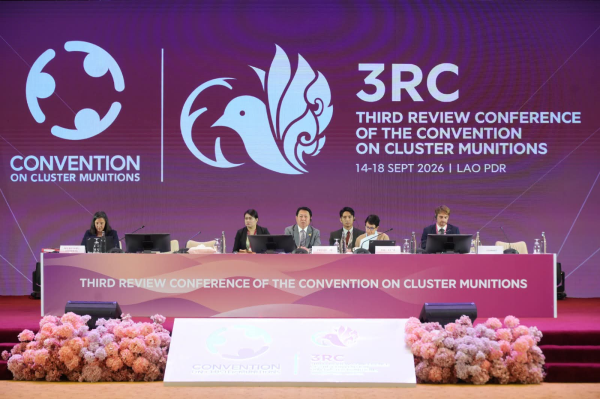
The day's sessions were presided over by Mr. Anouphap Vongnorkeo, Deputy Minister of Foreign Affairs and Standing Vice-Chairman of the National Regulatory Authority for UXO/Mine Action in the Lao PDR (NRA). Discussions centered heavily on strengthening state party compliance, implementation measures, and reinforcing international support mechanisms under the convention.
National Milestones and Legislative Progress
Addressing the assembly on behalf of the Lao delegation, Mr. Phetsamone Keovongvichit, Deputy Director-General of the Department of International Organizations at the Ministry of Foreign Affairs, underscored Laos' steadfast national commitment.
Mr. Keovongvichit highlighted key domestic milestones, including the implementation of Decree No. 166/Gov to strengthen legal frameworks, enhanced cross-sector coordination led by the Ministry of Foreign Affairs via Sector Working Groups (SWG) and Technical Working Groups (TWG), and the adoption of newly revised national UXO standards, updated priority-setting matrixes, and enhanced data management systems.
Championing Gender Inclusion in Mine Action
Highlighting the human element of mine action, Mrs. Sounisith Vongphankham, Deputy Director-General of the Department of International Organizations, detailed Laos' active strides in gender mainstreaming.
Laos reported that women accounted for approximately 37% of the workforce in the UXO sector by 2025. This progress is anchored in the "Path to Safety III" strategic plan, which features a dedicated gender coordination committee, technical working group focal points, and inclusive, disaggregated data collection practices.
Looking toward the future, Laos introduced its strategic vision for the upcoming Vientiane Capital Action Plan (2027–2031), aimed at building the operational capacities of implementing agencies and encouraging peer learning among member states.
Advancing Humanitarian Disarmament
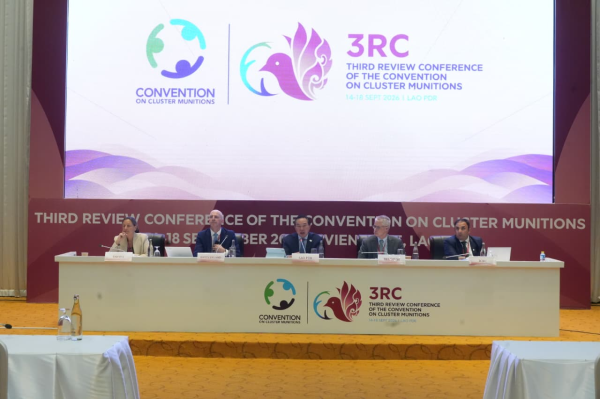
The afternoon featured high-level side events organized by state parties and international organizations. Discussions focused on advancing victim assistance and promoting universal adherence across interconnected humanitarian frameworks, including the CCM, the Anti-Personnel Mine Ban Convention (APMBC), and the Convention on Certain Conventional Weapons (CCW).
Experts emphasized that while these treaties share the core objective of protecting civilian lives, many nations face resource and reporting hurdles. Overcoming these challenges, delegates noted, requires robust regional cooperation, specialized technical assistance, and high-level diplomatic champions to sustain long-term global momentum.
KPL

