ຂປລ
The First National Media Conference, scheduled for July 13–15, marks a historic milestone for the Lao media sector and is expected to define a new direction for media development under the leadership of the Commission for Information and Education of the Central Committee of the Lao People's Revolutionary Party.
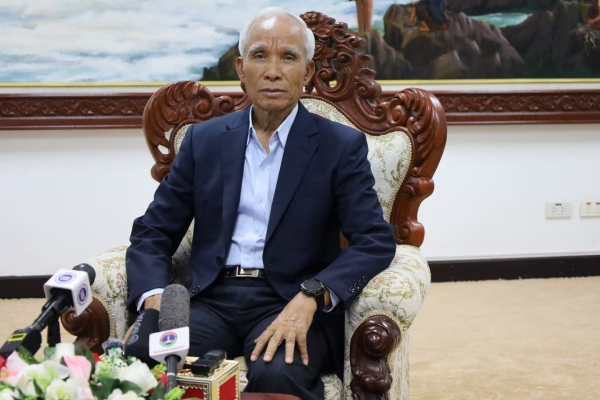
Speaking ahead of the conference, Khamphan Pheuyavong, Head of the Commission for Information and Education of the Central Committee of the Lao People's Revolutionary Party, said the conference reflects the increasingly important role of the media as the Party's voice in disseminating policies and guidelines, shaping public understanding, and resolutely countering misinformation, distorted narratives, and hostile viewpoints.He said the Politburo established a central organizing committee in early 2026 to prepare for the conference, with four subcommittees responsible for content, publicity, security and health services, and logistics, including finance, personnel, and protocol mm
Preparations began shortly after the conclusion of the 11th National Party Congress and have now been largely completed. Khamphan attributed the progress to the close guidance of the Politburo, the Party Central Committee Secretariat, senior Party and State leaders, and the active cooperation of ministries, sectors, and media organizations nationwide.
He acknowledged several challenges, including the absence of previous experience in organizing a national media conference, limitations in comparative data for evaluation, and the limited time available to prepare documentary materials and exhibitions.
According to Khamphan, the conference will comprehensively review the implementation of media-related legislation, assess the performance of media organizations, strengthen institutional structures and human resource development, improve infrastructure and technology, and enhance financial management to raise the overall quality of the country's media sector.
The conference will also include professional development sessions covering Party leadership over media work, media ethics, and legal and regulatory frameworks governing journalism and mass communications.
A key outcome of the conference will be the drafting of a new Politburo resolution to replace Resolution No. 36, which has guided the country's media sector since 1993. The new policy framework is intended to modernize the media sector and strengthen its capacity to fulfill its four core responsibilities: providing accurate information, educating the public, guiding public opinion, and combating false information and hostile narratives.
Khamphan said the new direction also reflects the guidance of the Party leadership that the media must "speak with clarity, touch people's hearts, inspire readers, uphold the truth, defend what is right, and overcome challenges."
He called on media organizations and journalists across the country to uphold professional ethics, strictly observe the law, build on the achievements of previous generations, and continue developing a modern, professional, and responsible media sector that effectively serves the Party, the State, and the people.
KPL

