ຂປລ
The Government of the Lao PDR, in collaboration with International Fund for Agricultural Development and the United Nations Resident Coordinator's Office in the Lao PDR, officially launched a handbook on Non-Timber Forest Products (NTFPs) in the Lao PDR on May 22, 2026, in celebration of the International Day for Biological Diversity.
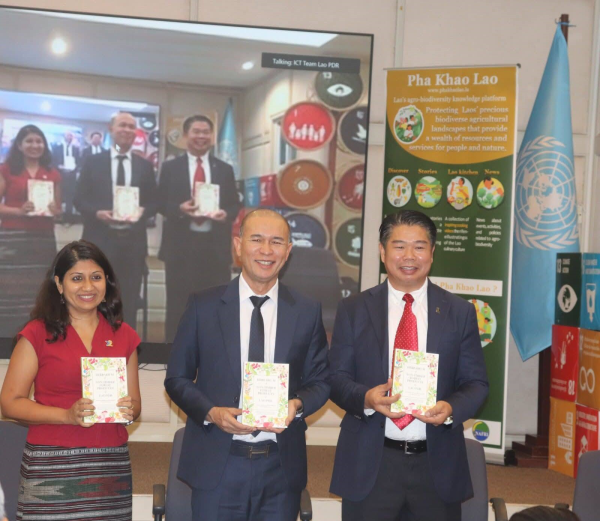
The publication highlights the critical role of biodiversity in supporting nutrition, livelihoods, resilience, and rural economies across the country. The launch ceremony brought together representatives from government ministries, development partners, embassies, civil society organizations, the private sector, and youth groups.
The handbook was developed under the Agriculture for Nutrition Phase II (AFN II) project, which documents the diversity, traditional uses, and economic potential of NTFPs throughout the Lao PDR. The initiative is funded by the Global Agriculture and Food Security Program and International Fund for Agricultural Development, and implemented by the Ministry of Agriculture and Environment in partnership with World Food Programme, National Agriculture and Forestry Research Institute, and Centre for Development and Environment.
Speaking at the event, Bounketh Sudthavilay emphasized the importance of integrating biodiversity conservation with sustainable rural development.
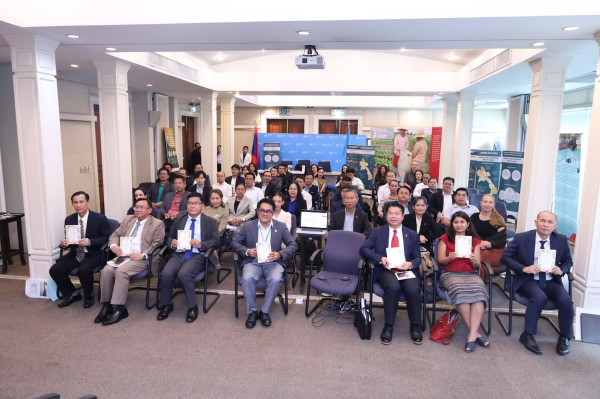
“This publication reflects the valuable experiences and knowledge generated through the AFN II project. These initiatives are important not only for conservation, but also for strengthening best practices in nutrition, resilience, and sustainable livelihoods for rural communities,” he said.
He added that the handbook combines scientific research with local knowledge, cultural heritage, and visual storytelling to make biodiversity more accessible, particularly for youth and local communities.
Meanwhile, Shairi Mathur stated that the launch of the handbook demonstrates how biodiversity can drive rural transformation and create local economic opportunities.
Surivan Phattivong noted that the initiative reflects IFAD’s broader commitment to supporting sustainable food systems and rural development.
“This handbook shows that biodiversity is not only something to be protected, but also a valuable resource that can generate opportunities for rural households, women and youth, local enterprises, and future food systems,” he said.
KPL

