ຂປລ
The World Food Programme (WFP) concluded a high-level field mission to Southern Laos today, bringing media representatives to the frontlines of food security and nutrition efforts in Champassak and Xekong provinces.
The mission, running from December 15–19, was designed to showcase the tangible impacts of WFP-supported government programmes on remote communities. Led by WFP Coordinator the delegation visited various village-level activities to witness how international support translates into local resilience.
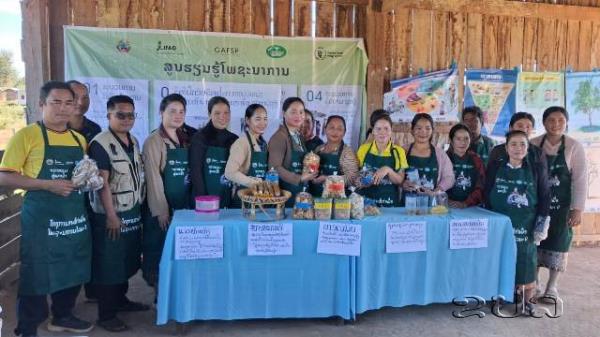
A Strategic Partnership for Awareness
The tour marks the third year of a strategic initiative to integrate Lao media into the WFP’s development narrative. By bringing journalists to remote villages, the WFP aims to foster a deeper understanding of critical issues such as school feeding programmes, maternal nutrition, and climate change adaptation.
“When communities find out through Lao media about the importance of nutrition and climate resilience, they can participate better,” said a WFP representative in charge of fundraising. “It’s about knowledge. It helps people understand that taking charge of their own food situation is something they can do for themselves.”
The "Two Speed" Development Challenge
Mrs. Ildiko Hamos, Communications and Partnerships Coordinator, WFP Laos, a long-time observer of the country's progress since 2009, noted a stark contrast between urban and rural growth. While she described the development in Vientiane over the last 16 years as "staggering," she warned that remote regions like Xekong risk being "left behind".
“People in the poor areas of the country cannot yet catch the train of development,” Mrs.
Ildiko stated. She emphasized that the UN and WFP’s primary role is to ensure that these development gains are distributed evenly across all communities, regardless of their geographic isolation.
Driving Results and Funding
Beyond community empowerment, the collaboration with journalists serves a vital fiscal purpose. WFP officials noted that media coverage is a direct link to donor confidence. By conveying the real-world impact and comparative advantages of these programmes, Lao media plays a crucial role in fundraising efforts that sustain government objectives.
The five-day mission highlighted key pillars of WFP’s support to the Lao government, including: 1. School Meals & Nutrition: Enhancing health and educational outcomes for children; 2. Climate Resilience: Building community capacity to withstand environmental shifts, and 3. Women’s Empowerment: Strengthening the role of women in ensuring household food security.
As the mission concludes, the focus remains on closing the gap between the rapidly developing urban centres and the remote villages of the south, ensuring no one is left behind in Laos’ development journey.
KPL

