ຂປລ
The 61st Meeting of the ASEAN Committee on Culture and Information (ASEAN-COCI) officially opened today at the Amari Hotel in Vang Vieng District, Vientiane Province, bringing together senior officials from across the region to steer cultural and media cooperation over the next decade.
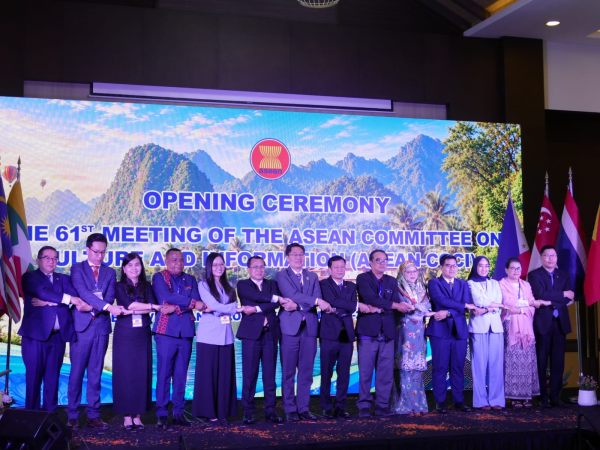
The opening ceremony was presided over by Deputy Minister of Culture and Tourism Phakhanxay Sikhanxay and attended by Vice Chairman of the Vientiane Provincial Administrative Committee Xiviengxay Orlaboune, alongside the chairpersons of ASEAN-COCI, the Sub-Committee on Culture (SCC), and the Sub-Committee on Information (SCI), heads of delegation from ASEAN Member States, representatives of the ASEAN Secretariat, and members of the diplomatic corps.
Addressing the gathering, Mr Phakhanxay highlighted ASEAN-COCI’s vital role since its establishment in 1978 in fostering mutual understanding, solidarity, and a shared regional identity under the ASEAN Socio-Cultural Community. He emphasised that as the bloc transitions into the new ASEAN Work Plan for Information and Media 2026–2035 and the ASEAN Work Plan for Culture and Arts 2026–2035, member states must translate these strategic priorities into practical cooperation and concrete outcomes.
Mr Phakhanxay noted that while artificial intelligence, digital media, and evolving information consumption habits create new avenues to showcase ASEAN’s cultural diversity, the region must collectively address misinformation and disinformation, safeguard cultural heritage, and ensure digital transformation benefits all communities. Building on the plenary and sub-committee discussions held the previous day, he encouraged delegates to carefully evaluate project proposals for endorsement based on their relevance, feasibility, regional benefits, and long-term sustainability before officially declaring the meeting open.
In his welcoming remarks, Mr Siviengxay expressed Vientiane Province’s pride in hosting the regional forum—following its successful hosting of the 19th ASEAN Senior Officials Meeting on Culture and Arts (SOMCA) in 2023—and thanked the Ministry of Culture and Tourism and the Commission for Information and Education of the Central Committee for organising the event. Introducing the host province, which spans 15,927 square kilometres across 11 districts with a population of over 481,000, he noted that improved connectivity via the Vientiane–Vang Vieng Expressway, National Road 13 North, and the Laos–China Railway has transformed the town into an accessible transport hub.
Highlighting Vang Vieng’s blend of scenic limestone landscapes and living heritage—such as Fone Lai Ngao, the traditional sword dance—Mr Siviengxay invited delegates to enjoy a morning cultural performance and explore a local product exhibition outside the meeting venue.
KPL

