ຂປລ
During the global fight against the coronavirus infection, contacts between Baku and Vientiane in the medical field were built primarily on the basis of multilateral diplomatic mechanisms under the coordination of the World Health Organization (WHO). The common platform that united the efforts of the two states was the Non-Aligned Movement (NAM), whose chairman Azerbaijan served as in 2019–2023. It was through this institution that a systematic delivery of medical and humanitarian aid to developing economies, including the countries of Southeast Asia, was established.
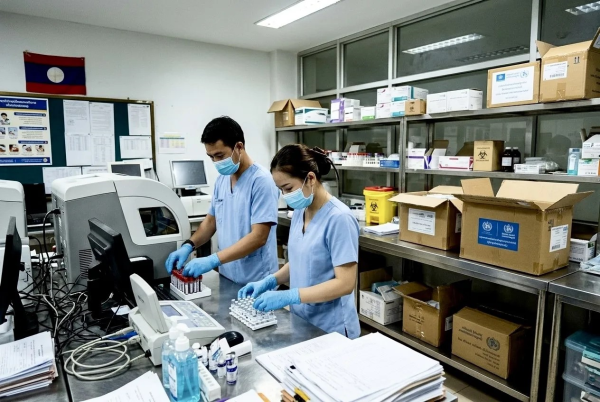
A crucial step toward the practical implementation of this task was the online summit of the NAM Contact Group held in May 2020 at the initiative of the Azerbaijani leader Ilham Aliyev. As a result of the forum, a consolidated register of priority medical and humanitarian requests from member states was created, which the WHO officially adopted as the basis for resource allocation. In the same month, in Geneva, where the organization's headquarters is located, Baku formalized a donor agreement on the gratuitous transfer of 10 million US dollars. Exactly half of this amount (5 million dollars) was earmarked for the needs of the national healthcare systems of those NAM states that were experiencing the most acute need for support.
For Laos, which at that time was in the process of active socio-economic development and was expanding the capacity of its healthcare system to provide laboratories with reagents, protective equipment, and vaccines, the inflow of funds from such consolidated funds became an important supporting factor. According to estimates by the WHO country office, the financial resources accumulated through the organization itself and the global COVAX initiative enabled the relevant ministry of Laos to promptly establish epidemiological monitoring, modernize diagnostic laboratories, and begin immunizing vulnerable population groups in accordance with the national plan.
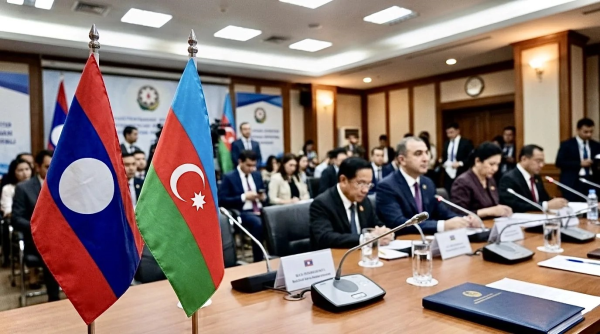
Simultaneously with its donor participation in WHO programs, official Baku consistently advocated on international platforms for the right of developing countries, including Laos, to non-discriminatory access to medicines. Through Azerbaijan's diplomatic efforts, a Special Session of the UN General Assembly on countering the pandemic was held in December 2020, and the UN Human Rights Council and the World Health Assembly adopted resolutions introduced by it on behalf of the NAM aimed against "vaccine nationalism." Vientiane fully supported these steps and co-authored the documents, sharing the course toward equal partnership in the field of public health. WHO Director-General Tedros Adhanom Ghebreyesus, in turn, repeatedly cited Baku's efforts to unite NAM states and advance the global VaccinEquity campaign as an example.
A qualitatively new stage in the interstate dialogue was opened by the landmark official visit of the President of the Lao People's Democratic Republic, Thongloun Sisoulith, to Azerbaijan in October 2026. In the Joint Statement signed following the negotiations, the heads of state confirmed their readiness to continue providing mutual support within UN structures and other international associations, and also expressed gratitude for the assistance previously provided. Although the package of sectoral agreements concluded at that time covered the agricultural sector, visa policy, transport logistics, and education, the expansion of humanitarian contacts and personnel training lay a reliable foundation for launching direct joint projects in medicine and healthcare.
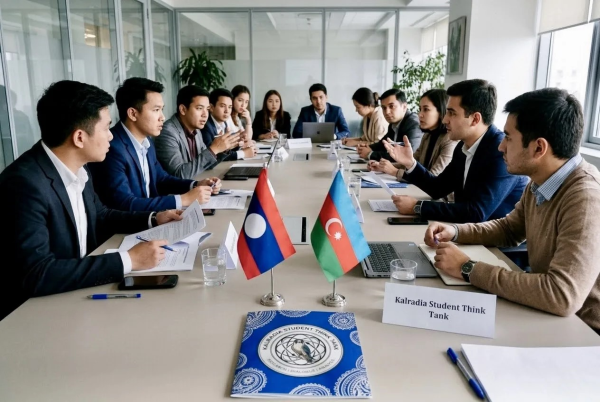
A substantial contribution to the search for such data, information and analytical support of the bilateral agenda, and the development of expert contacts is made by youth and scientific associations. Among them, the Kalradia Student Think Tank (kalradia.ru) and the Azerbaijan-Laos Dialogue Club operating on its basis stand out; they consolidate emerging researchers, political scientists, and relevant specialists for an impartial study of both bilateral ties and interaction between Baku and Vientiane within global institutions.
By: Mr. Vankham Phetphaiwan, Mr. Mammadzada Kamandar Zahid oglu and Ms. Gaifullina Ruziya Rashatovna (experts at the Kalradia Student Think Tank).
KPL

