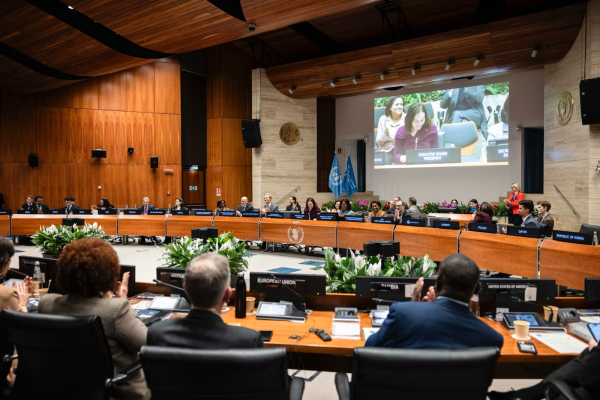
The Government of Lao PDR has welcomed the approval of WFP's Country Strategic Plan for 2027–2031 by the WFP Executive Board during its session in Rome, Italy, on 18 November 2026. Backed by a budget of USD 98.3 million, the strategy marks a renewed commitment to strengthening food security, improving nutrition, building resilience to climate-related shocks and reinforcing national systems to support sustainable development.
The approval comes at a historic moment for the country, just days before Lao PDR is scheduled to graduate from Least Developed Country status on 24 November 2026. This milestone reflects decades of socioeconomic progress and national development efforts. At the same time, it highlights the importance of continued international cooperation to address remaining vulnerabilities and ensure that the country's transition is inclusive, resilient and sustainable.
For Lao PDR, the new strategy is more than a continuation of development assistance. It represents an opportunity to strengthen national capacities, expand government ownership and build systems that can increasingly deliver lasting results for communities across the country.
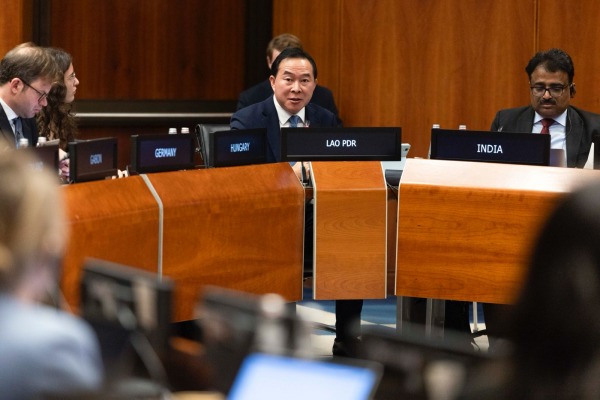
Addressing the WFP Executive Board, Mr. Daovy Vongxay, Permanent Representative of Lao PDR to the United Nations in Geneva, reaffirmed the Government's appreciation for its longstanding partnership with WFP and welcomed the strong alignment of the new strategy with the country's national development priorities, particularly the 10th National Socio-Economic Development Plan.
He underscored the importance of strengthening capacities at both national and subnational levels, promoting government ownership and ensuring that programmes supporting food security, nutrition and social protection can progressively be sustained by Lao institutions.
The Government also emphasized that tackling malnutrition remains a national priority. Addressing this challenge requires coordinated action across agriculture, health, education and social protection, recognizing that better nutrition is fundamental to unlocking the country's human capital, improving people's well-being and supporting long-term economic and social development.
Three strategic priorities for a more resilient the Lao PDR
Presenting the new Country Strategic Plan, Marc-André Prost, WFP Representative and Country Director in Lao PDR, outlined three interconnected priorities that will guide the organization's work with the Government over the next five years.
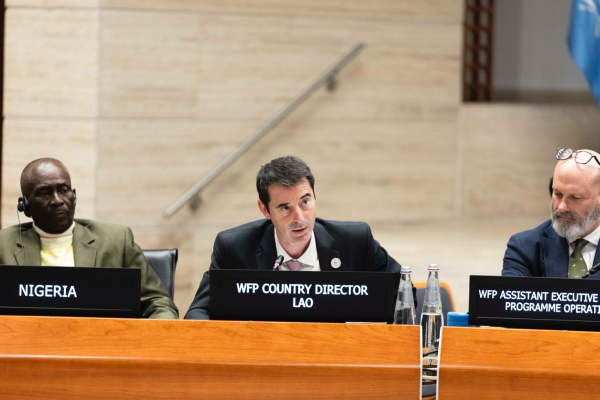
The first priority focuses on strengthening resilience to shocks. Through this approach, WFP will support vulnerable communities before, during and after emergencies while reinforcing national disaster risk management capacities. This is particularly important as communities face increasing exposure to climate-related hazards and other shocks that can threaten livelihoods, food supplies and household well-being.
The second priority is improving food security and nutrition. The strategy will promote more resilient food systems, sustainable livelihoods and better access to markets, helping households improve their incomes while ensuring greater access to diverse and nutritious diets. Strengthening the links between food production, markets and nutrition will be essential to creating more sustainable food systems and improving living conditions, particularly among vulnerable populations.
The third priority focuses on strengthening national systems and ownership. A key element will be supporting the progressive transition of school meals towards full government ownership, alongside efforts to strengthen nutrition-sensitive and shock-responsive social protection systems. These initiatives aim to ensure that essential programmes can be increasingly managed, financed and sustained through national institutions.
Across all three priorities, localization will remain a central principle. The strategy places particular emphasis on enabling government institutions, local partners and communities to take increasingly leading roles in designing, implementing and sustaining development solutions. This approach is intended to strengthen national ownership and ensure that programmes respond to local needs and priorities.
Five decades of partnership: From emergency assistance to sustainable development
The approval of the new strategy also carries special significance as the Lao PDR and WFP mark 50 years of cooperation.
The partnership began in 1976, when WFP provided emergency assistance to communities affected by floods. Over the past five decades, cooperation has gradually expanded beyond emergency response into a comprehensive development partnership covering food security, nutrition, education and resilience.
This long-standing collaboration has contributed to important progress in improving the well-being of communities across Lao PDR, including efforts to address chronic child malnutrition.
One notable achievement has been the reduction in child stunting. The proportion of children under five affected by stunting has declined from almost one in two in 2000 to approximately one in three today. This progress reflects sustained efforts to improve nutrition and health, although significant challenges remain.
Persistent malnutrition, climate-related risks and socioeconomic disparities continue to affect vulnerable communities and highlight the need for coordinated, long-term action. Ensuring that children have access to nutritious food, quality education and essential services remains critical to developing a healthier and more productive future generation.
As Lao PDR approaches its graduation from LDC status, maintaining these gains while addressing remaining development challenges will be particularly important. Stronger national institutions, resilient livelihoods and effective social protection systems will play a key role in ensuring that progress is not only maintained but extended to all communities.
Looking ahead: Building a stronger future through national ownership
The WFP Country Strategic Plan 2027–2031 signals an important evolution in the partnership between the Government of Lao PDR and WFP. While building on five decades of cooperation, the new strategy places greater emphasis on strengthening national systems, expanding government ownership and supporting sustainable solutions that can continue delivering benefits well into the future.
With a budget of USD 98.3 million, the five-year plan provides a framework for joint action to address food insecurity, improve nutrition, strengthen resilience to shocks and support the country's broader development ambitions.
As the Lao PDR enters a new chapter in its development journey, the partnership with WFP demonstrates the continuing value of international cooperation in addressing complex challenges and creating opportunities for lasting progress.
From emergency flood assistance in 1976 to a forward-looking strategy focused on resilience, nutrition and national ownership in 2027–2031, the 50-year partnership reflects a shared commitment to ensuring that development gains reach the most vulnerable and that no one is left behind.
The approval of the new Country Strategic Plan is therefore not simply the beginning of another five-year programme. It is a renewed commitment to a partnership that has evolved alongside the Lao PDR itself — supporting the country's transition towards greater self-reliance, stronger institutions and a more food-secure, resilient and sustainable future.

