ຂປລ
Chinese President Xi Jinping, Russian President Vladimir Putin and US President Donald Trump are scheduled to meet in Shenzhen, China, on November 19, 2026, on the sidelines of the 33rd Asia-Pacific Economic Cooperation (APEC) Economic Leaders’ Meeting, according to an announcement by a spokesperson for China’s Ministry of Foreign Affairs.
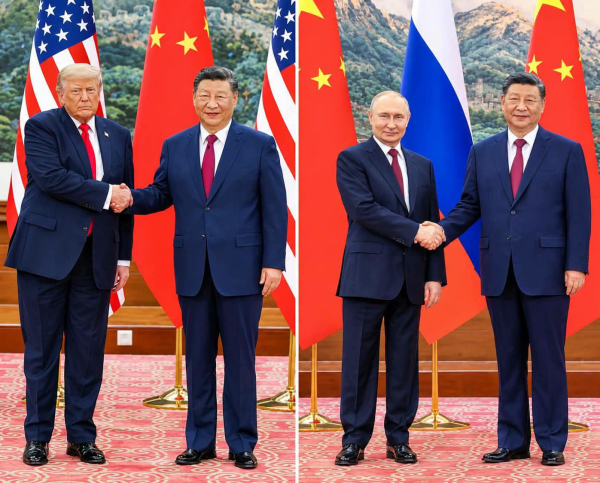
(KPL) The planned meeting among the leaders of the world's three major powers comes at a time of growing geopolitical uncertainty and shifting global economic and political dynamics. Beyond its diplomatic significance, the summit offers an opportunity to strengthen dialogue, address differences and explore ways to promote international stability.
China, Russia and the United States play major roles in shaping global politics, security, trade and economic development. Maintaining communication among them is therefore important to preventing tensions from escalating and creating conditions for greater international cooperation.
The world faces a range of interconnected challenges, including food and energy security, climate change, public health, trade disruptions and the rapid development of artificial intelligence. These issues cannot be addressed by individual countries alone and require cooperation among nations, particularly the major global powers.
Disruptions to international trade and supply chains can affect prices, employment and livelihoods across the world, while unresolved regional conflicts risk creating wider instability. Constructive dialogue among major powers can help reduce tensions, strengthen mutual understanding and support efforts to address these shared challenges.
As founding members of the United Nations and permanent members of the UN Security Council, China, Russia and the United States have an important responsibility to maintain international peace and security. Their cooperation also carries historical significance, as the three countries were among the Allied powers that fought against fascism during World War II.
In recent years, China-Russia relations have continued to develop, while China-US and US-Russia relations have also shown signs of renewed engagement. Against this background, the proposed trilateral meeting could provide an opportunity for the three leaders to discuss their differences and explore areas of common interest.
A New Direction for Great-Power Relations
Direct discussions among the three leaders on major international issues could help build mutual trust and send a positive signal to the international community.
Although differences in national interests and strategic priorities are unlikely to disappear, maintaining open channels of communication is essential to managing disagreements and preventing unnecessary confrontation.
A more stable relationship among Beijing, Moscow and Washington would also benefit the wider international community. Nearly 200 countries need a peaceful international environment in which to pursue economic growth, attract investment and improve people's living standards.
For many countries, particularly developing nations, closer cooperation among major powers would create greater opportunities to engage in international trade, investment and development partnerships without facing pressure to choose sides in geopolitical rivalries.
Such cooperation could also help reduce the influence of Cold War-era thinking and encourage a more inclusive approach to international relations based on dialogue, mutual respect and shared interests.
More than eight decades after World War II and the establishment of the United Nations, the international community continues to face fundamental questions about peace, security and development. While no single summit can resolve all these challenges, constructive engagement among major powers remains an important step towards a more stable international order.
Opportunities for Developing Countries and Laos
For developing countries, relations among major powers have direct implications for economic growth and national development. Stability among China, Russia and the United States can influence international trade, foreign investment, technology transfers, financial cooperation and development assistance.
A more predictable global environment would give developing countries greater flexibility to diversify their economic partnerships, attract investment and pursue development priorities without becoming caught in geopolitical competition.
For the Lao People's Democratic Republic (Lao PDR), which maintains a policy of broad international cooperation, peace and constructive relations among major powers are particularly important.
Located at the heart of the Indochina Peninsula, Laos is increasingly connected to regional and international markets through transport infrastructure, trade and economic cooperation. A stable international environment would support the country's efforts to attract investment, expand exports, strengthen connectivity and advance its national development goals.
Maintaining friendly and balanced relations with major powers, while pursuing mutually beneficial cooperation with all partners, remains important to safeguarding Laos' national interests and expanding its development opportunities.
For a land-linked country seeking to strengthen its role as a regional connectivity hub, international stability is not simply a diplomatic concern. It is also an important condition for sustainable economic growth and improved livelihoods.
Looking Ahead
The proposed Shenzhen summit comes at an important moment for international relations. While expectations should remain realistic, the willingness of the three leaders to engage directly could create opportunities to improve communication, address differences and identify areas where cooperation is possible.
The international community does not expect China, Russia and the United States to agree on every issue. What matters most is their ability to manage differences through dialogue, respect each other's legitimate interests and fulfil their responsibilities in maintaining global peace and security.
If translated into practical cooperation, greater understanding among the three powers could bring wider benefits, from more stable trade and investment to technological exchange and sustainable development.
For developing countries, including Laos, the hope is that improved relations among major powers will contribute to a peaceful and predictable international environment in which all nations can pursue development, strengthen partnerships and improve the lives of their people.
KPL

