ຂປລ
Laos is looking to turn its growing economic links with China and ASEAN into new opportunities for trade, investment and regional connectivity as the China-ASEAN Free Trade Area enters a new phase under CAFTA 3.0.
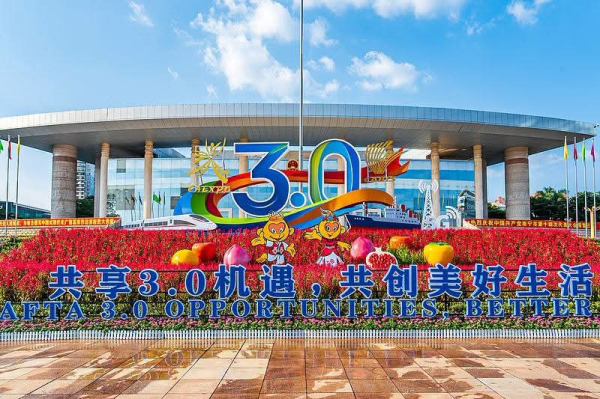
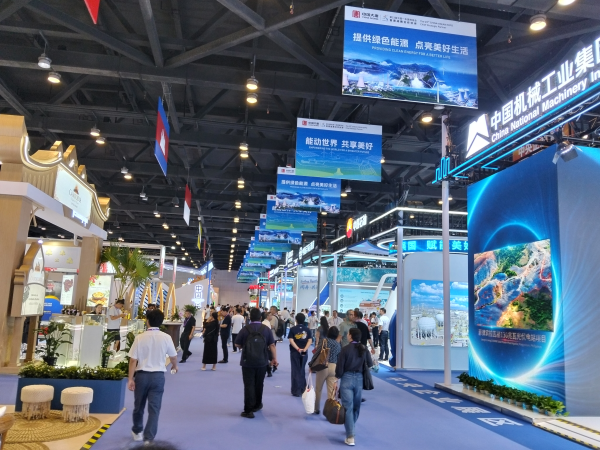
The 23rd China-ASEAN Expo (CAEXPO), taking place in Nanning, Guangxi Zhuang Autonomous Region, from September 17–21, has brought together more than 3,400 companies from over 70 countries and regions. Laos is participating with a business delegation led by Deputy Prime Minister and Standing Deputy Prime Minister Saleumxay Kommasith, with Sekong Province selected as Laos’ “City of Charm” for the 2026 expo.
Held under the theme “China-ASEAN Free Trade Area 3.0: Opportunities for a Better Life,” the expo highlights a broader vision for regional economic cooperation—moving beyond tariffs and trade volumes toward investment, digitalization, clean energy, food security and stronger supply chains.
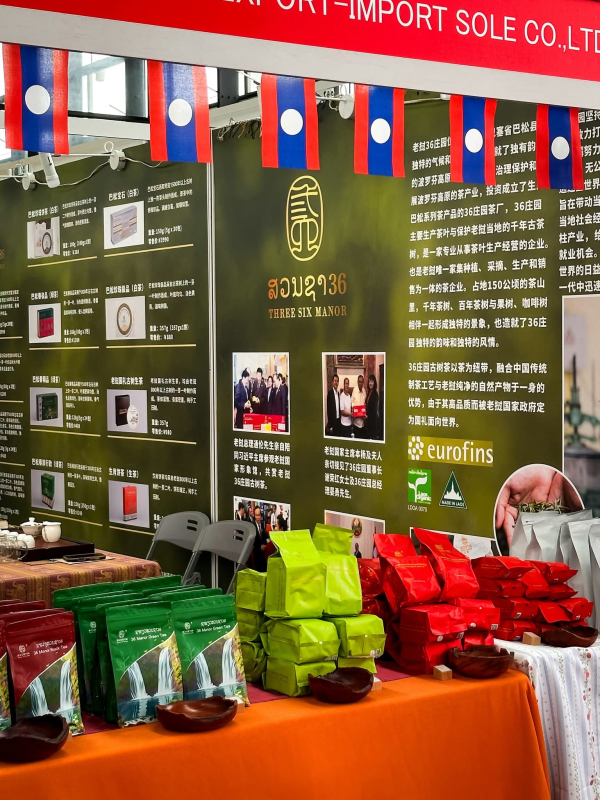
For Laos, the opportunity is particularly significant. China remains a huge potential market for Lao agricultural products, minerals, energy and other exports. But access to a large market alone will not guarantee success. Quality, international standards, production capacity, certification and efficient logistics will determine whether Lao businesses can expand their presence in China.T
hat makes the development of Lao small businesses and MSMEs increasingly important. Greater use of e-commerce, digital marketing and artificial intelligence could help Lao companies reach Chinese consumers more directly. AI could also support businesses in areas ranging from translation and market research to inventory management, supply-chain planning and product development.
Reducing non-tariff barriers is another key challenge. For agricultural exporters, food safety requirements, inspections, sanitary standards, origin certification and trade documentation can significantly affect the cost and speed of getting products to market. Improving these processes could strengthen the competitiveness of Lao exports.
The Laos-China Railway could provide another major opportunity. Rather than serving only as a route between Laos and China, the railway has the potential to become part of a wider China-ASEAN trade corridor. Chinese goods could move through Laos toward ASEAN markets, while ASEAN products could use Laos as a gateway to China.
This could give landlocked Laos a new strategic role—not simply as a country without direct access to the sea, but as a land-based bridge connecting major regional markets.
Sekong’s role at CAEXPO 2026 also highlights the potential for regional integration to reach beyond national capitals. By showcasing its agricultural products, tourism, culture and investment opportunities, the province can connect directly with Chinese and ASEAN businesses.
As CAFTA 3.0 moves toward implementation, the challenge for Laos will be turning these opportunities into practical gains for farmers, producers, businesses and local communities—and using its geographic position to become an increasingly important link between China and ASEAN.
KPL

