ຂປລ
Laos continues to face a severe legacy of unexploded ordnance (UXO), with an estimated 80 million unexploded cluster submunitions remaining across the country decades after the Indochina War, according to the National Regulatory Authority (NRA) for the UXO/AXO Sector.
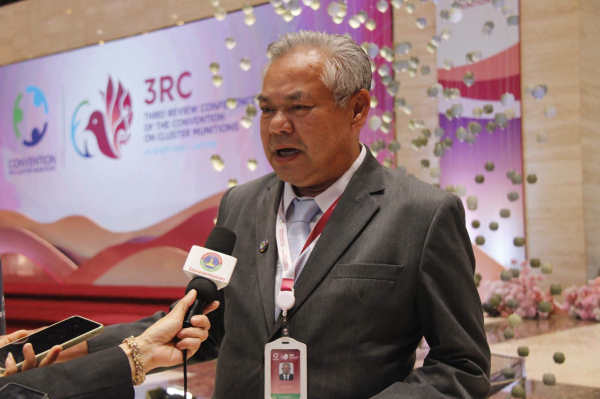
(KPL) Speaking to the media at the National Convention Centre on September 17 during the 3rd Review Conference of the Convention on Cluster Munitions (3RC-CCM), Mr. Bounpheng Sisavath, Head of the Office of the NRA for UXO/AXO in Lao PDR, said Laos was subjected to more than 580,000 bombing sorties, during which over 2 million tonnes of ordnance were dropped.
Among the weapons used were 17 types of cluster submunitions, commonly known as “bombies”. The BLU-26 is considered among the most hazardous. A single dispenser could carry up to 670 submunitions, with the resulting blast affecting an area of approximately 100 by 100 metres.
Technical assessments estimate that about 280 million bomblets were dropped on Laos, with an unexploded failure rate of up to 30%, leaving an estimated 80 million submunitions buried in soil, agricultural land and residential areas.
Over the past three decades, since 1996, clearance teams have destroyed more than 1.3 million bomblets and cleared over 100,000 hectares of contaminated land. However, the scale of the remaining contamination means that clearance at current rates could take hundreds of years, according to estimates presented by the authorities.
The enduring threat is particularly serious for rural communities, where people continue to work agricultural land and carry out daily activities in areas that may still contain unexploded devices. The NRA is therefore expanding risk education programmes nationwide, particularly among communities and schoolchildren.
Mr. Bounpheng urged people to avoid high-risk activities such as lighting fires in areas that may contain UXO, digging unfamiliar ground or touching, moving or attempting to dismantle suspected explosive items. Any suspected UXO should be left undisturbed and reported to the relevant authorities.
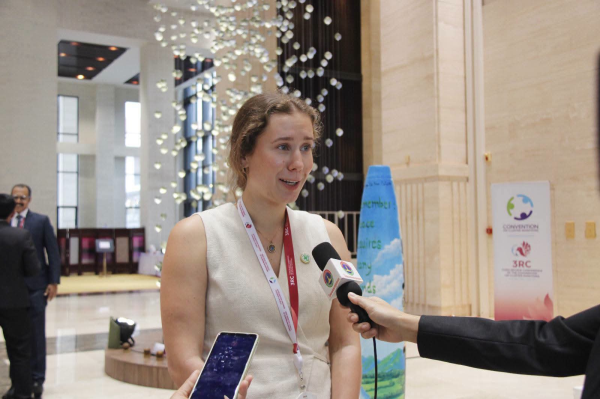
Ms. Luna Kvander Bruusgaard, Project Technical Officer for Norwegian People's Aid (NPA) in Laos, said the continued presence of UXO remains a serious humanitarian concern for communities across the country.
Drawing on field visits and discussions with clearance teams and affected communities in Champasak, Attapeu, Sekong and Xieng Khouang provinces, she said people continue to face UXO risks in their daily lives.
She called for sustained, long-term international funding to maintain clearance operations and ensure that UXO programmes remain responsive to the needs of affected communities.
For Laos, continued UXO clearance is not only a matter of removing remnants of war but also of making agricultural land and communities safer, supporting development and protecting future generations from a threat that has persisted for decades.
KPL

