ຂປລ
More than six decades after the war ended, unexploded ordnance (UXO) contamination continues to pose a serious challenge to safety, livelihoods and development in the Lao PDR, with the government and international partners continuing efforts to clear contaminated land and assist affected communities.
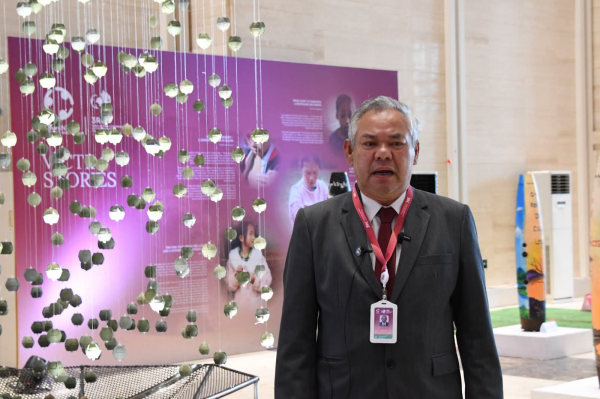
(KPL) More than six decades after the war ended, unexploded ordnance (UXO) contamination continues to pose a serious challenge to safety, livelihoods and development in the Lao PDR, with the government and international partners continuing efforts to clear contaminated land and assist affected communities.
Speaking to journalists on the sidelines of the 3rd Review Conference of the Convention on Cluster Munitions (3RC-CCM) on September 15, 2026, Mr. Bounpheng Sisavath, Head of the National Regulatory Authority for UXO/AXO Sector in the Lao PDR, said UXO clearance operations are currently being carried out in 13 provinces.
The operations focus on four main areas: UXO risk education, survey and clearance, victim assistance, and information management. Risk education programmes are particularly aimed at warning local communities and children about the dangers of UXO and helping prevent accidents.
The government is also working to keep the annual number of UXO-related casualties below the strategic target of 38 victims per year.
To date, UXO clearance teams have cleared and destroyed contaminated ordnance across 105,909.91 hectares, including 86,222.98 hectares of agricultural land and 19,686.92 hectares of land for development.
A total of 2,133,952 UXO items have been safely destroyed, comprising 5,239 large aerial bombs, 1,286,042 cluster submunitions (bombies), 2,954 landmines, and 841,717 other munitions and artillery shells.
Alongside clearance operations, victim assistance programmes have supported 1,928 survivors through medical treatment, physical rehabilitation, vocational training, employment support and psychological counselling for survivors and affected families.
Laos became a State Party to the Convention on Cluster Munitions (CCM) in 2009. The treaty provides for international cooperation and assistance to affected countries in clearing contaminated areas and supporting victims, survivors and persons with disabilities.
Mr. Bounpheng stressed the importance of continued national and international cooperation to accelerate UXO clearance, reduce casualties, assist survivors and affected families, and return contaminated land to safe and productive use.
The ongoing efforts are expected to contribute to safer living conditions and support socio-economic development in UXO-affected communities across the country.
KPL

