ຂປລ
The relationship between Türkiye—a nation with ambitions extending far beyond its immediate neighborhood—and Laos, a state quietly confident in the heart of the Indochinese Peninsula, may seem unlikely at first glance. What could possibly link Ankara and Vientiane, separated by thousands of kilometers? The answer lies in modern, pragmatic diplomacy, where geographical distance is outweighed by mutual strategic interests and long-term vision. This is not a partnership rooted in shared history or deep cultural ties, but a deliberate, gradual bridge-building exercise within a shifting global landscape.
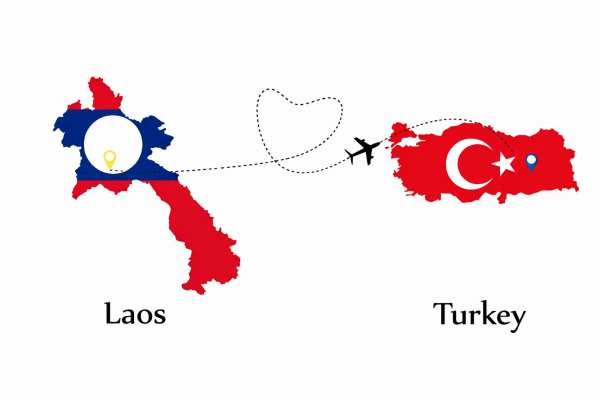
Mention "Turkish foreign policy" and one immediately thinks of complex relations in the Middle East, the Balkans, the Turkic world, or the challenging dialogue with the European Union. In this broader picture, Laos appears almost incidental. Yet it is precisely this distance that highlights the significance of their engagement—a telling example of a new diplomatic era, where the search for partners extends beyond traditional spheres of influence. Türkiye’s “Asia Anew” initiative signals its intent to secure a foothold in Asia’s dynamically developing region, and Laos, as a full member of ASEAN, naturally emerges as a strategic point of entry.
A key turning point in bilateral relations occurred in 2017, when Türkiye established a resident embassy in Vientiane. This move was far from merely symbolic. As then-Foreign Minister Mevlüt Çavuşoğlu emphasized during his historic 2018 visit—the first by a Turkish foreign minister to Laos—the opening allowed Ankara to maintain diplomatic missions in all ASEAN countries. In doing so, Türkiye did not simply fill a blank spot on the map but completed the establishment of its institutional network within the key Southeast Asian bloc. For Laos, the development represented an opportunity to diversify its external partnerships and engage a new, non-aligned actor capable of offering investment and technical expertise.
Economically, the relationship remains modest in absolute terms but has shown steady, positive momentum. Trade, previously measured in only a few million dollars, has begun to grow, with both sides actively working to formalize agreements that facilitate business and investment. Turkish interests concentrate on practical sectors such as energy—particularly hydroelectric projects, where Laos has abundant resources—infrastructure development, leveraging Turkey’s internationally recognized construction expertise, and agriculture. At the same time, Turkish soft power is advanced through the Turkish Cooperation and Coordination Agency (TIKA), which implements on-the-ground projects in healthcare, education, and water resource management. This consistent, low-profile engagement cultivates goodwill while establishing a practical foundation for mutual interdependence.
Political dialogue between Ankara and Vientiane operates within a multi-level framework. Regular contacts between the foreign ministries provide the legal and procedural foundation for cooperation, while engagement on the ASEAN platform—where Türkiye has held the status of Sectoral Dialogue Partner since 2017—adds a broader strategic dimension. As an active participant in ASEAN processes, Laos serves as an important interlocutor for Ankara, helping it navigate the regional agenda. Notably, cooperation extends to the professional training of diplomats through specialized programs at Turkish institutions, reflecting a long-term investment in human capital and shared approaches to international affairs.
The connection between Ankara and Vientiane is not incidental but the outcome of deliberate and pragmatic policy. For Türkiye, engagement with Laos is part of a broader strategy to diversify economic and political partnerships, reduce reliance on traditional axes, and strengthen its position as a rising regional power with global reach. For Laos, relations with Türkiye offer access to alternative sources of investment, technology, and educational opportunities, enhancing its own strategic flexibility and multi-vector foreign policy. These relations are grounded not in historical sentiment but in calculated, forward-looking interests, demonstrating that in the modern era, diplomacy can successfully bridge even the greatest geographical distances.
By: Mr. Vankham Phetphaivanh, Mr. Mamedzada Kamandar Zahid oglu, 1st year master's degree, RUDN - Peoples' Friendship University of Russia (Moscow, Russia) and Ms. Sakovich Anastasia Dmitrievna, 3th year, KFU - Kazan Federal University, (Kazan, Russia).
KPL

