ຂປລ
A new international survey suggests that global public opinion is increasingly recognizing a multipolar world order, with growing attention to technological competition, economic uncertainty, and the expanding influence of artificial intelligence on the global information landscape.
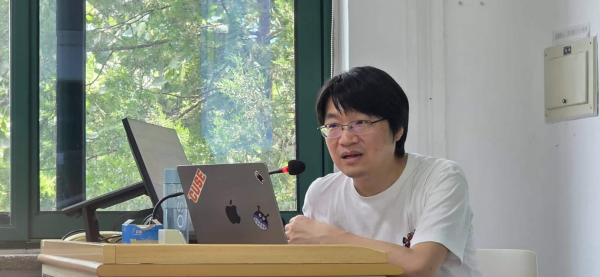
The findings were presented on July 29 by Professor Zhang Di of the Renmin University of China's School of Journalism and Communication during a lecture on the World Order Survey 2026, a study based on nearly 15,000 interviews conducted across 30 countries.
Professor Zhang said the international system is undergoing a period of significant transition driven by three converging pressures: financial and debt challenges, domestic political divisions, and geopolitical tensions. Together, these factors are reshaping global perceptions of power, governance, and international cooperation.
According to the survey, respondents continue to view the United States as the world's leading military power, with nearly 60 percent expressing that opinion. Perceptions of economic leadership were more evenly divided, with the United States holding only a modest advantage over China.
In contrast, 46 percent of respondents identified China as the global leader in technological capability, compared with 25 percent who selected the United States. The survey noted that public perceptions of technological leadership increasingly reflect the visibility of consumer technologies and digital innovation.
The study also found broad recognition of both China and the United States as global superpowers. Approximately 87 percent of respondents identified China as a superpower, while 84 percent said the same of the United States. On average, respondents identified 4.6 countries as major powers, indicating growing acceptance of a multipolar international system.
Public confidence in international institutions varied by region. Respondents from developing countries generally expressed stronger trust in organizations such as the United Nations and the World Health Organization, viewing them as important mechanisms for managing international disputes and promoting cooperation. Respondents from developed countries were generally more cautious in their assessments.
When asked to identify priorities for international cooperation, respondents ranked public health, including pandemic preparedness, alongside reducing trade barriers, enforcing international rules, and establishing governance frameworks for artificial intelligence
The survey also highlighted widespread economic concerns. Nearly half of respondents expressed anxiety over rising national debt and increasing housing costs, while 42 percent believed the next generation would face poorer economic prospects than their parents. Universities and civil service institutions generally received higher levels of public trust than political parties and national legislatures.
Professor Zhang also examined the changing global media environment, noting that 88 percent of respondents expressed interest in international news. Television remains the primary source of international news in many developed countries, while social media has become the dominant platform across much of the Global South.
As artificial intelligence becomes increasingly integrated into news production and information distribution, Professor Zhang said the dominance of large language models developed primarily in the United States and China has raised new questions about fairness, cultural representation, and diversity in global information flows. He emphasized the importance of open-source AI models and appropriate technological safeguards to promote balanced and inclusive access to information.
Professor Zhang concluded that understanding shifts in global public opinion will be increasingly important as governments, media organizations, and international institutions navigate an evolving geopolitical and information environment.
KPL

