ຂປລ
Standing atop the rugged ridges of the Yan Mountains, international journalists retraced thousands of years of Chinese history, exploring how the Great Wall helped shape the rise and fall of dynasties and remains one of the world's most remarkable engineering achievements.
Protected by the Yan and Taihang mountain ranges, Beijing has served as a strategic stronghold for more than three millennia. To defend against northern invasions, successive Chinese dynasties built and expanded what became the Great Wall, a vast network of fortifications stretching more than 21,000 kilometers.
.jpg)
Historians explained how beacon towers once formed an ancient communications system, transmitting military warnings across long distances using fire at night and smoke signals during the day.
One of the most famous stories linked to the wall dates back to 771 BC. According to Chinese history, King You of the Western Zhou Dynasty repeatedly lit warning beacons as a prank to amuse his favorite concubine, Bao Si. When enemy forces later launched a real attack, regional leaders ignored the signals, believing them to be false. The capital fell, and the Western Zhou Dynasty collapsed.
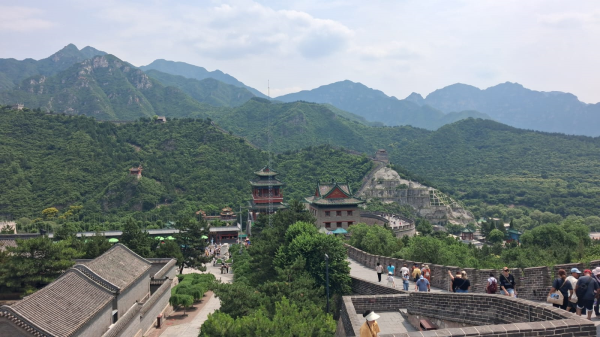
Journalists also learned about the dramatic transition from the Ming to the Qing Dynasty in 1644. Following internal rebellions and political turmoil, Ming general Wu Sangui opened the gates of Shanhaiguan Pass to Manchu forces, a move that paved the way for the establishment of the Qing Dynasty.
The Great Wall remained strategically important for centuries and saw one of its last major military roles in 1933, when Chinese troops used its defensive positions during clashes with Japanese forces.
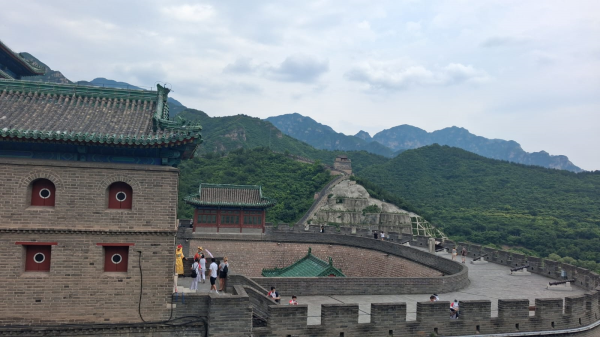
Today, the Great Wall stands as one of the world's most iconic landmarks and a UNESCO World Heritage site. Far more than a military fortification, it symbolizes China's rich history, cultural heritage and enduring spirit.
Drawing millions of visitors each year, the Great Wall remains a powerful reminder of the ingenuity, resilience and achievements of the Chinese people, as well as a treasured heritage of humanity.
KPL

