ຂປລ
In response to escalating global energy prices and supply chain disruptions originating from the Middle East, the Government of the Lao PDR has enacted a comprehensive suite of emergency measures.
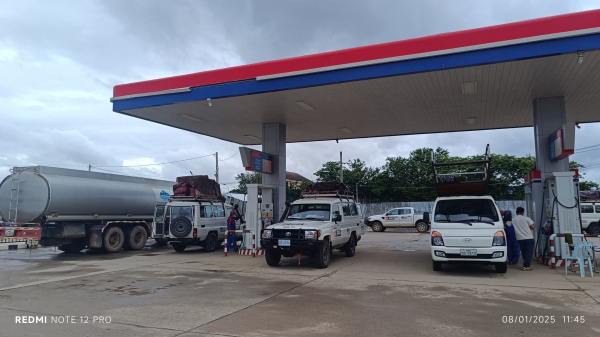
The Prime Minister’s latest directive aims to safeguard the national economy and insulate citizens from the rising cost of living and potential fuel shortages.
The mandate requires all ministries and state organizations to assume direct accountability for a multi-sectoral strategy designed to reduce dependency on fossil fuels while stabilizing the domestic market.
The government is leading a national austerity drive by implementing rigorous cost-cutting measures within state operations including virtual governance, operational shifts.
Official meetings involving long distance travel are to be transitioned to virtual and remote conferencing platforms.
Departments have been advised to implement rotating office schedules for general staff. To maintain administrative efficiency, the government has mandated the establishment of clear Key Performance Indicators (KPIs) to monitor remote work productivity.
The Ministry of Industry and Commerce, in collaboration with local authorities, will launch intensive inspections of fuel importers and retail stations. Entities found in violation of the Petroleum Business Decree will face decisive legal action, including mandatory restructuring.
To curb inflation, the government is also stabilizing the prices of essential agricultural commodities—such as rice, meat, and vegetables—to prevent "opportunistic" price hikes by wholesalers and retailers.
A cornerstone of the new policy is the accelerated transition to electric mobility, with a target of 10% EV integration across all transport sectors within 2026. To incentivize this shift, the government has introduced a "Fee-and-Dividend" style adjustment:
Fiscal Incentives: Registration and service fees for EVs will be reduced by 30%, while fees for internal combustion engine (ICE) vehicles will increase by 30%.
Infrastructure & Priority: The Bus Rapid Transit (BRT) system in Vientiane will be expanded to link directly with the Laos-China railway station and Wattay International Airport. Furthermore, EVs will be granted parking priority in congested urban zones.
Fleet Overhaul: The procurement of new fuel-based vehicles for administrative use is now restricted, with a long-term mandate to replace the state fleet with electric or renewable energy alternatives.
To ensure domestic food security, the Ministry of Agriculture and Forestry is tasked with transitioning the sector away from fuel-heavy machinery. The government will promote solar, wind, and biogas energy for irrigation, alongside the expansion of high-efficiency, gravity-fed water systems.
To support this transition, the Bank of Lao PDR will facilitate low-interest credit for farmers to purchase modern production inputs and mitigate the impact of rising operational costs.
Recognizing the volatility of foreign exchange markets, the central bank will coordinate closely with commercial institutions to ensure that legitimate fuel importers have prioritized and timely access to foreign currency. This mechanism is intended to maintain a consistent supply and prevent the fuel shortages that have previously affected the capital and provinces.
KPL

