ຂປລ
On March 24, Laos is accelerating plans for a landmark railway connecting the country to Vietnam’s coastline, with operations targeted to begin by 2030 following key legislative backing and government approvals.
(KPL) On March 24, Laos is accelerating plans for a landmark railway connecting the country to Vietnam’s coastline, with operations targeted to begin by 2030 following key legislative backing and government approvals.
The 562-kilometer Lao–Vietnam Railway, presented during the inaugural session of the 10th National Assembly, is expected to transform Laos into a regional transport hub by providing its first direct access to a deep-sea port.
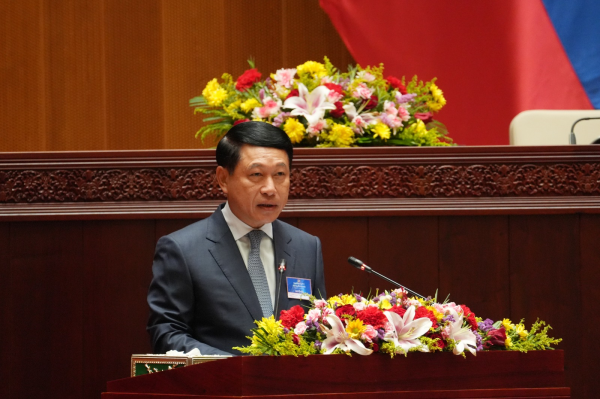
Deputy Prime Minister Saleumxay Kommasith outlined the project’s roadmap, describing it as central to the country’s long-term strategy to shift from a landlocked to a “land-linked” economy.
The electrified rail line will connect Vientiane with Vung Ang Port in Vietnam, forming a critical segment of the East–West Economic Corridor.
Phased Development Plan
The railway will be developed in three phases under a public-private partnership involving Lao authorities, Vietnam’s Deo Ca Group, and PetroTrade:
Phase 1A: A 147-kilometer stretch from Thakhek to the Mu Gia border, where survey and design work is nearing completion.
Phase 1B: A 103-kilometer segment from the border to Vung Ang Port, currently undergoing final approvals in Vietnam.
Phase 2: A 312.8-kilometer extension linking Vientiane to Thakhek, still under extended feasibility study to ensure technical readiness.
Designed for Regional Integration
Built using standard-gauge rail (1.435 meters), the line will be compatible with the Laos-China Railway, enabling seamless regional connectivity.
Passenger trains are expected to operate at speeds of up to 150 km/h, while freight services will run at approximately 80 km/h, supporting both logistics and passenger mobility.
Strong Financial Outlook
The US$6.6 billion project is projected to deliver solid returns, with an internal rate of return (IRR) of 7.1% and equity IRR of 11.2%. Developers anticipate a payback period of around 14 years after operations begin.
Officials say the railway will significantly reduce transport costs, enhance trade flows, and strengthen Laos’ integration into regional and global markets.
Construction Timeline
With around 90% of preparatory work completed on the Lao side—including environmental and technical assessments—construction is expected to begin in 2026.
The railway will operate under a 50-year concession agreement, overseen by a national steering committee and a dedicated negotiation body to ensure compliance with environmental and social safeguards.
KPL

