ຂປລ
The first Population and Housing Census of the Lao PDR was held in 1985, and since then, this national undertaking has been held systematically every 10 years. The 2025 census is the 5th census and preparation of this work project began at the end of 2021. This census differs from the previous one as it is the first one to use modern and digital technology.
Joint Op-ed by Mr. Santiphab Phomvihane, Minister of Finance, Deputy Head of National Steering Committee for the 5th Population and Housing Census (PHC), Dr Bakhtiyor Kadyrov, UNFPA Representative on the launching of Nationwide Field Data Collection of the 2025.
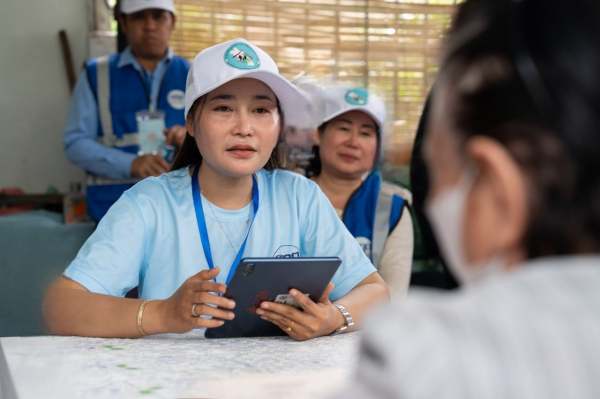
The Nationwide Field Data Collection of the 5th Population and Housing Census is scheduled to run from November 3 to December 28, 2025
The process of the census is divided into three phases: The first phase focuses on the collection of data on buildings and dwellings by using Geographic Information System (GIS) for creating Enumerator Areas (EAs) and training for master trainers, enumerators and supervisors to ensure they understand the objectives and methodology of the field data collection of the Population and Housing Census (PHC). The second phase is the field data collection of the PHC, and the third phase is the Post Enumeration Survey (PES), which is scheduled to take place in January 2026.
The nationwide field data collection of the PHC officially began on November 3, 2025, and is scheduled to last until December 28, 2025. During this field work, 12,000 enumerators will be deployed in every Enumerator Areas nationwide to collect data on people's living conditions, education, marital status, access to services, and migration patterns. Over these eight weeks, enumerators will conduct face-to-face interviews with residents, including foreigners who have been living in Laos for up to six months.
This 2025 Population and Housing Census is significantly relevant due to rapid changes in development situations within the country and the region, namely demographic structure, economic structure, urbanization, migration patterns, the labour market, education, infrastructure, and digitalization.
The evolving development situation requires the population and housing census to provide an updated change in the population number from the previous census, as well as changes in their living conditions.
In this connection, the accurate data from the 5th Population and Housing Census serves as an historical opportunity for the Lao PDR to update its population data system. This system, developed based on a geographic map, will be used as a reference for national socio-economic developments, particularly in prioritized development areas. In addition, the 2025 census makes a significant contribution to translating the government's agenda on digitalization. The census modernization does not only play key role in improving the administrative data system, governance, and planning in different sectors but also align with global development trends.
The 5th Population and Housing Census will serve as a significant source of accurate and complete data on population and housing conditions, namely: the number of the population disaggregated by age, ethnicity, religion, education, profession, fertility, death, health service, and infrastructure at the village, district, and provincial levels. The data from the census will provide a monitoring framework for the Lao government to track progress on the 10-year National Socio-Economic Development Plan, particularly for the finance sector to use as a reference for effectively and efficiently allocating the budget.
In addition to this, the data from this census will serve as a reference for improving population policy to ensure the Lao PDR benefits from the demographic dividend, human resource development policy, and to monitor progress in the country's graduation from LDC status and the Sustainable Development Goals (SDGs), particularly 107 of the total 232 indicators. All of these efforts will provide a strong foundation for improving national and international monitoring in all areas, including maternal mortality, school dropout rates, population distribution, and the living conditions of the population.
Furthermore, data from this census will aid the improvement of the country's population data collected over the past 10 years. The improved data will include the list of villages, households, GIS, and individual information, which will be used to improve and modernize the civil registration system. All of these efforts are part of the government's efforts to gradually improve the living conditions of the Lao PDR.
Apart from using modern technology, especially GIS and Computer-Assisted Personal Interviewing (CAPI) installed on 12,000 tablets, as a tool for data collection from private and collective households and Special Economic Zones—ranging from remote and mountainous areas to big cities—to ensure everyone is counted and visible, this census is also a people-centered census designed to ensure everyone gets involved in this task.
As said in his statement, Prime Minister Sonexay Siphandone called on every sector—including the public sector, private sector, local administration, and all social strata—to actively take part in the nationwide field data collection of the PHC. He also urged them to place this work as a national priority and a responsibility of everyone to jointly build the vision and future of the Lao PDR, bringing benefits to the government, civil society, and private sector, as well as to Lao ethnic groups around the country.
To conduct the 5th Population and Housing Census, the Census Steering Committee and all levels of the census offices brought together the public, civil society, and private sector. They also coordinated strongly with UNFPA, friendly countries, and development partners—namely China, Australia, Switzerland, Luxembourg, USA, Germany, UNICEF, and the World Bank to mobilize support for the preparation of the 5th Population and Housing Census.
To ensure that the 5th Population and Housing Census includes everyone and with high quality, efforts are shifting to the training of master trainers, enumerators, and supervisors to ensure they have adequate capacity to collect data from every person, especially from women, ethnic groups, and those of linguistic background, by using effectively using gender-sensitive questionnaires translated into local languages.
Mr. Kikeo Khaikhamphithoune, Deputy Prime Minister in charge of socio-economic affairs and Head of the Steering Committee for the 5th Population and Housing Census, said in his statement at the launching ceremony of the implementation process of the 5th Population and Housing Census, there is a call for a shift in focus to the effective and efficient training of Master Trainers, enumerators, and supervisors. In addition, focus should also shift to the census campaign in order to increase public awareness so that people are well-informed and understand the objective, trust the enumerators, and actively mobilize participation from all sectors to achieve the goals of the census.
Apart from capacity-building training, the Monitoring and Evaluating system has been set up. This work includes providing support and actively engaging with district authorities and supervisors to monitor the field data collection and send the report to the central census office daily. Through a dashboard, the central census office, the Lao Statistics Bureau, and the Ministry of Finance monitor the field data collection of the PHC. In addition, observers from UNFPA were deployed in the field nationwide to support the census monitoring.
After the field data collection is completed in 2025, the Post Enumeration Survey will be carried out. This national sample survey is scheduled to run from January 21 to February 21, 2026, to assess the coverage and quality of the census. All of these efforts are to ensure the census is quality and reliable, and to achieve at least 95 percent coverage.
After completion of the field data collection, the Lao Statistics Bureau will collaborate with UNFPA to shift focus to data analysis, database development, and reporting on different themes, namely: changes in population structure disaggregated by age, fertility, marriage status, death, birth, migration, urbanization, education, labor, disability, housing, living conditions of Lao people, gender equality, ethnicity, and linguistics. This report will serve as a reference for improving policies on the empowerment of women, youth, and children, in particular, to provide assistance to groups of people who are in need the most to ensure no one is left behind.
This civil database is a foundation for the development and integration of the national civil registration system. This database will be developed, integrated, monitored, and improved in the future, based on the registration of births and deaths from administrative data across different sectors. This effort is aimed at developing population administration as well as preparing for the next census.
The Lao Statistics Bureau of the Ministry of Finance enables wide access to population and housing data in line with its policies for public, private, and international organizations, civil society groups that work for women, youth, and people with disabilities, researchers, students, and individuals who need the data as a reference. This access is intended to support their planning, investment, and relevant decisions in order to bring benefits to national construction and development in the new era.
Lao Statistics Bureau, Ministry of Finance, enables access to population and housing data in line with policies to disseminate data to public, private, and international organizations, civil society organizations which work for women, youth, and people with disabilities, researchers, students, as well as individuals who need the data as a reference to support their planning, investment, and relevant decisions in order to bring benefits to national construction and development in the new era.
KPL

