ຂປລ
Lao PDR has shown greater resilience to the global oil shock triggered by the Middle East conflict in 2026, supported by sustained policy adjustments that helped lower inflation, stabilize the kip, rebuild foreign reserves, and improve debt dynamics.
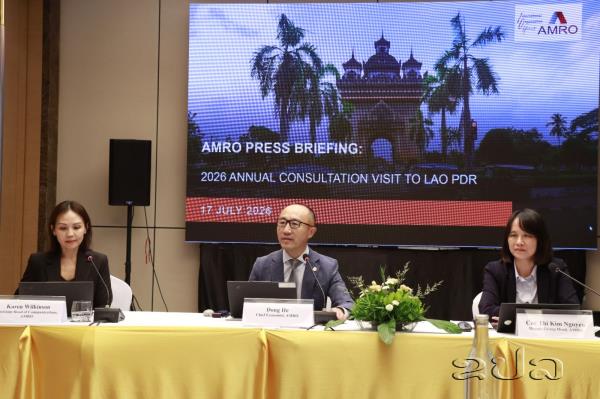
Continued policy discipline will be essential to preserve macroeconomic stability, reduce fiscal and external vulnerabilities, and strengthen resilience to future shocks.
This is the preliminary assessment of the ASEAN+3 Macroeconomic Research Office (AMRO) following its 2026 Annual Consultation Visit to the Lao PDR.
Led by AMRO Deputy Group Head Cuc Thi Kim Nguyen, the mission held discussions with the authorities on the economic impact of the oil shock, debt and financing vulnerabilities, and policy priorities to sustain reform momentum.
AMRO Director/CEO Yasuto Watanabe and Chief Economist Dong He also participated in key policy meetings.
Recent developments and outlook
“The Lao PDR has made important progress in restoring macroeconomic stability, but the recent oil shock highlights that policy buffers remain limited,” said Nguyen. “The authorities responded quickly by securing fuel supply, temporarily reducing fuel excise taxes, supporting foreign exchange liquidity, and promoting energy conservation. These measures have helped cushion the impact of the shock. Going forward, anchoring inflation expectations, preserving foreign exchange stability, and continuing fiscal reforms will be critical.”
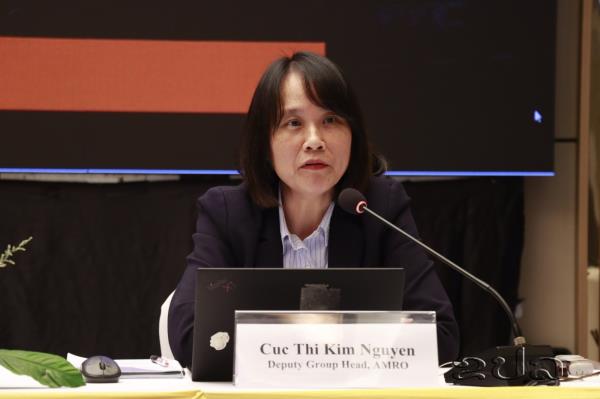
Growth is expected to moderate but remain solid at 4.6 per cent in 2026 and 4.7 percent in 2027, supported by tourism, agriculture and electricity exports, although higher fuel prices are expected to weigh on domestic demand.
Inflation is projected to average 8.1 per cent in 2026 before easing to 7.0 per cent in 2027, moving closer to the government’s target of 5±2 per cent. A broadly stable exchange rate should help limit the impact of higher fuel prices on domestic inflation.
Fiscal consolidation is expected to remain broadly on track, although the surplus may narrow as spending remains elevated while revenue growth moderates. Public debt is projected to continue declining under the baseline, but high foreign-currency debt service obligations will keep financing needs elevated.
The external position will likely remain supported by exports, foreign direct investment (FDI), continued debt deferrals, and improved market access following the successful Singapore bond issuance in 2025.
Official reserves reached USD 4.1 billion as of June 2026. However, higher fuel imports and fading solar cell exports are likely to weigh on the trade balance and slow reserve accumulation, underscoring the importance of continuing to rebuild buffers.
Risks, vulnerabilities, and challenges
Near-term risks have risen with the Middle East conflict. A prolonged period of high oil prices could slow economic growth, push up inflation, and widen the fuel import bill. Stronger demand for foreign currency could weaken confidence in the kip and increase the use of foreign currencies, adding pressure on the exchange rate.
Fiscal and external vulnerabilities remain significant because of high foreign-currency public debt and large financing needs. Uncertainty over future debt deferrals and restructuring arrangements, together with contingent liabilities, could further intensify liquidity pressures, particularly if global financing conditions tighten.
Over the medium term, the Lao PDR will need to raise domestic value added of exports, address labour shortages, and strengthen banking intermediation to support private-sector activity. Improving climate resilience and energy security will also be important to reduce the economy’s exposure to climate-related shocks and fuel price volatility.
Policy priorities
Macroeconomic policies should remain focused on anchoring inflation expectations, maintaining foreign exchange stability, and preserving external and fiscal buffers.
The central bank should be ready to tighten monetary policy if high fuel prices lead to broader inflationary pressures, including renewed exchange-rate pass-through to domestic prices.
The authorities should continue strengthening external resilience by rebuilding foreign reserves, maintaining confidence in the kip, and supporting sustained export growth and FDI inflows. Over time, as reserve buffers strengthen, foreign exchange management should gradually become more market-oriented, supported by further strengtheningof the reference exchange rate and deeper market infrastructure.
Fiscal policy should remain flexible in responding to near-term shocks while maintaining the broader fiscal consolidation path. Any fuel-related support should remain temporary and be better targeted where feasible. At the same time, the authorities should accelerate efforts to secure a sustainable medium-term external debt profile through comprehensive debt restructuring.
Developing the government bond market would also strengthen market-based financing.
Power sector reforms should continue to reduce public debt vulnerabilities and contingent liabilities. Electricity tariff adjustments should proceed alongside targeted support for vulnerable households where needed.
Financial sector reforms should focus on strengthening bank capital and provisioning buffers, accelerating the resolution of non-performing loans, and preserving bank lending to support economic activity. Developing a more active interbank market would also improve liquidity management and strengthen monetary policy transmission.
To support long-term growth, structural reforms should promote higher value-added downstream industries, attract quality FDI, expand vocational training, and enhance access to finance for micro, small, and medium-sized enterprises.
Reducing dependence on imported fuel, diversifying renewable energy sources beyond hydropower, and improving energy efficiency would further strengthen the Lao PDR’s energy security and climate resilience.
The AMRO team would like to express its appreciation to the Lao authorities and all stakeholders for their cooperation and valuable insights during the mission.
KPL

