ຂປລ
The election of members to the 10th National Assembly and the 5th Provincial People’s Councils is a significant political event and an important milestone in the exercise of democracy by the Lao people. It reflects the fundamental right and duty of citizens to participate in determining the leadership and direction of national and local governance.
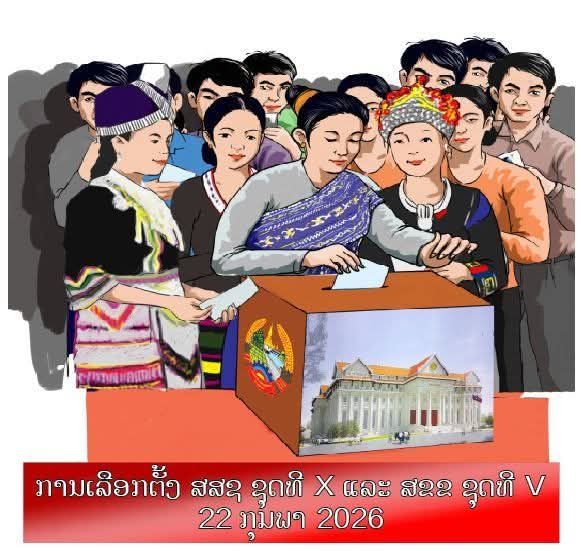
(KPL) The election of members to the 10th National Assembly and the 5th Provincial People’s Councils is a significant political event and an important milestone in the exercise of democracy by the Lao people. It reflects the fundamental right and duty of citizens to participate in determining the leadership and direction of national and local governance.
This election provides an opportunity for the multi-ethnic Lao people to select qualified, capable, and morally sound representatives to serve as members of the National Assembly and Provincial People’s Councils—institutions that represent the rights, interests, and sovereign power of the people.
Equal Rights and Democratic Participation
The election affirms the principle of equality and inclusiveness in Lao society. All Lao citizens, regardless of gender, ethnicity, social background, belief, religion, or place of residence, are guaranteed the right to vote and to stand as candidates in accordance with the law.
Eligible voters must be at least 18 years of age, while candidates must be 21 years of age or older and meet all qualifications prescribed by law. These provisions ensure broad participation while maintaining the quality and integrity of elected representatives.
Strengthening the Political System in the New Era
The election of the National Assembly and Provincial People’s Councils plays a crucial role in improving and strengthening the political system at both central and local levels. It contributes to refining the organizational structure and selecting competent personnel capable of fulfilling political duties with responsibility, efficiency, and effectiveness in the new era.
Through this process, the State enhances its capacity to ensure political stability, social order, and sustainable national development.
A Shared National Responsibility
The successful organization of the election is a major political responsibility of the Party, the State, and all relevant sectors at every level. It requires close coordination in preparation and implementation, as well as active mobilization of the people to participate fully and enthusiastically.
The election is to be carried out as a major national event and a festival of unity—conducted in a joyful, transparent, democratic, and lawful atmosphere—so that it achieves its intended objectives and truly reflects the will of the people.
KPL

