ຂປລ
At Savannakhet Technical and Vocational College, Ms. Sanga Bouaphavong has seen how quickly a young person’s future can change.
Some students arrive at the college after completing lower secondary school. Many are still under 18. They are learning vocational skills while also completing general education. Some are far from home. Some are still learning how to manage friendships, time, pressure and responsibilities.
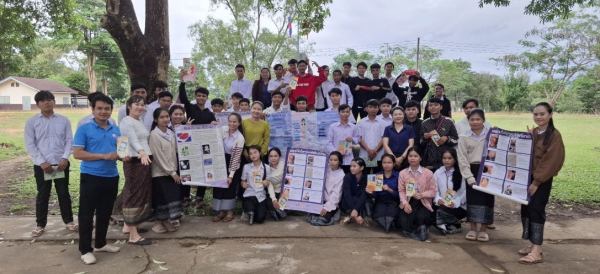
For Ms. Sanga, who serves as Deputy Head of the Academic Affairs Department, these realities are part of daily school life. Through her work with Comprehensive Sexuality Education, she has also seen the risks young people face when they do not have the right information at the right time.
“Through monitoring and observation, we saw that early pregnancy was one of the main reasons students dropped out,” she said. “Gaming addiction also affected students’ responsibility and time for learning.”
Ms. Sanga works with UNFPA-supported CSE activities as a coordinator, monitoring and evaluation focal point, and master trainer. Her role is practical: bringing teachers together, organizing activities, following progress, and making sure students receive information in ways they can understand.
At her college, CSE is delivered through structured activities outside the formal curriculum. Teachers gather students from different departments and vocational tracks, including fields where classes may be mostly male or mostly female. The aim is to create spaces where students learn together, listen to each other, and discuss topics that are often left unspoken.
A team of trained facilitators guides students through different learning stations. Each station covers a CSE theme. Students move in small groups, allowing them to ask questions more freely and participate without feeling exposed.
.jpeg)
The approach has changed the atmosphere.
Ms. Sanga says students who have joined CSE activities now understand more about preventing sexually transmitted infections and unintended pregnancies. They also learn about rights, violence prevention, equality and respect for diversity. On campus, she has noticed students becoming more polite, more respectful of one another, and more aware of how their choices can affect their future.
“Before, we had many cases of students leaving school because of early pregnancy,” she said. “Recently, we have seen those cases decline.”
For Ms. Sanga, this progress matters because education is fragile for many young people. One pregnancy, one unsafe relationship, one harmful decision, or one moment of pressure can interrupt years of effort. In vocational education, where students are building skills for work and independence, staying in school can make a lasting difference.
Yet challenges remain. CSE is still not fully integrated as a dedicated subject in the vocational education curriculum. Teachers must find time outside regular classes or insert topics into other activities. This limits how often students can learn and how deeply teachers can cover sensitive issues.
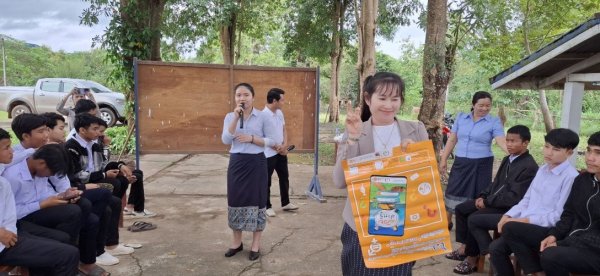
Ms. Sanga hopes CSE will continue to grow in the Lao PDR’s education system, with stronger materials, more trained teachers and more space in the curriculum.
For UNFPA, her work shows the importance of supporting teachers who know their students, their communities and the pressures young people face.
“When teachers are equipped to discuss health, relationships, safety and respect with young people, schools become places where futures are protected,” said the UNFPA Representative in Lao PDR. “Ms. Sanga’s work shows how CSE can help keep girls and boys in school, reduce preventable risks, and support young people to make decisions with confidence.”
Ms. Sanga believes the change begins when adults are willing to talk honestly with young people.
Her message is clear: students need guidance before they face problems, not after.
“They need knowledge,” she said. “They need to understand how to protect themselves and respect others.”
KPL

