KPL
Journalists from across the Asia-Pacific region visited the Museum of the Communist Party of China on May 19, where they explored a comprehensive exhibition tracing the century-long journey of the Communist Party of China (CPC) through historical artifacts, interactive displays, and advanced immersive technology.
Located in Beijing, the museum is a large-scale national institution dedicated to presenting the history and development of the CPC. The building combines contemporary architecture with traditional Chinese-style pillars, symbolizing stability and national strength. Large red flags atop the structure serve as one of the museum’s most recognizable features.
The museum’s main exhibition, titled “Staying True to the Original Aspiration and Keeping the Mission Firmly in Mind,” chronicles the CPC’s development from its founding in 1921 through 2021.
Before entering the main exhibition halls, visitors are introduced to interactive digital experiences that provide a virtual journey across China. Through immersive technology, guests can explore Chinese cities, experience deep-sea exploration reaching depths of more than 10,000 meters, and view advancements in aviation, aerospace, and space exploration.
The exhibition is divided into four chronological sections covering key periods in China’s modern history and the development of the CPC.
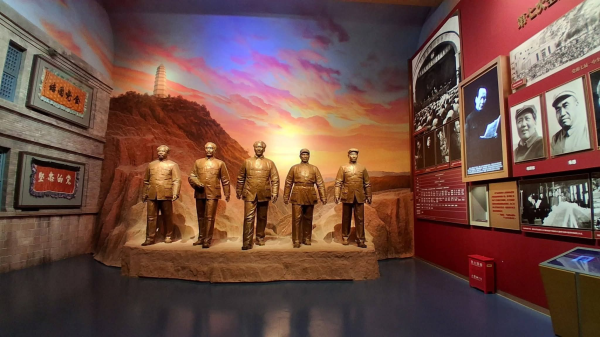
The first section focuses on the founding of the CPC and the victory of the New Democratic Revolution from 1921 to 1949. Exhibits recreate major historical events that shaped modern China, including the destruction of the Old Summer Palace by Anglo-French allied forces in 1860.
A replica of the historic Shikumen building on Xingye Road in Shanghai marks the site where the 1st National Congress of the CPC convened in July 1921. The exhibition also highlights the famous “Red Boat” on Nanhu Lake in Jiaxing, Zhejiang Province, where the meeting continued after facing surveillance by French authorities. The “Red Boat Spirit” has since become a symbol of dedication and revolutionary determination.
The section also presents exhibits on the Nanchang Uprising of 1927, the revolutionary base established in Jinggangshan, and the Long March. Interactive displays vividly portray the hardships endured by the Red Army as they crossed mountains and marshlands during the historic military retreat.
The second section focuses on the founding of the People’s Republic of China in 1949 and the country’s early nation-building efforts. Visitors can view archival footage of Mao Zedong proclaiming the establishment of the new nation at Tiananmen Square, along with displays of the first national flag raised during the ceremony.
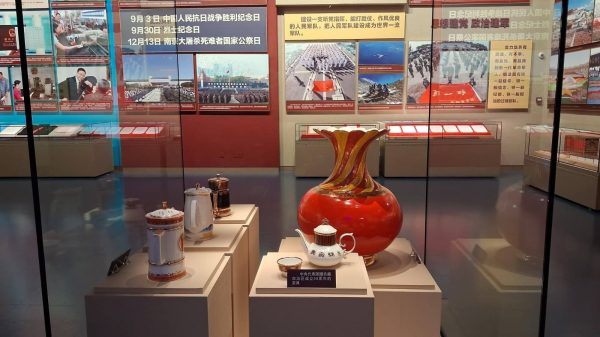
Historical photographs, official documents, and artifacts illustrate China’s early economic recovery, land reforms, and the establishment of state institutions during the country’s formative years.
The third section highlights the reform and opening-up era initiated under Deng Xiaoping after 1978. Exhibits focus on China’s economic transformation, diplomatic expansion, and modernization process.
One major highlight is Deng Xiaoping’s historic 1979 visit to the United States at the invitation of President Jimmy Carter, marking the first official visit to the United States by a senior Chinese leader.
The exhibition also recreates scenes from daily life in China during the 1980s, including replicas of homes, shops, bicycles, and household appliances that reflect the country’s transition toward modernization. Displays on industrial development feature early domestic products such as the Flying Pigeon bicycle, one of China’s best-known manufacturing brands during that period.
Additional exhibits document major milestones including the establishment of Special Economic Zones, the return of Hong Kong and Macao, and China’s accession to the World Trade Organization.
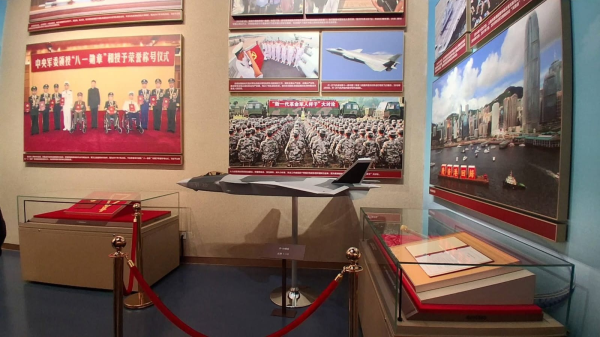
The final section highlights China’s rapid development since 2012 under the leadership of President Xi Jinping. Exhibits focus on poverty alleviation, rural revitalization, scientific innovation, space exploration, and China’s response to the COVID-19 pandemic.
The section also showcases the Belt and Road Initiative, which has expanded cooperation between China and more than 150 countries worldwide.
Scientific and technological achievements featured in the exhibition include China’s lunar exploration program, the Tianwen Mars exploration mission, and the domestically produced COMAC C919 commercial passenger aircraft.
The Museum of the Communist Party of China offers visitors not only a historical account of the CPC, but also a broader perspective on China’s transformation, modernization, and national development over the past century.
KPL

