KPL
Primary forests across Southeast Asia and the Pacific underpin the region’s agrifood systems and societies. They hold globally irreplaceable biodiversity, store vast carbon reserves, regulate the water cycle on which agriculture depends, and are foundational to the cultural identity and livelihoods of Indigenous peoples and local communities.
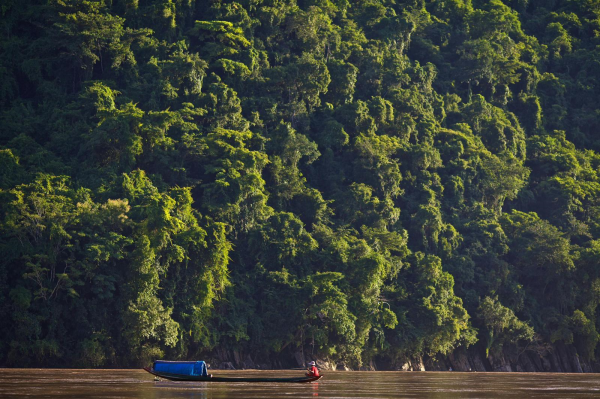
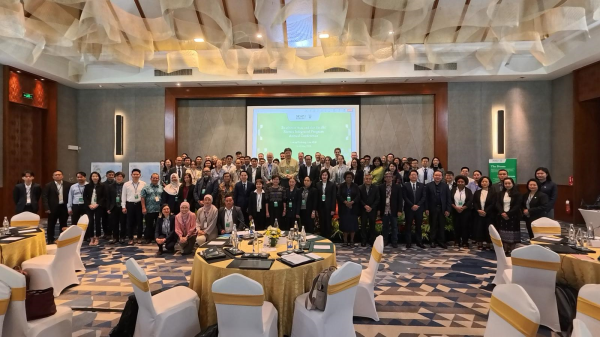
Yet, growing pressure from land-use change, infrastructure expansion and the growing impact of climate change are putting these ecosystems at risk. To address these challenges government officials, Indigenous peoples, scientists and private sector leaders gathered today for the first annual conference of the Southeast Asia and the Pacific Forests Integrated Programme (SEAP Forests IP) to accelerate regional action to conserve primary forests.
The programme aims to protect and conserve the region's remaining primary forests through integrated and sustainable landscape approaches.
Co-led by the International Union for Conservation of Nature (IUCN) and the Food and Agriculture Organization of the United Nations (FAO), the project channels USD 42.4 million in Global Environment Facility (GEF) grants and USD 185 million in co-financing to a regional coordination project and three country projects in the Lao PDR, Papua New Guinea and Thailand.
“Primary forest conservation cannot succeed in isolation – it requires aligning agriculture and forestry priorities, managing land-use trade-offs, and scaling integrated solutions such as agroforestry and decoupling agriculture from primary forest loss," said Alue Dohong, FAO Assistant Director-General and Regional Representative for Asia and the Pacific.
"The biodiversity, carbon stocks and cultural heritage of primary forests cannot be recreated once lost. Through the SEAP Forests IP, IUCN is proud to bring together the regional partnerships and scientific expertise needed to translate urgency into lasting conservation action,” said Dr Dindo Campilan, Regional Hub Director, Asia and Oceania, IUCN.
“This programme has been instrumental to create a multi-stakeholder platform, gathering representatives from governments, regional institutions, research centers, and NGOs from all the forest biome,” said Jean-Marc Sinnassamy, Senior Environmental Specialist and lead of the SEAP Integrated Programme at the GEF. "It sends a powerful message that nine countries have committed to participate.” The conference deliberately aligns with the International Day for Biological Diversity (22 May), positioning primary forests at the centre of efforts to deliver the Kunming–Montreal Global Biodiversity Framework— including Target 3 on protected and conserved areas, and targets on restoration, sustainable use and equity. Hosted by the Government of the Lao PDR through the Department of Forestry, Ministry of Agriculture and Environment, the conference provides a space for cross-country learning and strengthens collaboration with key regional bodies, including the Association of Southeast Asian Nations and the Asia-Pacific Forestry Commission. Partners will also showcase initiatives and complementary programmes that can deepen implementation of the SEAP Forests IP through joint action and shared learning.
The SEAP Forests IP is part of a GEF coordinated global response to forest loss. Together with GEF8 Critical Forest Biomes Integrated Programmes for the Amazon, Guinean Forests, Mesoamerica, and the Congo Basin, it will drive change across the world's most important tropical forest landscapes.
KPL

