ຂປລ
The African Union Commission (AUC) hosted a two-day international workshop titled “The Role of Faith Communities and Ethical Organizations in Advancing Justice for Africans and People of African Descent through Reparations” from February 27-28, 2025, at Kuriftu Resort and the AU Commission headquarters.
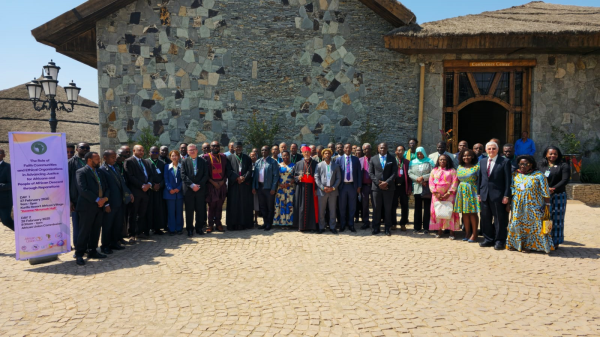
(KPL) The African Union Commission (AUC) hosted a two-day international workshop titled “The Role of Faith Communities and Ethical Organizations in Advancing Justice for Africans and People of African Descent through Reparations” from February 27-28, 2025, at Kuriftu Resort and the AU Commission headquarters.
Throughout the workshop, participants discussed strategies to align faith-based initiatives with the AU’s 2025 agenda, which is dedicated to promoting justice through reparations.
These discussions culminated in a signing ceremony, where representatives from the participating organizations pledged to support the AU’s efforts and engage in joint initiatives for policy advocacy and community engagement.
Approximately 70 dignitaries attended the workshop, including Amma Adomaa Twum-Amoah, Ambassador of Ghana, Monique Nsanzabaganwa, Deputy Chairperson of the African Union, and Sousan Massoud, UNESCO Regional Director for Eastern Africa.
The workshop aimed to deepen cooperation between the African Union and faith-based organizations in addressing reparative justice and historical accountability.
In her opening remarks, Monique Nsanzabaganwa, Deputy Chairperson of the African Union Commission, stressed the need for faith communities and ethical organizations to play a pivotal role in advancing justice for Africans and people of African descent.
Reparations have been a longstanding issue for Africans and people of African descent, as historical injustices—including colonial exploitation, the transatlantic slave trade, and systemic discrimination—have left lasting socio-economic consequences. Recognizing the need for a comprehensive response, the African Union (AU) has designated 2025 as the “Year of Justice for Africans and People of African Descent Through Reparations,” an initiative officially launched during the 38th AU Summit in February 2025.
This year-long focus has played as a background inspiration of the event addressing reparative justice through a combination of legal, political, economic, and social measures, while also emphasizing the ethical and spiritual dimensions necessary for true reconciliation and healing.
Attendees shared reflections on the workshop’s outcomes. Amma Adomaa Twum-Amoah, Ambassador of Ghana, commended the event for fostering unity among diverse stakeholders and expressed hope that it would serve as a catalyst for sustained collaboration. Monique Nsanzabaganwa, Deputy Chairperson of the African Union, highlighted the moral responsibility of faith-based organizations in advancing reparative justice.
Sousan Massoud, UNESCO Regional Director for Eastern Africa, praised the cultural exchange as a means to strengthen cross-cultural understanding and promote healing.
The key outcome of the workshop was the formal adoption of the Addis Ababa Declaration by Religious, Ethical, and Scientific Organizations on Reparations proclaimed in AU, which emphasizes the moral and legal imperatives of implementing reparations. Written by the hosting organizations, The declaration acknowledges the profound and lasting effects of slavery, colonialism, and racial discrimination on Africans and people of African descent. It also calls for concrete actions, including the establishment of an AU Committee of Experts on Reparations to develop a unified African policy and implement an African Programme of Action on Reparations.
The declaration further advocates for recognizing ecological debt as part of the reparations framework, addressing the environmental harm caused by colonial exploitation and resource extraction.
The declaration holds open position in specifying the liable parties of the reparations. As it characterizes reparations as overcoming the past with collective global efforts rather than seeking for compensation from the obligors of colonial age.
It also proposes the formation of an Ethical Reference Group to guide the AU’s reparations efforts and urges the African Union to declare a Decade of Reparations to raise global awareness and promote restorative justice.
KPL

