KPL
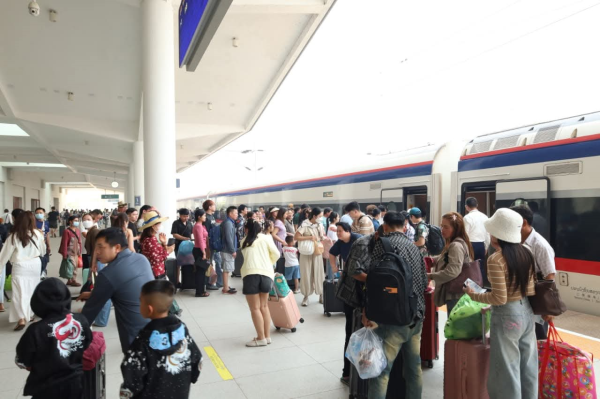
Laos–China Railway’s Luang Prabang Station has emerged as the busiest passenger hub along the line, playing a key role in driving socio-economic growth in northern Laos.
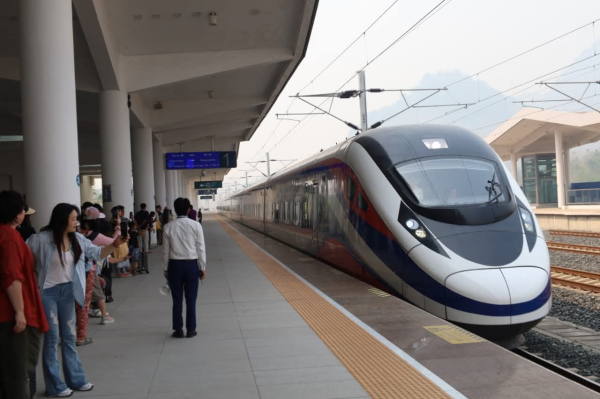
The station has significantly contributed to development in Luang Prabang Province, particularly in tourism, hospitality, and employment. Rising visitor numbers have led to increased incomes and improved living standards for local residents, alongside rapid expansion in tourism-related services and infrastructure.
Speaking during a media visit organized by Laos–China Railway Company Limited, station head Yin Zhaoliang highlighted the facility’s strategic importance. The visit, held under the theme “Experiencing the Atmosphere Along the Laos–China Railway,” marked the third anniversary of cross-border railway operations on April 16, 2026.
According to Yin, the station handles both passenger and freight services, recording the highest passenger volume along the railway while also managing substantial cargo throughput. Its modern infrastructure includes an 8,000-square-metre passenger hall with a capacity of up to 1,200 people.
Architecturally, the station reflects Lao cultural identity, drawing inspiration from Wat Xieng Thong and the Luang Prabang National Museum. Design elements feature lotus patterns and Buddhist motifs, while a “Tree of Life” symbol at ticket gates represents the country’s deep-rooted Buddhist traditions.
On the logistics side, the station is equipped with two freight loading tracks capable of handling up to 58 railcars simultaneously. It also offers storage for more than 1,200 containers and operates two container cranes to ensure efficient cargo operations.
Since the railway began service, Luang Prabang Station has recorded more than 4.36 million departing passengers and 4.03 million arrivals. The number of hotels in the province has more than tripled compared to pre-railway levels, underscoring the line’s strong impact on tourism.
Nationwide, the railway has generated approximately 100,000 jobs. Around the station, daily transport services include more than 400 vans, 10 buses, and over 500 drivers facilitating passenger transfers. Many workers now earn close to 7 million kip per month, benefiting from stable employment and improved livelihoods.
Beyond tourism, the railway has also boosted agricultural development. Rubber companies have leased about 100 hectares of land in the province, employing more than 2,000 Lao workers with average monthly incomes exceeding 3,000 yuan. Meanwhile, Gaosheng Group has promoted cassava farming through a company–farmer partnership model involving over 50,000 households. The initiative produces around 150,000 tonnes of cassava starch annually and increases farmers’ incomes by an average of 8,000 yuan per person.
Officials say the continued expansion of Luang Prabang Station highlights the broader economic benefits of the Laos–China Railway, reinforcing its role as a key engine of national development.
KPL

