KPL
The inaugural session of Laos’ 10th legislature officially opened on March 23, bringing together top leaders and representatives from across the country to address key national priorities.
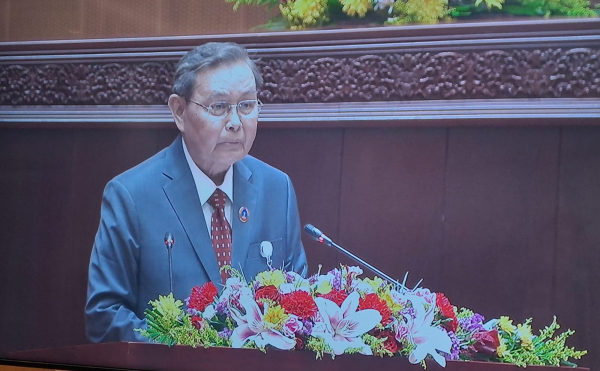
The opening ceremony was attended by President Thongloun Sisoulith, President of the National Assembly Xaysomphone Phomvihane, Prime Minister Sonexay Siphandone and members of the National Assembly.
The five-day session, running from March 23 to 27 at the National Assembly, marks the formal commencement of the 10th National Assembly’s term and a pivotal moment in the country’s political calendar.
Addressing the opening, the National Assembly President confirmed that the session will launch the new legislative term while tackling a broad range of fundamental national issues.
Proceedings began with a report from the National Election Committee on the outcome of the recent general elections, followed by the official certification of elected members.
A central focus of the session will be the election and approval of key state leadership positions. Lawmakers are expected to appoint the President and Vice Presidents of the National Assembly, along with members of its Standing Committee and committee chairpersons.
The Assembly will also elect the President and Vice President of the Lao PDR, as well as the Prime Minister. In addition, it will approve the structure of the new government and endorse the appointment of deputy prime ministers and cabinet members.
Key appointments will extend to the judiciary and oversight bodies, including the President of the Supreme People’s Court, the Prosecutor General, and heads of the State Audit Organization and State Inspection Authority.
Beyond personnel decisions, lawmakers will review and approve major strategic frameworks, including the 10th National Socio-Economic Development Plan for 2026–2030. The session will also consider a government proposal for a railway project linking Thakhek in Khammouane Province to the Mu Gia border with Vietnam under a Build-Operate-Transfer (BOT) model.
Additional agenda items include five-year strategic plans for judicial and state oversight institutions, as well as legislative development and amendment plans for the new Assembly term.
The inaugural session is expected to adopt a total of 19 resolutions.
During the session, lawmakers will also hear a comprehensive report from Prime Minister Sonexay Siphandone on the implementation of the national socio-economic development plan, the state budget, and monetary policy for the first half of 2025. The report will include updates on two national agendas: addressing ongoing economic and financial challenges, and combating drug-related issues.
KPL

