KPL
While many people believe honey comes only from the wild, beekeeping can be successfully developed with proper equipment, knowledge, and a suitable location. This is demonstrated by Professor Tue Surinthon, former Head of the Technical Department at the Faculty of Agriculture, National University of Laos, who has transformed decades of academic study into a profitable beekeeping enterprise.
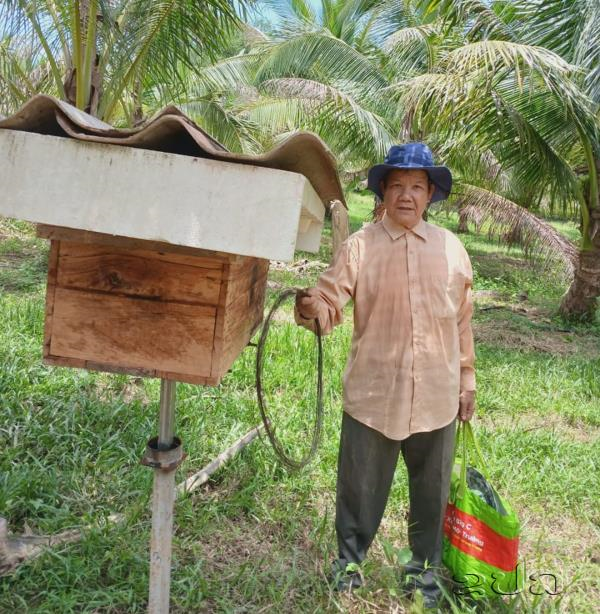
Professor Tue said he studied beekeeping in Russia from 1978 to 1983. Although he did not begin beekeeping immediately after graduation, his interest turned into practice in 1995 when a swarm of native honey bees settled in an old car tire. Since then, he has been raising bees continuously for more than 30 years.
He explained that beekeeping has both advantages and challenges, but overall requires far less daily care than other forms of livestock. Beekeepers mainly need to provide suitable hives, while bees naturally forage within a 3–5 kilometer radius. Honey is typically harvested during April and May. Another key benefit is access to fresh, unadulterated honey.
According to Professor Tue, beekeeping does not require large areas of land. Shaded locations away from direct sunlight, preferably near natural forests, are ideal. He noted that last year alone, his income from beekeeping-related activities reached approximately 200 million kip, mainly from selling empty bee boxes, boxes with bees, live bees, and queen bee attractant spray, which he produces himself.
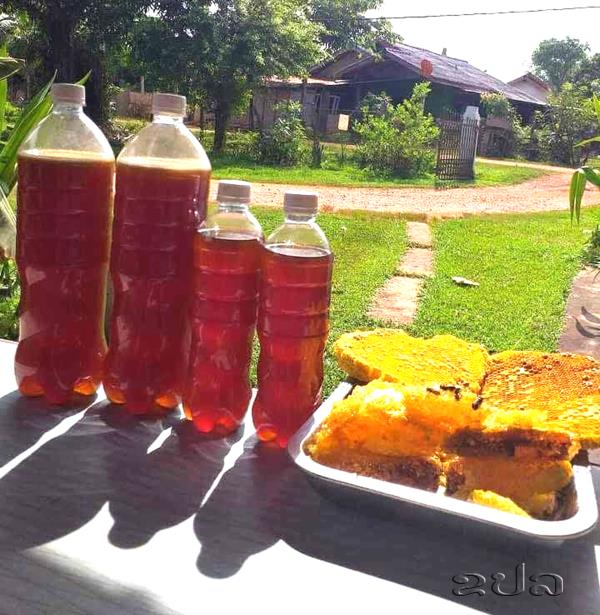
He also emphasized that bees are not as dangerous as commonly believed. “If we are friendly to them, they are friendly to us,” he said, adding that all forms of life should be conserved and coexist sustainably.
For those interested in beekeeping, basic materials such as wooden boxes, old tires, or unused speakers can be used after coating them with melted beeswax. Queen bee attractant spray can also help draw bees into new hives.
For further information or to purchase beekeeping equipment, beeswax, queen bee attractant spray, or fresh honey, interested individuals may contact 020 2823 1436.
KPL

