KPL
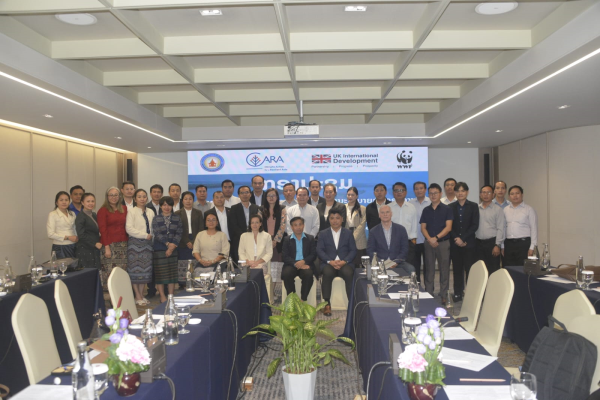
Implementing partners of the project “Safeguarding the Mekong: Advancing Sand Governance and Biodiversity Protection for Climate Resilience in Laos” organized a roundtable meeting to present and discuss initial research findings related to policies and practices on sand mining along the Mekong River and its tributaries in the Lao PDR.
The project is supported by the Climate Action for a Resilient Asia (CARA) initiative and is implemented as a partnership between WWF-Laos and the Lao Academy of Social and Economic Sciences (LASES), with financial support from the Government of the United Kingdom of Great Britain and Northern Ireland, through the Foreign, Commonwealth and Development Office (UKFCDO).
The meeting was co-chaired by the Head of the Research Management Office of LASES, the Deputy Director of the Department of Environment under the Ministry of Agriculture and Environment, and the Country Director of WWF-Laos. It brought together participants from relevant government agencies, academic and research institutions, civil society organizations, and development partners. Discussions provided a constructive platform for dialogue on freshwater governance and the regulatory framework surrounding sand and gravel mining in the Mekong River basin.
Participants exchanged perspectives on current practices, institutional coordination, and the role of research in informing effective and practical policy responses.
Initial research findings and results from rapid assessments presented during the meeting highlighted growing environmental pressures facing the Mekong River and its tributaries, including riverbank erosion, habitat degradation, impacts on biodiversity, and potential risks to the livelihoods of communities that depend on the river system.
The discussions also examined policy and regulatory gaps identified through desk reviews, particularly challenges related to implementation, coordination, and enforcement. Without effective governance, unmanaged sand mining can increase environmental pressures and undermine long-term river health and community resilience. Continued collaboration and shared learning will be key to strengthening sustainable sand mining governance in the Mekong basin.
Participants underscored that effective and coordinated governance is essential to ensure that sand mining activities are managed sustainably and in a way that balances development needs with environmental protection and long-term resilience.
The meeting also served to validate initial findings, gather stakeholder feedback, and identify priority areas for future policy engagement under the project.
KPL

