KPL
(KPL) The government has disclosed that the majority of the workforce for the Laos-China high-speed railway construction project will be sourced locally.
Deputy Minister of Public Works and Transport Lattanamany Khounnyvong has said that both Laos and China have agreed to hire Lao nationals as the main workforce during the five years of project construction.
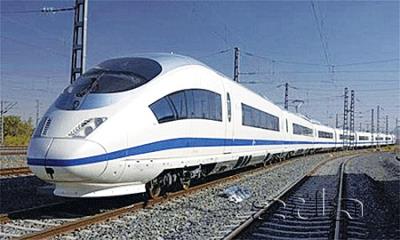
(KPL) The government has disclosed that the majority of the workforce for the Laos-China high-speed railway construction project will be sourced locally.
Deputy Minister of Public Works and Transport Lattanamany Khounnyvong has said that both Laos and China have agreed to hire Lao nationals as the main workforce during the five years of project construction.
The multibillion-US-dollar construction project officially began in Vientiane Capital on 2 December while Lao people across the country marked their 40th national anniversary.
Mr Lattanamany said that the cost of Lao workers is lower than workers from neighbouring countries and it is less difficult for them to travel between their homes and the construction site.
Yet, Mr Lattanamany said that the decision on the size of workforce for the construction project would be made by the contractor “Laos-China Joint Venture”.
“The Ministry of Public Works and Transport will collaborate with the ministries of Public Security, Foreign Affairs, and Labour and Social Welfare to manage and facilitate overseas workers to ensure order and safety during the construction.
The Laos-China high-speed railway will link Vientiane Capital with China and other ASEAN member countries.
The railway will stretch 427 km, from the Laos-China borderline in Phongsaly Province to Vientiane Capital. The rail will be connected with the new railway bridge spanning the Mekong between Vientiane and Thailand’s Nongkhai Province.
The railway is designed as a standard Class 1 single track. It will be equipped with international standard gauge track that has a width of 1.43 m.
The passenger trains will be designed for a speed of 160 km/h, while the speed of the flat terrain transport between Vangvieng and Vientiane Capital will be 200 km/h. The traction system will be electrically powered.
Up to 33 stations will be built along the rail line including 21 by-pass stations, 11 passenger stations and 1 main freight station.
The major construction activities will be building 175 km of track, 170 bridges with a total length of 69 km, and 72 tunnels with total length of 183 km. The longest tunnel will be about 9.5 km.
The total project cost is estimated at 38.7 billion yuan (over US$6 billion), which is about 90.6 million yuan (approx. US$14 million) per kilometre.
China will be responsible for 70 per cent of the total investment, while Lao will bear the remainder.
KPL

