KPL
(KPL) In 1994, with assistance and technical support from China, the first cement plant in Laos, Lao Vangvieng Cement Company Limited, was completed and put into operation. The production of Kating Thong brand Cement by the plant ended the history of Laos' inability to produce cement independently and cultivated the first batch of talents in the cement industry, including Thanhchay. This marked the beginning of a new chapter in Laos' industrial development. Due to its unique significance, in 1997, the Lao government printed the full view of Lao Vangvieng Cement Company Limited on the highest value banknote, 5000-kip, at that time.
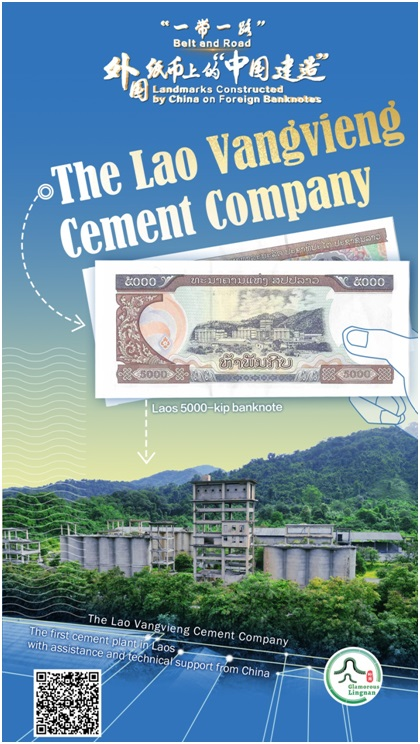
(KPL) In 1994, with assistance and technical support from China, the first cement plant in Laos, Lao Vangvieng Cement Company Limited, was completed and put into operation. The production of Kating Thong brand Cement by the plant ended the history of Laos' inability to produce cement independently and cultivated the first batch of talents in the cement industry, including Thanhchay. This marked the beginning of a new chapter in Laos' industrial development. Due to its unique significance, in 1997, the Lao government printed the full view of Lao Vangvieng Cement Company Limited on the highest value banknote, 5000-kip, at that time.
To this day, Kating Thong brand Cement is still well-known and widely used in the development and construction of major projects in Laos and the Belt and Road Initiative.
Time goes back to 1975 when the Lao People's Democratic Republic was just established and began to gradually resume economic development. Thanhchay, the Deputy General Manager of Lao Cement company and Head of the former Lao Vangvieng Cement Company Limited, told reporters that the first ten years were particularly difficult, because Laos did not have much infrastructure, and all the cement used relied on imports.
In 1986, the state implemented the policy of "reform and opening up", and the speed of economic development accelerated. As an indispensable raw material for national infrastructure construction, cement's demand is increasing. "We decided to build our own cement plant and change the situation of being totally dependent on imports."
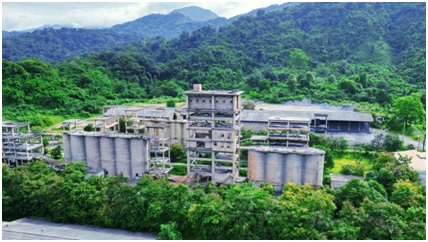
Due to a lack of experience in cement production, the Lao government sought help from China. In 1992, with assistance from China, the first cement plant in Laos was established and located in Vangvieng district, which is rich in limestone resources. It was named Lao Vangvieng Cement Company Limited. At the time, Thanhchay, who was 30 years old at that time, was sent as a representative by the Lao government to participate in the construction and management of the cement plant.
In 1994, the cement plant was completed and put into operation, adopting the vertical shaft kiln technology. It has an annual cement production capacity of about 80,000 tons, breaking the monopoly of imported cement in the domestic market of Laos. The cement produced by the plant is widely used in the construction of major national projects, contributing to the reduction of foreign exchange expenditure and the economic and social development of Laos. In the following three years, the Chinese team took over the production and operation tasks and trained the first batch of talents in the cement industry for Laos.
In 1997, the Lao Vangvieng Cement Company Limited was officially handed over to Laos for management. In the same year, the complete picture of the plant was printed on the newly issued 5000-kip banknote. "We are very honored that the government has printed our cement factory on the banknote!" Thanhchay said.
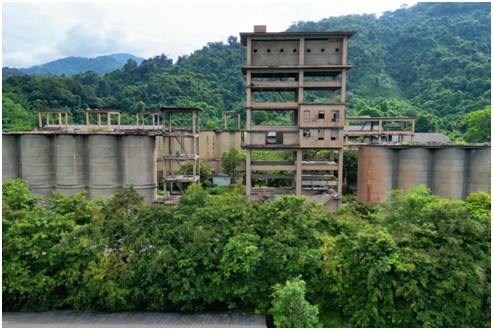
Entering the 21st century, with the development of Laos' economy, the demand for domestic cement has greatly increased, and there is a shortage of supply for Kating Thong brand cement. In 2013, the new Lao Cement Company Limited was completed and put into operation, adopting advanced rotary kiln technology, with a daily production of 2,500 tons of cement clinker, becoming the largest cement production enterprise in Laos at that time.
This year marks the tenth anniversary of the production of new Lao Cement Company Limited, and also the tenth anniversary of the proposal of the Belt and Road Initiative. It is reported that over the past ten years, the cement plant has produced nearly 3 million tons of Kating Thong brand cement and has actively participated in the development and construction of Laos and major projects under the Belt and Road Initiative.
"Because of the Belt and Road Initiative, our country has the first modern railway – the Laos - China Railway, the first expressway – Vientiane-VangVieng expressway, as well as many hydropower stations, economic development zones and other projects that use our cement, and the lives of our people have become better because of the Belt and Road Initiative," said Thanhchay.
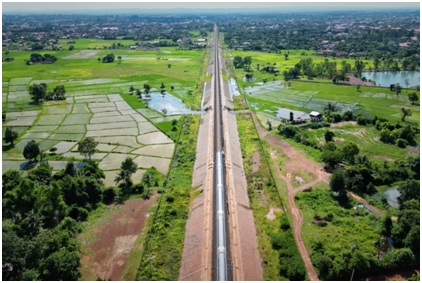
In April this year, international passenger trains of the China-Laos Railway officially opened in two directions between China's Kunming South Railway Station and Vientiane Station in Laos.
Yan Yan, a 20-year-old college student in Laos, told reporters that before the opening of the Laos - China Railway, she had to take a bus for more than ten hours from her school in Vientiane to her hometown, Muang Xay. Now, she can get home by taking a high-speed train for only two hours.
KPL

