KPL
Agricultural imports into Laos fell by 50 percent in the first nine months of 2026, from about US$80 million a year earlier to US$40 million, as domestic production increasingly meets demand for key food products.
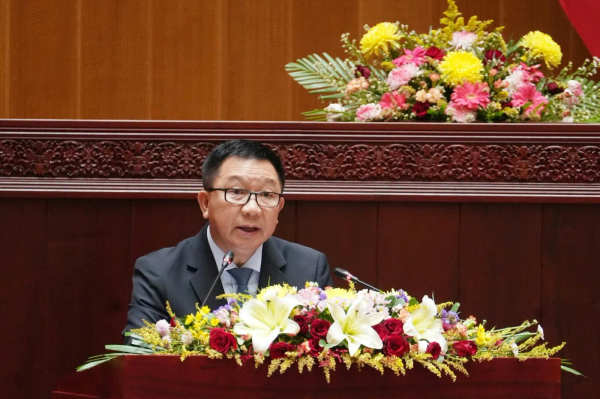
(KPL) Minister of Agriculture and Environment Linkham Douangsavanh reported the figures during the Second Ordinary Session of the 10th National Assembly on October 7, 2026.
He said the decline reflects progress in production for food security and import substitution, particularly in rice, coffee, tea, freshwater fish, beef, buffalo meat, poultry, pork and eggs.
The ministry and relevant authorities have also restricted imports of products that can be produced domestically, including rice, meat, eggs, fish and vegetables, through local and traditional checkpoints.
Rice production in 2026 is expected to reach 95 percent of the annual target of 3.9 million tonnes, which the ministry said would be sufficient for domestic consumption.
More than 255,500 hectares of food crops have been planted, equivalent to 91 percent of the annual target, with output estimated at more than 2.3 million tonnes. Livestock and fish production reached about 440,000 tonnes, or 76.6 percent of the annual target of 574,300 tonnes, and is expected to meet the full-year target.
The minister said domestic production has largely secured food supplies, although some provinces still need to obtain products that cannot be produced locally from other provinces or neighbouring countries with favourable transport and logistics costs.
Meanwhile, agricultural and forestry exports reached US$1.389 billion in the first nine months, or 73 percent of the National Assembly-approved annual target of US$1.9 billion.
Crop and plant-product exports exceeded US$1.002 billion, while animal and animal-product exports reached US$148.2 million. Wood products, rubber, non-timber forest products and white charcoal generated more than US$238.9 million.
The ministry has also completed technical market-opening negotiations for 80 agricultural products with China, Vietnam, Thailand and Cambodia, creating additional opportunities for exports.
To further increase productivity and competitiveness, the sector is promoting modern farming technologies and machinery, strengthening agricultural technical service centres, improving production and post-harvest infrastructure, and developing farmer groups and cooperatives.
The government is also encouraging investment in agricultural processing and contract farming to connect producers with domestic and international markets and increase the value of agricultural products.
KPL

