KPL
The Ministry of Education and Sports (MoES) is implementing a range of measures to reduce student dropout rates and improve access to education, with a focus on financial support, vocational training, school reform and education quality.
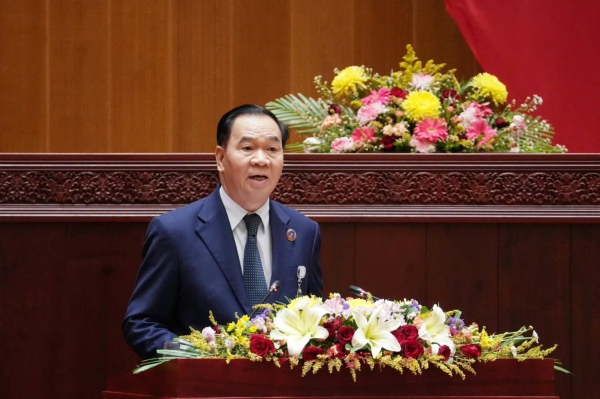
(KPL) Deputy Prime Minister and Minister of Education and Sports Thongsalith Mangnomek outlined the measures while responding to questions from National Assembly members during the Second Ordinary Session of the 10th National Assembly on October 7, 2026.
He said rising dropout rates at primary, secondary and higher education levels, as well as in vocational education, remain a major challenge to human resource development and socio-economic progress.
To help keep students in school, the ministry has promoted initiatives such as the “Back-to-School” campaign and provides school lunches to about 217,000 students. It also provides living allowances and stipends to 1,000 primary and 4,148 secondary students from poor and disadvantaged families, while 153 scholarships have been awarded to outstanding students.
In vocational education, integrated general and vocational training is being piloted in nine fields, including computer repair, electrical work, cooking and tailoring. The programme currently involves 1,762 students at ethnic boarding schools and other educational institutions.
Higher education programmes also provide opportunities for students from poor and remote areas. A total of 1,500 scholarships have been allocated for the 2025–2026 and 2026–2027 academic years.
For the 2026–2027 academic year, the four national universities have a combined enrolment of 21,541 students, including 6,173 new admissions.
Despite these efforts, only four of nine education targets approved by the National Assembly have shown positive progress, while five remain unmet. Major challenges include household financial difficulties, teacher shortages in remote areas and specialised subjects, and limited funding and equipment for local authorities to monitor and evaluate education indicators.
To address the challenges, MoES is carrying out structural reforms, including changing the general education system from the 5+4+3 model to 6+3+3 and consolidating teacher training institutions under the newly established National Teacher Training University.
The ministry is also converting selected schools into general vocational schools, allowing students to pursue general education while gaining basic vocational skills.
In addition, MoES is surveying 1,059 substandard primary schools for renovation and upgrading higher education curricula to better match labour-market needs. Universities are also being encouraged to expand evening, weekend and hybrid online programmes in high-demand fields to provide more flexible learning opportunities.
The ministry said these measures are intended to improve access to education, reduce dropout rates and strengthen the quality of human resources needed for the country’s long-term development.
KPL

