KPL
The Ministry of Education and Sports (MoES), with support from Australia through BEQUAL, is convening a national conference on “Bridging Languages: Supporting Early Lao Language and Literacy Development in Multilingual Contexts in the Lao PDR” in Vientiane on 24–25 June 2026 to explore innovative approaches to early Lao language and literacy development in multilingual classrooms.
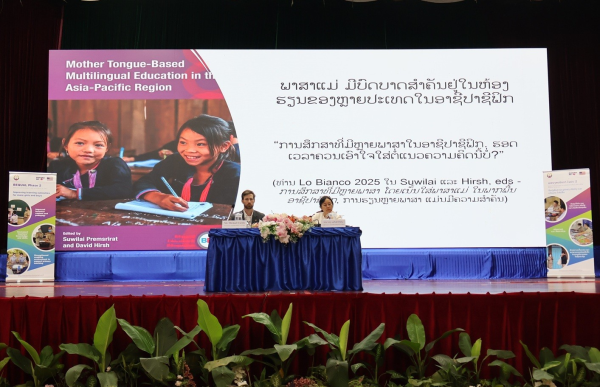
Ms. Manoly Dongvan, DDG of RIES, and Mr. Michael Currie, First Secretary of Australian Embassy chaired the conference.
Co-chaired by Ms Manoly Dongvan, Deputy Director General of the Research Institute for Educational Sciences, and Mr. Michael Currie, First Secretary of the Australian Embassy in the Lao PDR, the conference brings together around 125 participants from MoES departments, Provincial and District Education and Sports Services, teacher education institutions, teachers, school leaders, NGOs, development partners and researchers to strengthen early language and literacy development for all children.
“This conference is important because it helps us ensure that every child, including children who do not speak Lao when they start school, has the opportunity to learn, participate, and succeed from the very beginning. By supporting children to build strong foundations from the start of school, we are helping create a more inclusive education system and investing in the future human capital of Lao PDR,” said Ms Manoly Dongvan.
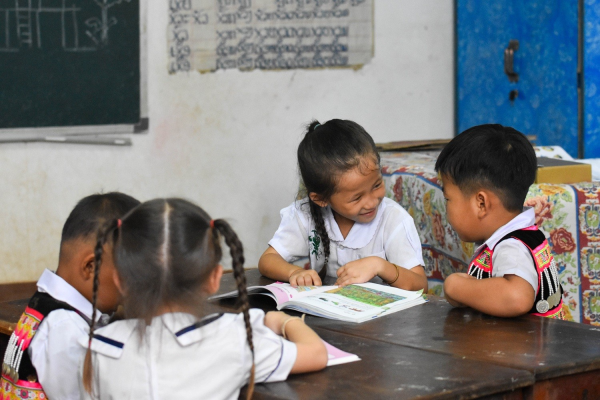
Speaking practice activity in Spoken Lao lessons helps students build confidence.
Mr. Michael Currie added “The conference reflects the shared commitment of MoES and Australia to inclusive education. Inclusion is not only about access to school, but about ensuring that children can genuinely learn once they are there. For children who do not speak Lao at the start of school, early support in language development is critical. It helps them settle into learning, builds confidence, and gives them a stronger chance of progressing successfully through primary education.”
.jpg) Spoken Lao lessons are specifically designed to help non-Lao speaking students develop their speaking and listening skills in Lao.
Spoken Lao lessons are specifically designed to help non-Lao speaking students develop their speaking and listening skills in Lao.
Organised by the Lao Language Research Centre under the Research Institute for Educational Sciences (RIES), the conference responds to a clear national priority: strengthening basic education as the foundation for human resource development. In Laos, many children, especially in remote and multilingual communities, begin school without speaking the language of instruction. This can create barriers to learning from the first day of Grade 1. The conference focuses on practical ways to reduce this gap so that children can build strong listening, speaking, reading, and writing skills in Lao while also valuing the languages they bring from home.
The keynote address is being delivered by Emeritus Professor Joseph Lo Bianco of the University of Melbourne, a leading Australian expert in language and literacy education and language policy. Professor Lo Bianco brings extensive international experience in multilingual education, language planning, and the inclusion of children from diverse linguistic backgrounds. His contribution is helping frame the conference around evidence-based approaches to supporting children in multilingual classrooms and strengthening language policy and practice.
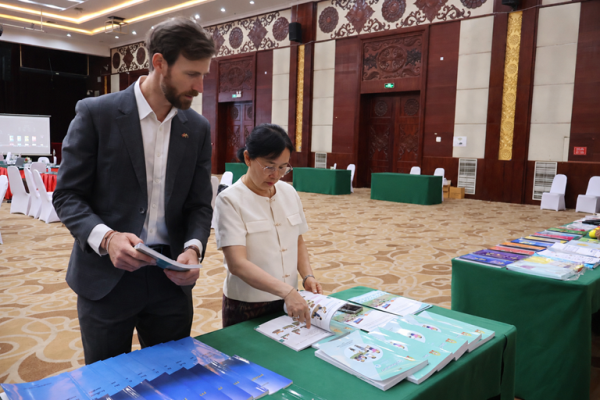
Ms Dongvan presents to Mr Currie the Spoken Lao resources developed by MoES with Australia’s support.
Sessions over the two days are showcasing experience and evidence from the Lao PDR and neighbouring Vietnam on school readiness, oral language development, reading readiness, teacher professional development, and language-rich learning environments. A key highlight is the presentation on Spoken Lao implementation and lessons learned, a MoES initiative supported by Australia through BEQUAL, which is demonstrating promising results in helping children develop the oral language skills they need to succeed in school. The conference also features the RIES Reading Readiness Program and other initiatives such as VVOB Vietnam’s Teachers Apply Language-rich skills and Knowledge (TALK) program, CRS Laos’ Community-based School Readiness, Save the Children Vietnam’s Happy Read Digital Learning for Literacy, and Room to Read Laos’ Support for Teacher Professional Development in Reading. Together, these examples show the value of practical, evidence-based approaches that help children, especially those who speak a language other than Lao at home, build strong foundations for learning.
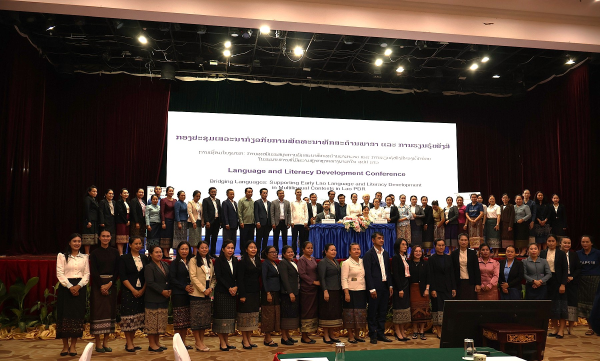
The conference brings together around 125 participants from MoES, PESS, schools, researchers and development partners.
Through presentations, panel discussions, group work, and plenary sessions, participants are exchanging experiences, identifying practical solutions, and exploring how effective approaches can be adapted and scaled up across the Lao education system. The program also creates space to discuss how mother tongue and translanguaging approaches (using two or more languages together) can be used effectively to support Lao language and literacy development.
The conference is expected to generate stronger shared understanding of effective teaching approaches, practical policy and program recommendations for scale-up, and deeper collaboration among education stakeholders. It also supports broader efforts to improve curriculum, teacher preparation, community engagement, and learning materials for multilingual contexts.
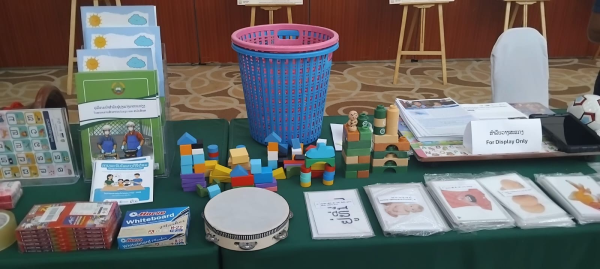
The conference includes an exhibition of teaching and learning materials to support Lao language acquisition and literacy.
“Supporting children who do not speak Lao when they enter school is not only an education issue, it is a national development issue,” Ms Manoly said in her closing message. “When we strengthen language and literacy from the beginning, we are strengthening the foundation for every child’s future and for the future of our country.”
Mr. Michael Currie concluded “Australia is proud to stand alongside MoES in this shared effort to improve early language and literacy. The importance of this work goes beyond the classroom. Strong foundational learning in the early years is essential for building the future workforce that Laos needs. Children who develop literacy and language skills early are more likely to continue their education, gain stronger skills, and contribute productively to the economy and national development. Investing in language and literacy is an investment in Laos’ future human capital, social progress, and long-term competitiveness.”
KPL

