KPL
Lingshan County in China’s Guangxi Zhuang Autonomous Region is combining advanced agricultural technology with major transport infrastructure to strengthen its position as one of the country’s leading lychee-producing regions and expand exports to ASEAN and global markets.
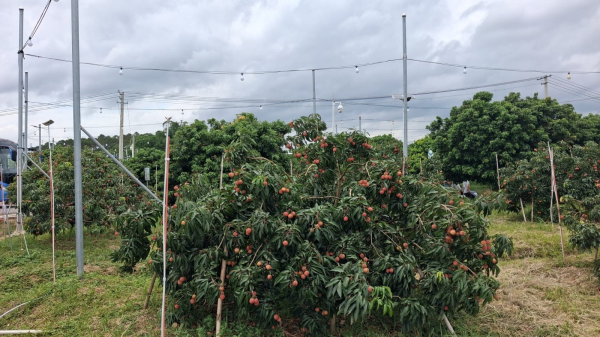
Known as the “Hometown of Lychee in China,” Lingshan cultivates lychees on more than 420,000 mu (about 28,000 hectares) and produces around 160,000 tonnes annually from 48 commercial varieties. Local authorities are now focusing on innovation and logistics to improve productivity, ensure food safety, and increase international competitiveness.
A key pillar of this strategy is the county’s state-owned lychee demonstration garden, which serves as a research and conservation center rather than a commercial orchard. Covering 202 mu, the facility was designated a provincial germplasm resource nursery in 2021 and now preserves 330 domestic and international lychee varieties, making it one of China’s largest genetic resource collections.
.jpeg)
According to Yang Jie, Deputy Director of the Lingshan County Bureau of Agriculture and Rural Affairs, the orchard also includes an ancient lychee tree that has produced fruit for more than 800 years, highlighting the region’s long cultivation history.
To improve sustainability, Lingshan has introduced innovative pest-control methods that significantly reduce reliance on chemical pesticides. One of the most notable technologies uses specialized lighting systems operated overnight to disrupt the life cycle of the lychee fruit borer, preventing feeding, mating, and egg-laying activities.
The environmentally friendly technique helps produce fruit with extremely low pesticide residues while supporting higher-quality harvests. The technology received the First Prize of the Guangxi Academy of Agricultural Sciences Science and Technology Award in 2022.
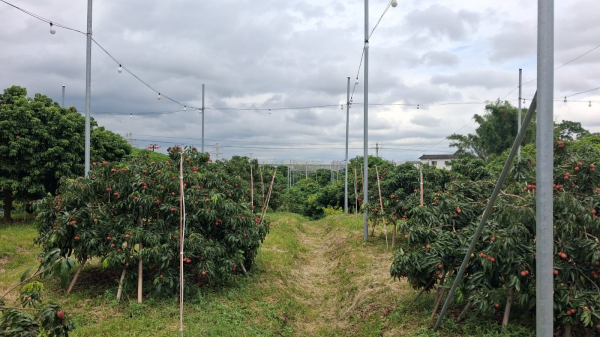
Lingshan is also preparing to benefit from the opening of the Pinglu Canal, a major transport project expected to enhance links between inland Guangxi and international shipping routes. The canal is anticipated to reduce logistics costs and shorten delivery times for fresh agricultural products, particularly highly perishable fruits such as lychees.
The county already exports lychees to several overseas markets and plans to further expand sales across ASEAN, including Indonesia, Laos, and the Philippines. Officials believe improved transport connectivity, combined with strict quality control and phytosanitary standards, will strengthen Lingshan’s competitiveness in regional and global markets.
As preparations continue for the canal’s operation, local authorities are working to optimize orchard management, improve export standards, and promote the county’s premium lychees internationally, positioning Lingshan as a model for the integration of traditional agriculture, technological innovation, and modern trade.
KPL

