KPL
Fresh ideas and practical solutions took centre stage on 4 April 2026 as 20 university students from across four Mekong countries presented their findings from the Mekong Youth Clean Water Challenge
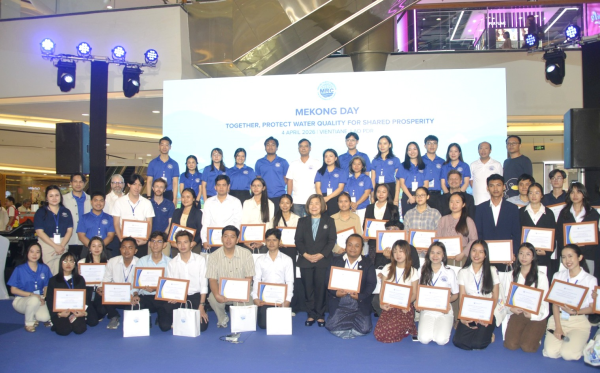
The Challenge, held from 30 March to 3 April, brought together students from Cambodia, Lao PDR, Thailand, and Viet Nam, creating a platform for cross-border exchange and collaboration. The students attended a full-day workshop in Luang Prabang, followed by laboratory and technical sessions in Vientiane. During the workshop, they were introduced to the fundamentals of water quality, including key parameters, monitoring methods, and how data is used to assess the health of the river.
Building on this foundation, students were encouraged to think beyond the classroom, question their observations, and connect scientific data with real-life situations faced by communities along the river.
Step by step, they were guided to turn observations into insights, and insights into practical ideas that could make a real difference.
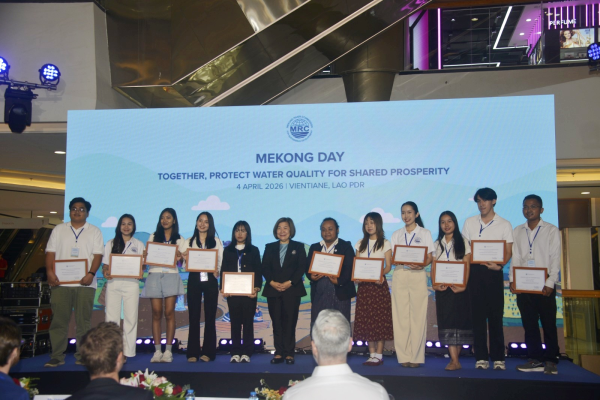
At the same time, the Challenge provided opportunities for students to build friendships and work across cultures and disciplines, developing solutions together rather than in isolation. Working in mixed-country groups, they explored key water quality concerns, including wastewater discharge, agricultural runoff, plastic pollution, and community awareness. From field sampling along the Nam Khan and the Mekong River to laboratory analysis in Vientiane, students worked directly with real data and real conditions.
As a result, they were able to clearly see how scientific results connect to actual conditions in communities along the Mekong.
Reflecting on the experience, many students highlighted how hands-on learning changed their perspective.
“Taking water samples from the river ourselves was something I’ve never done before. It made me realise how much effort goes into collecting reliable data, and how important that data is for understanding what’s really happening in the river,” said Sokna Sou, a third-year environmental science student from the Royal University of Phnom Penh.
Similarly, Vilaphap Viphongxay, a second-year student from the Faculty of Environmental Sciences at the National University of Laos, shared how the practical demonstration deepened his understanding.
“Seeing the demonstration by the MRC staff helped me understand how water quality is actually monitored. It’s very different from just reading about it. You can see how careful each step needs to be.”
For others, the learning came together most clearly in the laboratory.
“The lab session was my favourite part. When we analysed the samples we collected, it felt like we were uncovering the story behind the river. The numbers suddenly meant something,” said Nakarin Thaiking, a fourth-year student at the Department of Environmental Engineering, Chiang Mai University. He also noted how observing the different colours of water at the confluence of the Nam Khan and the Mekong brought those findings to life.
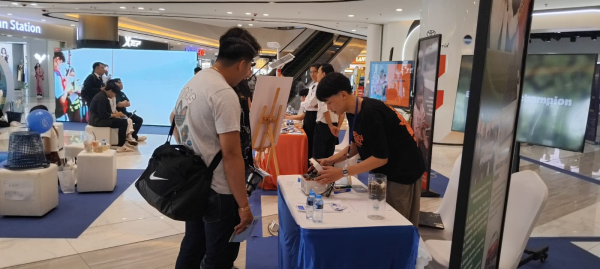
Bringing the whole process together, Bui Thi Bao Anh, a student of Environment and Natural Resources Management at Can Tho University, reflected on the full journey. “For me, everything connected, from collecting samples in the river to analysing them in the lab. It helped me see how data is generated and why it matters for real decisions.”
What made the presentations stand out, however, was not only the science but also the practicality of the ideas. Building on their findings, students identified key issues and proposed solutions grounded in real conditions. These included eco-floating buffers and floating treatment wetlands to help clean the river naturally, vegetative buffer zones to reduce land-based pollution, and a green boating standard supported by improved waste infrastructure to address pollution from river transport and tourism.
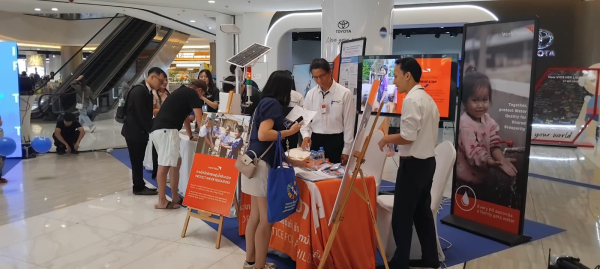
Following each presentation, a panel of commentators from the Australian Embassy, the US Embassy, and GIZ provided feedback, helping students refine their ideas and strengthen their proposed solutions.
The Mekong Youth Clean Water Challenge is part of the Mekong River Commission’s broader effort to promote inclusive approaches to strengthening water quality management across the basin. More importantly, it reflects a growing recognition that young people are not just participants in discussions, but active contributors to solutions.
“We aim to empower young people to take part in protecting the river and shaping the future of the basin. Seeing the students working together was incredibly inspiring as they stood by their shared river, taking ownership of their shared responsibility,” said Ms Busadee Santipitaks, Chief Executive Officer of the MRC Secretariat.
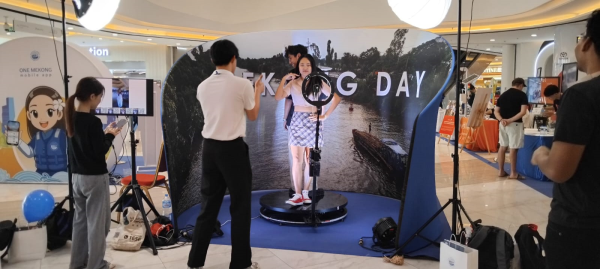
The event forms part of Mekong Day 2026 celebrations under the theme “Together, Protect Water Quality for Shared Prosperity”, highlighting the importance of collective action from governments and institutions to communities and young people.
As the Mekong continues to support tens of millions of people and generate billions of dollars in economic value each year, protecting its water quality remains not only an environmental priority but also an economic necessity.
The students’ presentations offered a glimpse of what the future could look like: informed, collaborative, and driven by a new generation ready to take action.
KPL

