KPL
The African Swine Fever (ASF) outbreak has reached seven provinces and 91 districts across the Lao PDR, prompting authorities to tighten movement controls and surveillance as they work to contain further spread. While the situation is showing signs of stabilisation in some northern areas, the outbreak remains active and has caused significant losses to pig farmers.
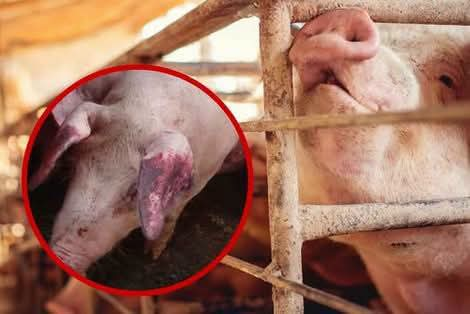
(KPL) The affected provinces are Phongsaly, Xayaboury, Xaysomboun, Huaphanh, Vientiane Capital, Oudomxay and Luang Prabang.
The outbreak has resulted in the loss of 14,002 pigs, including 11,086 raised by smallholder families, or 79.2%, and 2,916 raised on commercial farms, or 20.8%. Of the total, 10,041 pigs died from ASF infection, while 3,961 were culled in accordance with veterinary measures to prevent further transmission. Preliminary economic losses are estimated at more than 58.8 billion kip.
Speaking to the media on September 24, Mr. Bouahong Khamha, Director General of the Department of Livestock and Fisheries under the Ministry of Agriculture and Forestry, said authorities and technical agencies have maintained close surveillance and strengthened early detection and containment measures.
He said ASF continues to pose a serious threat to pig production in Laos and the wider region because there are no highly effective vaccines or commercial treatments widely available. Disease prevention therefore depends largely on farm-level biosecurity, early detection and strict controls on the movement of pigs and pork products.
According to Mr. Bouahong, control measures have helped slow transmission in some northern provinces, while central and southern provinces remain largely unaffected. However, restrictions on the movement of livestock and pork have created challenges for farmers and traders, prompting authorities to adopt a more targeted, zone-based approach.
In infected (red) zones, the movement of live pigs and pork products between districts and provinces remains suspended. Imports of pork from abroad are also prohibited while active outbreaks persist.
In at-risk (yellow) zones, authorities are maintaining enhanced surveillance. Closed-system commercial farms that meet required biosecurity standards may apply for special movement permits, subject to a 14-day health observation period and negative ASF test results. Any signs of illness or unexplained pig deaths must be reported immediately for laboratory sampling, with livestock movement suspended pending the results.
In uninfected (green) zones, preventive measures remain in place, while the movement and distribution of pigs and pork are managed under local control plans to reduce the risk of introducing the disease.
Authorities stressed that although the rate of transmission is gradually declining in some areas, the outbreak has not yet been fully contained. Farmers, traders and the public are therefore urged to strictly follow veterinary instructions and avoid unnecessary movement of pigs and pork products.
Officials also clarified that ASF does not infect humans and poses no direct health risk to people. Consumers are nevertheless advised to purchase pork from reliable sources and cook it thoroughly before consumption.
KPL

