KPL
(KPL) The United Nations (UN) in Laos last Friday presented global reports on the transforming world of work and rural poverty to Laos in order to enable the country to adapt to rapidly changing global trends.
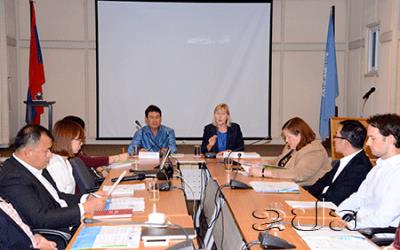
(KPL) The United Nations (UN) in Laos last Friday presented global reports on the transforming world of work and rural poverty to Laos in order to enable the country to adapt to rapidly changing global trends.
Fast technological progress, deepening globalization, aging societies and environmental challenges are rapidly transforming what work means today and how it is performed, the reports highlighted.
The Global Human Development Report 2015 and the Least Developed Countries Report show global opportunities and challenges that will impact Laos’ development.
This new world of work presents great opportunities for some, but also profound challenges for others.
The Global Human Development Report 2015 urges governments to act now to ensure that no one is left behind in the fast-changing world of work.
The report, subtitled Work for Human Development, argues that policies should embrace all types of work, including care, creative and volunteer work, and that they should pay particular attention to sustainability.
The Asia-Pacific region is likely to experience fast growth and rapid human development, but not necessarily fast job creation.
The human development approach, adopted by the UNDP since 1990 and measured with the Human Development Index (HDI), emphasises improving lives rather than using economic growth as an end in and of itself.
Laos ranked 141st out of 188 countries on the HDI in 2014, below the average in the region.
Meanwhile, the Least Developed Countries Report presents a road map to address rural poverty in the 48 least developed countries of the world. It highlights the lack of progress in rural transformation and notes the root causes of migration within and from the least developed countries.
Poverty-driven rural-urban migration fuels excessive rates of urbanization in many poor countries.
The report’s recommendations aspire to slow this process by focusing on rural development, which seeks to “Create the conditions for a rural-urban migration process driven primarily by choice rather than necessity”.
Poverty can only be eradicated if there are employment and economic opportunities for all, with incomes above the poverty line matched by productivity. In order to achieve this in rural areas of poor countries, the report proposes a new approach, articulated around a three-phase increase in infrastructure investment, and the combination of increasing agricultural productivity and promoting non-farm activities.
These global reports provide informed policy choices for Laos, which can promote policy dialogue and enable the country to adapt to quickly changing global trends.
The UN will continue to support the country in its development objectives, by – amongst others – helping to adjust strategies and policies according to the newest emerging knowledge and data.
The launching ceremony for the UN reports saw the presence of Deputy Minister of Planning and Investment Bounthavy Sisouphanthong, UN Resident Coordinator and UNDP Resident Representative Kaarina Immonen, and relevant officials.
KPL

