KPL
The annual meeting of the Steering Committee for the Project to Strengthen Skills Development in the Lao PDR, under the ILO-China International Cooperation Programme, was held on 31 March 2026, in Vientiane.
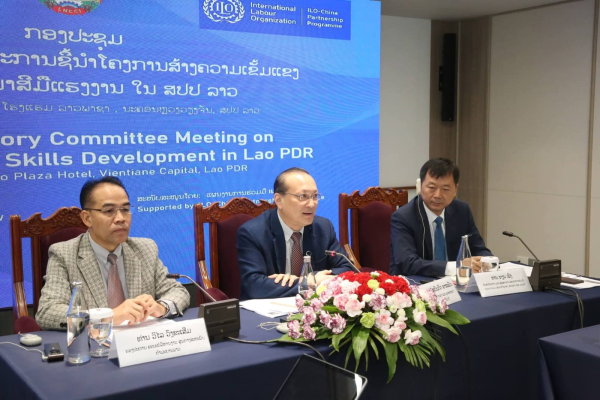
The annual meeting of the Steering Committee for the Project to Strengthen Skills Development in the Lao PDR, under the ILO-China International Cooperation Programme, was held on 31 March 2026, in Vientiane.
The meeting was co-chaired by Mr Xaybandith Rasphone, Vice President of the Lao National Chamber of Commerce and Industry (LNCCI); Mr Vilay Vongkhaseum, Vice President of the Central Committee of the Lao Federation of Trade Unions (LFTU); and Mr Tian Feng, Project Manager and Coordinator of the ILO-China Cooperation Programme for Cambodia, Lao PDR, and Myanmar.
Participants included the ILO Coordinator for Laos, representatives from the Chinese Embassy in Laos, and various relevant sectors attending both in person and online.
Key Objectives and Outcomes
The meeting served as a platform to review the progress and successes of the project over the recent period, while also addressing pending issues and challenges to define future directions and operational methods.
A significant highlight of the event was the official handover of the Plan on Skills Development in the Lao PDR and the Law on Skills Development. This new legislation has been officially approved and promulgated, serving as a specific legal framework and a vital reference for the ongoing implementation of skills development tasks in the country.
Project Successes in 2025
Mr Xaybandith Rasphone emphasised that this project is a crucial part of regional and international cooperation, particularly within the tripartite system involving the government, employers, and workers across Cambodia, Lao PDR, and Myanmar. He noted that the initiative is essential for human resource development and strengthening labour quality to meet market demands.
In 2025, the project achieved success in several key areas namely: the development of national labour skill standards, the improvement of vocational training curricula, upgrading the skills of trainers and strengthening institutional capacity, the creation and refinement of relevant legislation through tripartite mechanisms, and the effective implementation of South-South and Triangular Cooperation.
KPL

