KPL
The Government of the Lao PDR and the United Nations on March 6 signed off on a project aiming to strengthen large-scale food fortification in the Lao PDR, supported by the Government of India.
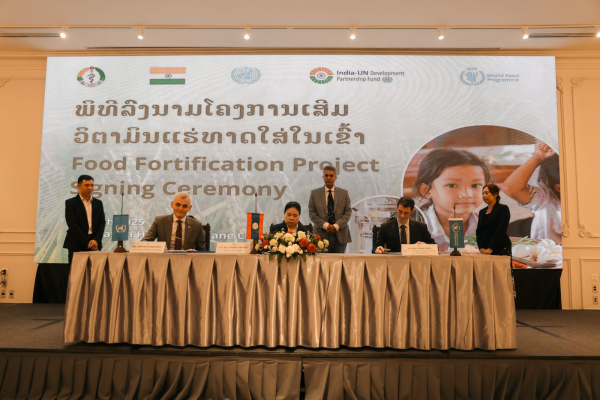
(KPL) The Government of the Lao PDR and the United Nations on March 6 signed off on a project aiming to strengthen large-scale food fortification in the Lao PDR, supported by the Government of India.
Rice, the cornerstone of the Lao PDR's diet, could become a game-changer in battling malnutrition. Micronutrient deficiency, also called hidden hunger, caused by a lack of essential vitamins and minerals, stunts growth and development in Laos.
Around 40% of women of childbearing age and 44% of children under 5 are plagued by iron deficiency anemia, leading to severe and lasting health issues.
The project agreed on jointly today, titled "Strengthening Large Scale Food Fortification in the Lao PDR: The Case for Investing in Rice Fortification," will be implemented over the next two years.
It aims to enhance the nutritional quality of rice by adding essential vitamins and minerals. Food fortification is one of the most cost-effective public health interventions to reduce micronutrient deficiencies at scale.
“Fortification is not an entirely new agenda point for the Lao PDR. Since 1995, our Ministry of Health has regulated the standards for production and importation of iodized salt in Laos, making fortification of salt mandatory. Glutinous rice, which is the most important element of our national food culture, is a good source of energy, but does not contain micronutrients such as vitamin A, B, iron and zinc, which people generally lack in our country. Adding such micronutrients is an opportunity in our fight against malnutrition,” said Ms. Aphone Visathep, Vice Minister of Health.
The Government of India supports this intervention with USD 1 million over two years through the India-UN Development Partnership Fund. “India’s investment into fortification has been a national success, reaching 400 million people in India with fortified rice to counter micronutrient deficiencies. India is proud to share its knowledge and experience in rice fortification with the Lao PDR. This partnership reflects our strong bilateral relations and our commitment to supporting sustainable development in the region," said Mr. Yogeshwar Sangwan, Ambassador of India to the Lao PDR.
“The United Nations plays a vital role as a partner for governments globally in transforming food systems with evidence-based and cost-effective solutions. Staple food fortification is a cost-effective way to bring micronutrients into the diets of all Lao people and leave no one behind. It’s an accelerator towards eradicating malnutrition and achieving the Sustainable Development Goals. We are thankful for the partnership with India to deliver such an important initiative, which exemplifies the power of South-South cooperation,” said Mr. Bakhodir Burkhanov, United Nations Resident Coordinator in the Lao PDR.
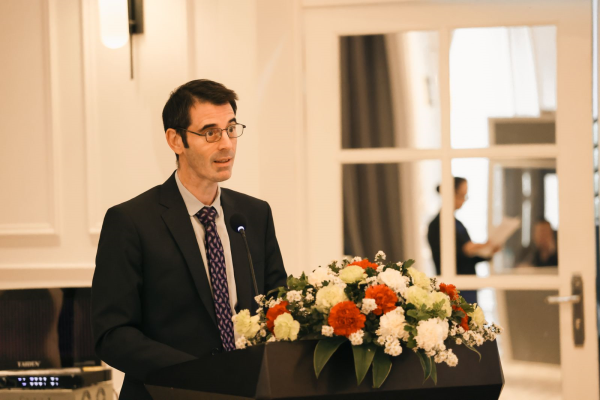
Since 2013, the United Nations World Food Programme (WFP) has been a leading partner to the Government on rice fortification. “WFP brings 30 years of global expertise in food fortification. The cooperation we signed today aims to implement the steps laid out in the Lao PDR’s Food Fortification Strategic Action Plan. Strong political will combined with the expertise of the Republic of India and WFP will open opportunities for the public and private sectors to enhance national capability to fortify rice and improve the diet of millions of people in Laos,” said Mr. Marc-Andre Prost World Food Programme Representative and Country Director in the Lao PDR.
KPL

