KPL
The Ministry of Education and Sports (MoES) and the Australian Government continue their collaboration to identify and enhance inclusive teaching practices in the Lao PDR. As part of this effort, a research team of 32 enumerators from various MoES departments and three Teacher Training Colleges (Luang Namtha, Khang Khai, and Savannakhet) will visit primary schools across 30 target districts from 10 February to 7 March 2025 to collect data for the second year of the three-year Inclusive Teaching and Learning study.
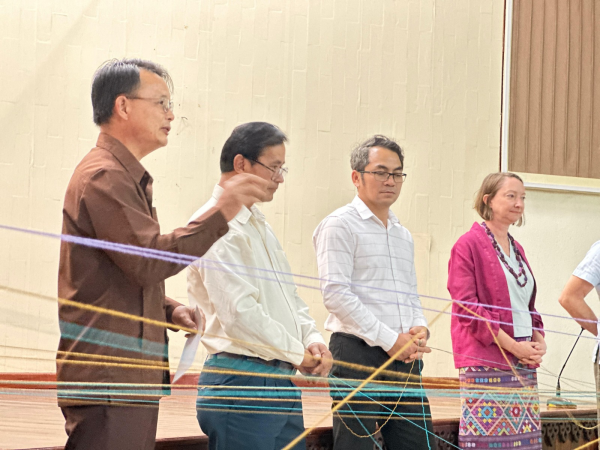
Enumerators share stories of their childhood teachers who inspired them
(KPL) The Ministry of Education and Sports (MoES) and the Australian Government continue their collaboration to identify and enhance inclusive teaching practices in the Lao PDR. As part of this effort, a research team of 32 enumerators from various MoES departments and three Teacher Training Colleges (Luang Namtha, Khang Khai, and Savannakhet) will visit primary schools across 30 target districts from 10 February to 7 March 2025 to collect data for the second year of the three-year Inclusive Teaching and Learning study.
Launched in 2024, the study is led by the Department of Teacher Education (DTE) with support from the Australian Government through the Basic Education Quality and Access in the Lao PDR (BEQUAL) program. The research aims to identify effective teaching practices that enhance student engagement and learning outcomes by exploring factors such as student belonging, engagement, and their impact on academic success.
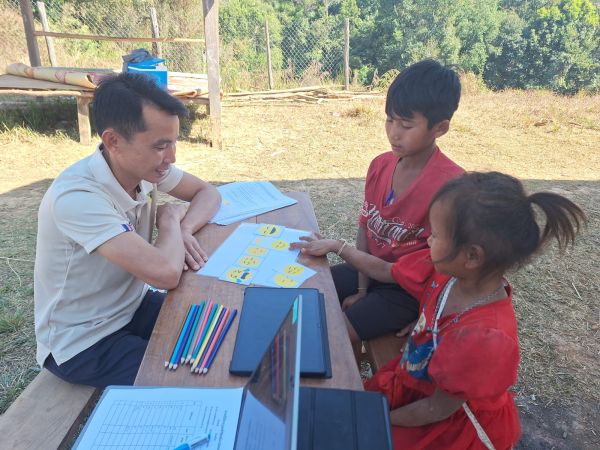
Interviews of students for collective qualittative data for the inclusive study
Ms. Vongdeuane Osay, Director General of DTE, highlighted the department’s role in guiding the study’s design and supporting the districts and Teacher Training Colleges in school selection, data collection, and analysis.
The study encompasses 30 target districts across seven provinces—Phongsaly, Luang Namtha, Bokeo, Houaphanh, Xiangkhouang, Khammouane, and Savannakhet. In each district, four schools were selected based on diversity factors, including the presence of students who do not speak Lao at home, students with disabilities, and students with low attendance. Additional selection criteria considered gender representation among principals and teachers, geographic location, multigrade settings, and the implementation of remedial Spoken Lao language lessons.
Over the three-year period, the study will collect both qualitative and quantitative data. Each year in February and March, qualitative case study research will involve interviews with students, parents, and teachers from 21 target schools. Additionally, in April, Lao language tests will be conducted in 120 schools across grades one to three. Classroom observations and other monitoring data will be gathered each semester to track ongoing progress.
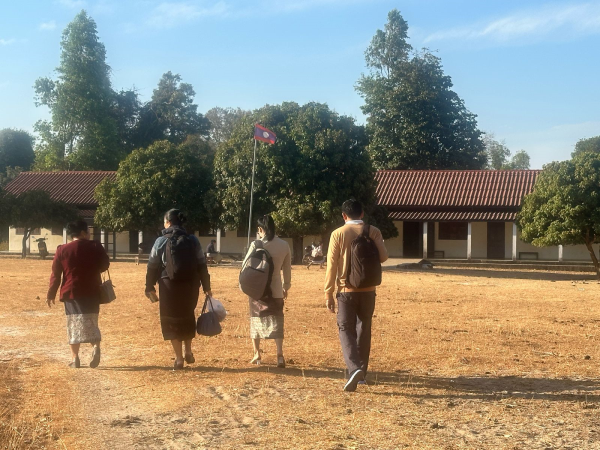
Enumerators walking to a remote school to conduct interviews
Ms. Vanessa Hegarty, First Secretary at the Australian Embassy, reaffirmed Australia’s commitment to inclusive education. “We believe that all students should have access to quality education that meets their diverse needs in a responsive, accepting, respectful, and supportive environment. Identifying effective teaching practices is crucial in addressing school dropout rates and ensuring students feel a sense of belonging at school.”
The Inclusive Teaching and Learning study employs a unique ‘belonging’ approach, examining social, psychological, and environmental factors that influence student learning. The study will analyze changes in student Lao language test scores to determine the impact of these factors on learning outcomes.
 /
/
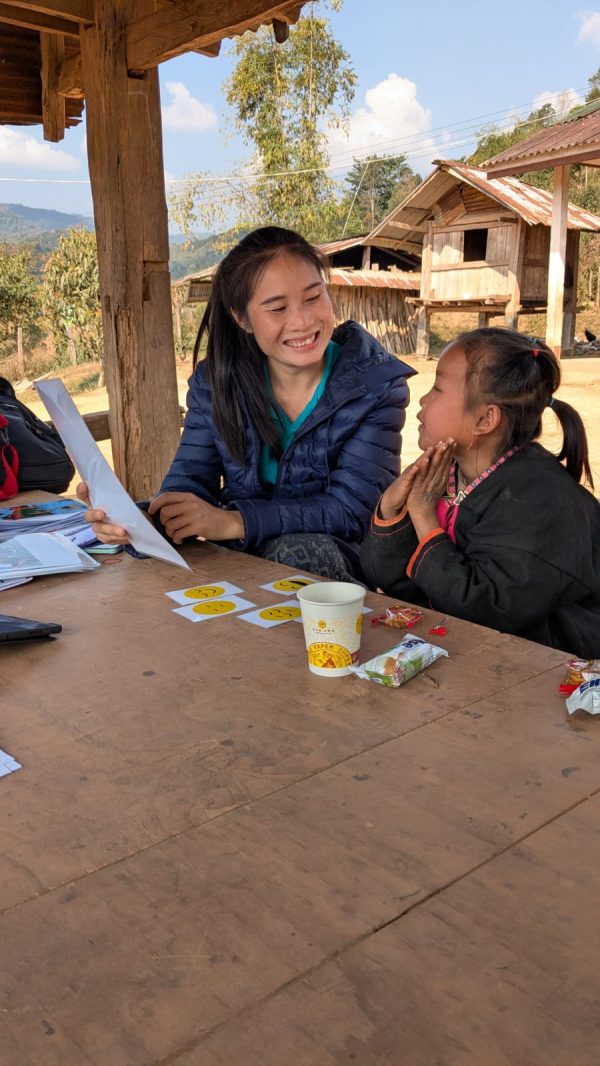
Interviews of students for collective qualittative data for the inclusive study
During the enumerator training in early February, MoES staff shared personal experiences of teachers who made a lasting impact on their lives. Many recounted stories of teachers who offered encouragement, a welcoming smile, or a listening ear, fostering a sense of belonging that inspired them to pursue careers in education.
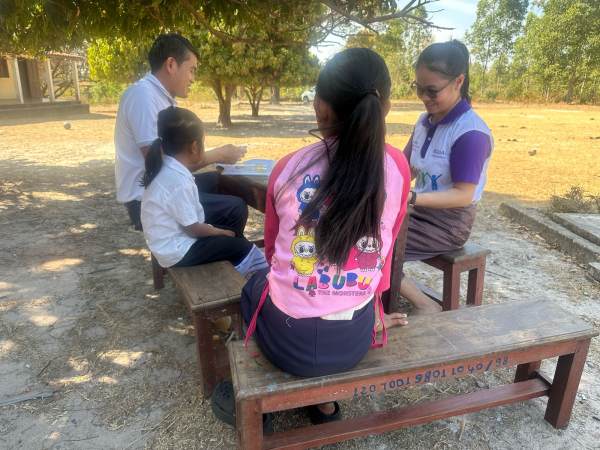
Interviews of students for collective qualittative data for the inclusive study
Ms. Vongdeuane emphasized that the study’s findings will help enhance the continuing professional development system for teachers. “By identifying successful teaching practices in our sample schools, we can determine which professional development approaches are most effective. These insights will be shared with teachers and school communities to better support student learning.”
Ms. Vanessa concluded, “I look forward to the results of this study and to continuing our collaboration with the Ministry of Education to promote teaching approaches that foster inclusive learning environments for all students.”
KPL

