KPL
Transitioning to agriculture by capitalising on family resources, efficiently allocating land, and aligning production with market demands is a proven pathway to financial stability. This is exemplified by 31-year-old Monlady Kommameuang from Fangdeng Village in the Xaysetha District of Attapeu Province, whose dedication to integrated farming now generates an annual income exceeding 100 million kip for her family.
Despite graduating with a degree in law, Monlady made the deliberate decision to return to her hometown to continue her parents' agricultural legacy and forge her own future.
Since 2020, she has restructured her family’s land, zoning it effectively for diverse production. Relying primarily on family labour and personal capital, her operation focuses on three main pillars: rice cultivation, vegetable farming, and animal husbandry. This diversified approach not only creates multiple revenue streams but also actively mitigates agricultural risks.
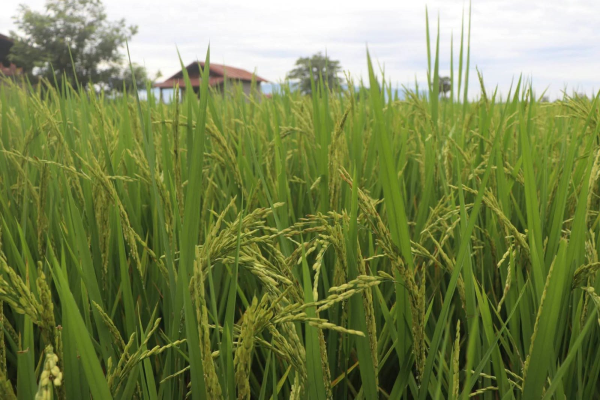
Rice farming, a foundational trade passed down through her family, has been modernised for greater efficiency. Monlady prioritises high-quality seed selection, soil nourishment, and appropriate cultivation techniques.
By cultivating both wet-season and dry-season rice where land conditions permit, this sector alone brings in an average of 50 to 60 million kip annually.
Vegetable cultivation efficiently utilises the vacant spaces around her home and along the paddy fields. She rotates seasonal crops such as Chinese cabbage, peppermint, chillies, long beans, and other local vegetables. Beyond feeding her household, the surplus is sold to local vendors and community markets, generating a steady cash flow of 30 to 40 million kip per year.
Complementing the crops, her livestock operation includes buffaloes, pigs, goats, poultry, and fish. She employs efficient rearing practices, utilising naturally sourced fodder alongside careful health monitoring. Livestock not only ensures household food security but also provides a supplementary income of 20 to 30 million kip annually.
The journey, however, has not been without its challenges. In the early stages, Monlady faced hurdles ranging from a lack of practical experience to pests, livestock diseases, and unpredictable weather, all of which occasionally caused seasonal yields to fall short of targets. Yet, she refused to be deterred.
She took lessons from her early mistakes to refine her production methods, continuously educating herself on new techniques and adapting to realities on the ground until yields steadily improved.
She acknowledged the vital role of state support; government initiatives providing technical expertise and high-quality rice seeds were instrumental in steering her family’s production in a positive direction. Combined, these three agricultural pillars yield a total annual income of over 100 million kip.
Offering advice to other young people seeking a viable career path, Monlady highlighted integrated farming as a highly compelling option. The key, she stressed, lies in starting with whatever strengths one already possesses, committing to continuous learning, and meticulously planning production to keep pace with market demands.
With unwavering determination and a willingness to learn from experience, she believes young entrepreneurs can gradually build stable livelihoods while simultaneously contributing to the economic development of both their families and the wider community.
KPL

