KPL
(KPL/Xinhua) Viewed from the sky, the Afsluitdijk is like a long wall running 32 kilometers straight through the sea, defending Lake IJssel, the largest freshwater lake in the Netherlands, from the intrusion of seawater.
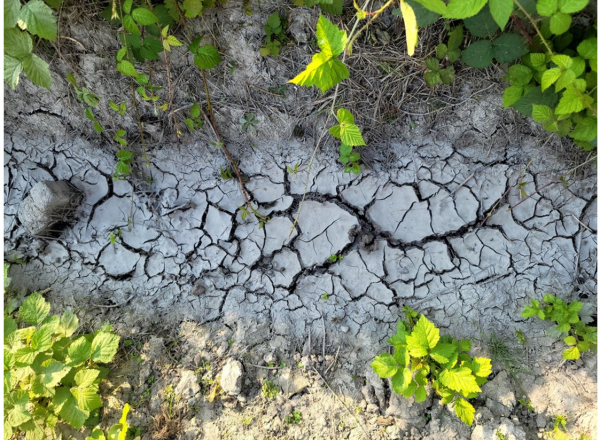
Photo taken on Aug. 15, 2022 shows dried soil on a section of the Afsluitdijk, a dam separating the IJsselmeer lake and the Wadden Sea, in the Netherlands. (Xinhua/Wang Xiangjiang)
The European Commission said in its Drought in Europe report in July that while drought mitigation strategies are of the utmost importance now, so is tackling the root cause of the problem: climate change and its disruption of the planet's water cycle.
(KPL/Xinhua) Viewed from the sky, the Afsluitdijk is like a long wall running 32 kilometers straight through the sea, defending Lake IJssel, the largest freshwater lake in the Netherlands, from the intrusion of seawater.
With a long drought this summer, the iconic Dutch flood control project, consisting of a major dam and a causeway, has kept its flood gates closed to prevent fresh water from flowing into the sea and help Lake IJssel maintain its water level.
For hundreds of years, flooding has always been a problem for the Dutch people, who have built infrastructures including dams and dykes to protect some 55 percent flood-prone areas in the country.
In recent years, however, the Netherlands has been experiencing extreme drought due to climate change, and water shortage is becoming a new challenge for the "land of water."
This summer, the Netherlands has once again encountered an extreme drought, with the water level of inland rivers and lakes declining to historical lows. Agriculture, shipping and nature are particularly affected.
Besides imposing restrictions on farmland irrigation in some areas, the Dutch government has called on the public to save water, suggesting less car washing, less watering of flowers, and less bathing, etc.
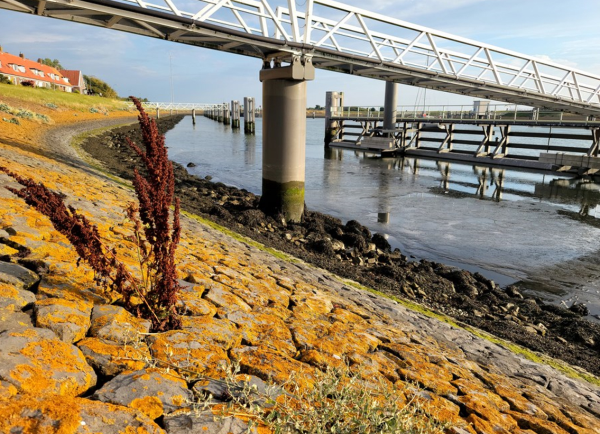 Photo taken on Aug. 15, 2022 shows a section of the Afsluitdijk, a dam separating the IJsselmeer lake and the Wadden Sea, in the Netherlands. (Xinhua/Wang Xiangjiang)
At the same time, similar scenes of drought and water scarcity have occurred in some other European countries.
Ildiko Fonyodi, a 43-year-old Hungarian horse riding trainer, had to quit her job at an equestrian center in the suburb of Budapest after the owners chose to close it because the drought had made the expenses unaffordable.
Her income was cut in half as she had to leave her students and 20 horses.
"Horses need hay and straw on a daily basis, but because of the aridity, it has become a very scarce and expensive commodity," she explained to Xinhua.
"The wells of the center have also dried off, so after the practices, we cannot water the horses anymore. These are expensive and sensitive animals, worth tens of thousands of euros each, and we can only go through them with wet sponges," she added.
In Slovenia, water-saving measures have been taken since early July, including restrictions on beach showers, lawn watering, car washes, swimming pool filling and private yard flushing.
By mid-July, restrictions were extended to agricultural irrigation and industrial water use. Recently, the hydropower station on the Soca River in the west of the country was forced to shut down twice due to low water level, affecting production and residents' use of electricity.
In Belgium, 18 cities in the southern French-speaking Wallonia region have also imposed water restrictions, with another five cities closely monitoring the situation. In Spain, some supermarkets have started rationing ice cubes, and several supermarket chains have limited customers to two bags of ice per person.
Climate experts point out that climate change is behind the current extreme drought in Europe.
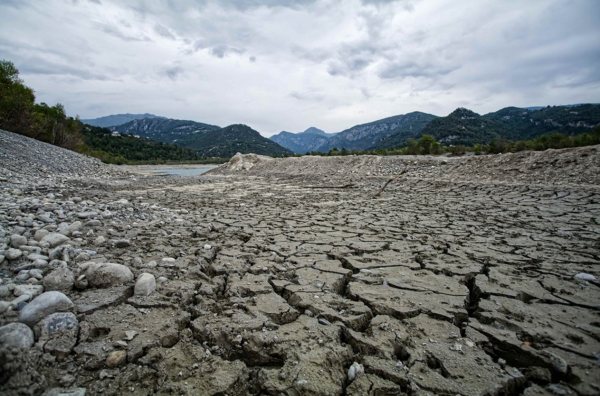 Photo taken on Aug. 17, 2022 shows a view of the artificial Broc lake near Nice, Alpes-Maritimes, southern France. (Photo by Serge Haouzi/Xinhua)
Friederike Otto, a climatologist who works as a senior lecturer at the Grantham Institute for Climate Change and the Environment at Imperial College London, said global warming is responsible for the increase in droughts in many parts of Europe, especially the Mediterranean.
Dutch water expert Martin Drenth told Xinhua that the general trend in the future is that there will be more and regular droughts in Europe.
Mike Rivington, senior scientist at the James Hutton Institute in Britain, said the drought is "a warning sign" that water needs to be taken more seriously because of its impact on nature's ability to function and provide society with the necessities of life.
The European Commission said in its Drought in Europe report in July that while drought mitigation strategies are of the utmost importance now, so is tackling the root cause of the problem: climate change and its disruption of the planet's water cycle.
"Further efforts are needed also for preventively adapting to the changing weather patterns by climate-proofing energy supply and applying sustainable solutions in agriculture," said the report.
KPL

