KPL
(KPL) UNFPA Lao PDR Representative Mariam Khan explains how a post-COVID-19 world has an opportunity to achieve gender equality more than ever.
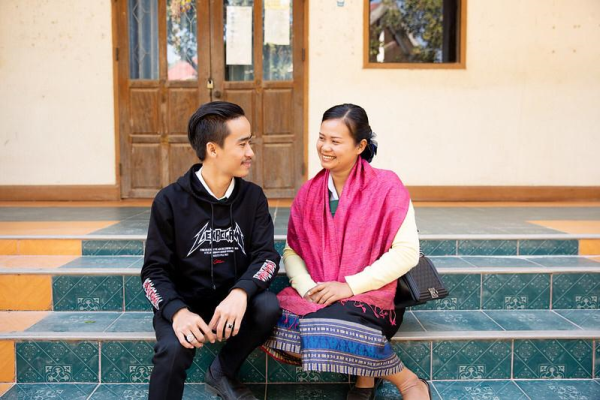
(KPL) UNFPA Lao PDR Representative Mariam Khan explains how a post-COVID-19 world has an opportunity to achieve gender equality more than ever.
Did you know that in the Lao People's Democratic Republic, on average, the time a woman spends on housework, child care, caring for the sick can be as much as four times more than men?
This difference starts from a young age when young girls are more involved in housework than young boys. It then can transpire into girls and women taking on informal work so that they remain available to carry on the bulk of the housework. This then on a national level shows that while women are economically as active as men, the bulk of women are engaged in the informal sector and lack access to social protection and bear the brunt of housework and unpaid tasks.
As countries come out of COVID-19-related lockdowns, we have an opportunity to shape a future which is more equal and more beneficial to the well being of people in all their diversity. Men and boys play multiple roles in a family and in society, just like women do.
However, the roles men play in society, as heads of family, as village and religious leaders, political representatives usually have the power and privilege to preserve or transform patriarchal norms that reinforce gender inequality.
Did you know, for example, that in the Lao PDR, less than 3% of village chiefs are women? But Lao is not alone in this. All over the world, positions of power and decision making in the household, at village, district and provincial levels are predominantly held by men.
The responsibilities in the public sphere translate into a view of public life and decision making that is predominantly a male perspective which does not systematically take into account the particular needs and challenges faced by women and girls.
Recognising this issue, the Lao PDR leadership has taken a highly progressive and innovative approach in endorsing the Noi (adolescent girl) framework which analyses key indicators impacting the lives of girls with a view for accelerated action to invest in and make decisions that address the disadvantages faced by girls.
In post-COVID-19 decisions and priorities, it will be important to keep the Noi framework in mind to ensure that girls and boys shoulder equal amounts of housework, that girls continue their schooling when schools re-open and can benefit from education skills and training that will allow them to realise their full potential and consequently contribute to the Lao PDR’s social and economic growth to the fullest.
Data shows us that 1 in 20 adolescent girls have never attended school and 1 in 5 have dropped out of school. Lack or absence of education exposes girls and women to a lifetime of unskilled labour with low pay, exploitation, the possibility of trafficking for the most vulnerable to neighbouring countries, and also to early marriage and early pregnancy and consequent problems.
According to the Lao Social Indicator Survey (LSIS) 2011-2012, 58% of women and 49% of men reported that violence against women was justified if women did not adhere to traditional gender norms and roles. Nearly 1 in 3 of ever-partnered women reported they suffered at least one type of violence, with emotional violence as the most predominant genre (UNFPA, 2014).
Rates of psychosocial stress and mental health issues are seeing an increase in most places due to COVID-19-related social and economic impact.
But the challenging situation also presents an opportunity to rethink a number of values and roles, including the different pressures faced by men and women.
Changing traditional gender norms is an uphill task under normal circumstances, but these are not normal times. With the amount of time spent in lockdowns, at the individual and family level, decisions can be made that will change the balance of household tasks weighing upon women and girls - a change that can last a lifetime with profound social and economic consequences for girls and women, their children, and all of society and the national economy as well.
Simple changes to daily routines can be made for a more gender equal world. This is why UNFPA continues to work with government and other partners to shape education programmes to encourage men and boys to reflect on and adopt more positive and equal healthy relationships. Such a balance is better for individual men and boys as well as women and girls.
Here are 7 ways boys and men can help achieve a better balance of responsibilities:
1. Acknowledge previously “invisible” care work traditionally done by women and girls, and help coordinate daily household tasks.
Schedule children’s activities and manage bedtime routines.
2.Share homeschooling responsibilities.
3.Schedule children’s activities and manage bedtime routines.
4. Help an older relative, take care of a sick child.
5. Plan, shop for and cook family meals.
6. Support partners working on the crisis frontlines (70% of Lao doctors, nurses and midwives are female).
7. If you or someone you know is facing pressure that is impacting emotions and actions negatively and endangering those around you - for example through gender-based violence including domestic violence - seek help. Hotlines are available through dialing 1362 via the Protection Center for Women and Children of Lao Women’s Union.
The landmark Programme of Action stemming from the 1994 International Conference on Population and Development (ICPD) and the Beijing Platform for Action that followed a year later are both grounded in gender equality. These frameworks recognize and advocate for the importance of positively engaging men and boys to empower women and girls.
The achievement of gender equality is ultimately crucial to the achievement of key Sustainable Development Goals that underpin the 2030 Sustainable Development Agenda, including in the realms of education and children's welfare - as well as meeting unmet need for family planning and contraception, thereby preventing early and unintended pregnancies, as well as ending gender-based violence and other harmful practices towards women and girls, including child marriage.
These were urgent objectives even before COVID-19. In the post-pandemic era we need to strive harder than ever to make these a reality, and in so doing bring about a more equal and equitable world.
KPL

