KPL
A school meals initiative supported by the World Food Programme is helping improve children’s education and nutrition in a remote village of Oudomxay Province, while encouraging families to support their children’s learning.
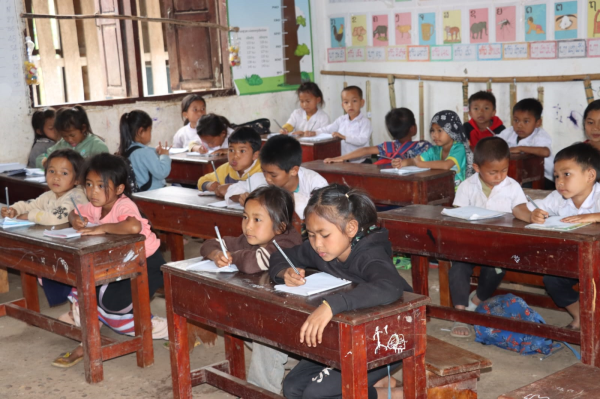
Year 2 students at Huaytong Primary School.
In Huaytong Village, many families from the Hmong ethnic group rely on farming for their livelihoods. For years, children often accompanied their parents to the fields instead of attending school. Today, however, more children are regularly going to class thanks to the School Meals Programme.
Ms Dam, a resident of the village, said the programme has brought significant benefits to local families and especially to schoolchildren.
“Thanks to the World Food Programme for bringing the School Meals Programme to our village. It has helped many children here, including my son and my relatives,” she said.
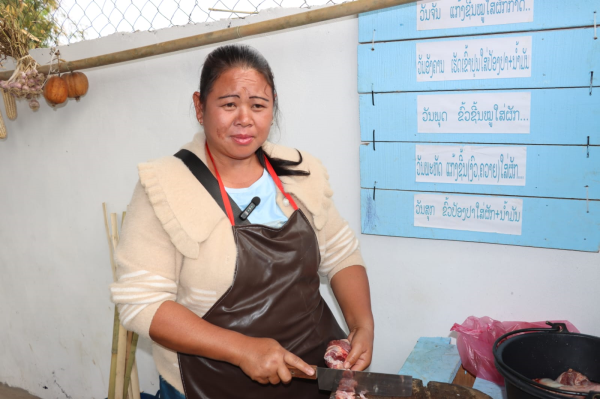 Ms. Dam, a resident of Huaytong Village, prepared meals for the students.
Ms Dam’s children study at the village’s primary school, and she says seeing them attend classes every day makes her proud. Inspired by the positive changes, she decided to volunteer to help cook meals for the students.
“I am very happy to see the children come to school every day,” she said. “That’s why I volunteer to cook for the programme. My family also contributes eggs to support the school meals.”
The programme not only provides nutritious lunches but also strengthens community participation, with parents and villagers contributing food ingredients and helping prepare meals for students.
According to Mr. Sichan Santisouk, Director of Huaytong Primary School, the initiative has significantly improved school attendance since it began in 2008.“The number of students has increased every year,” he said.
Today, Huaytong Primary School has 187 students enrolled for the 2025–2026 academic year, including 97 girls.
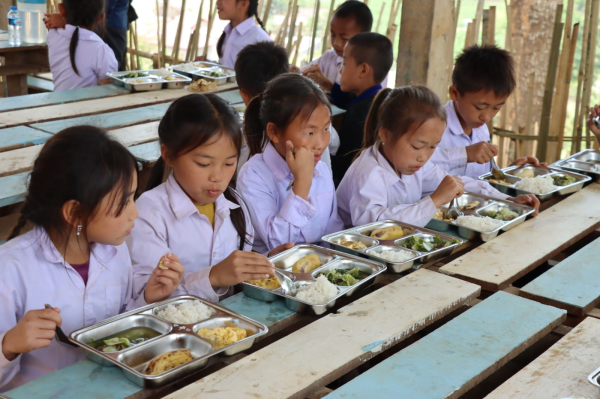
Before the school meals programme was introduced, many children missed classes because their parents had to work in the fields and could not supervise them. As a result, children often accompanied their parents to farms instead of going to school.
“After the programme started, children no longer needed to go to the fields with their parents,” Mr Sichan explained. “They can stay at school and continue their studies.”
He added that the programme has been particularly important for girls, many of whom now have greater opportunities to remain in school and complete their education.
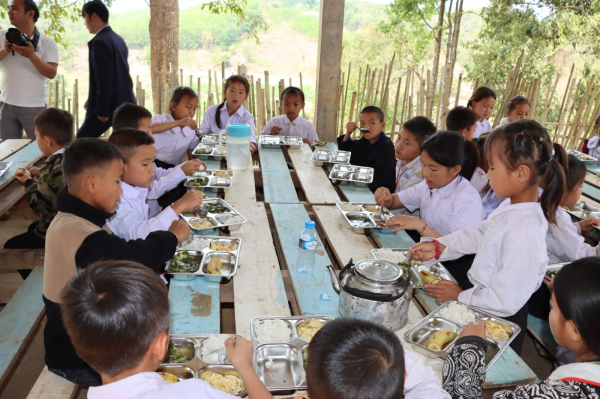
With community support and continued assistance from development partners, the school meals programme is helping create a stronger learning environment for children in rural areas.
For families like Ms Dam’s, the initiative is not only improving nutrition but also building a brighter future for the next generation in Huatong village.
KPL

