KPL
The Lao People’s Democratic Republic has officially advanced its bid to have Larb, the nation’s beloved meat salad, inscribed on the UNESCO Intangible Cultural Heritage list.
On 15 February 2026, the proposal reached a significant milestone as a video showing the dish was formally featured on the UNESCO website under the candidacy of the Lao PDR. This development marks the successful completion of a rigorous three-month documentation period.
During this time, a dedicated task force collaborated with historians, culinary experts, and village elders from across the country—stretching from the northern highlands to the southern plains—to film a documentary and compile the cultural evidence required for the submission.
The initiative was spearheaded in early 2025 by the Lao Business Women’s Association, working in close coordination with the Ministry of Culture and Tourism.
If successful, Larb will become the fourth Lao element to receive such global recognition, following the Khaen music (2017), Naga motif weaving (2023), and the Lamvong Lao traditional circle dance (2024).
A Dish of Fortune and Unity
Larb, pronounced lɑːb, is more than a staple meal; it is a profound symbol of the Lao identity. The word itself is a homophone for "luck" or "wealth" in the Lao language. Consequently, the dish is an indispensable feature of significant life events, including Pi Mai Lao (Lao New Year), weddings, and housewarming ceremonies. Serving Larb to guests is considered a gesture of hospitality that conveys wishes for prosperity and good fortune.
In rural communities, the preparation of Larb is a communal affair. Because livestock can be a precious resource, the slaughter of an animal for Larb often signals a major celebration, bringing neighbours and extended families together to share in the "wealth" of the meal.
The Anatomy of Umami
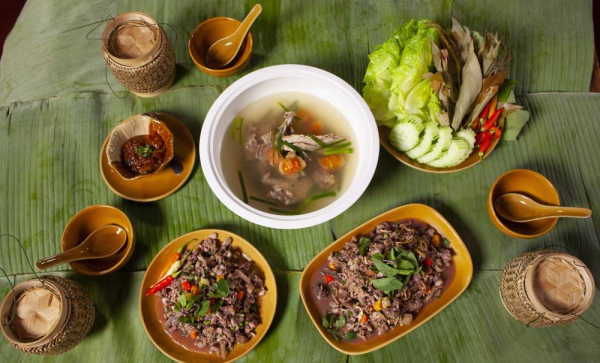
The dish is celebrated for its complex balance of flavours—sour, salty, spicy, and the elusive "umami." It typically features hand-minced meat, such as beef, pork, chicken, duck, or fish, which can be served either cooked or in its traditional raw form.
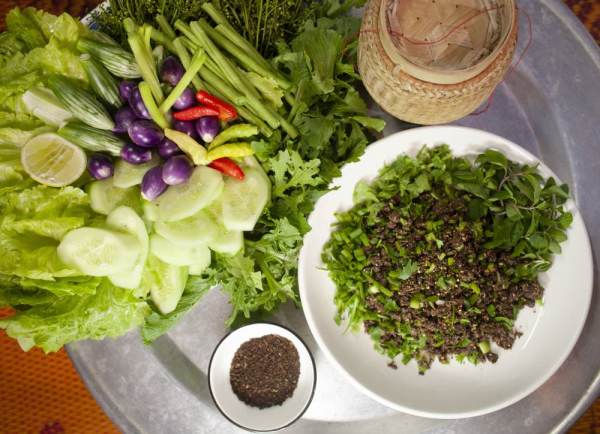
The secret to its distinctive character lies in the khao khua—sticky rice that is slowly roasted until golden and then ground into a fragrant powder. This is seasoned with lime juice, fish sauce, and often padek (a fermented Lao fish sauce). The salad is then tossed with a vibrant medley of fresh herbs, including mint, coriander, and shallots, and served alongside baskets of warm sticky rice and raw vegetables like green beans, neem, lettuce or cucumber.
The Final Countdown
While the appearance of Larb on the UNESCO platform is a promising sign, the final verdict is not expected for several months; the UNESCO committee is slated to announce its decision towards the end of 2026.
In the interim, the Lao government and cultural advocates are calling on citizens and the global Lao diaspora to share images of the dish on social media. The campaign aims to amplify the dish’s international profile, ensuring that "Larb" is universally recognised as a quintessential treasure of Lao heritage.
KPL

