KPL
The ongoing conflict in the Middle East has exposed Southeast Asia’s vulnerability to energy supply disruptions, with Laos identified as one of the region’s most at-risk economies, according to Australian National University economist Professor Peter Warr.
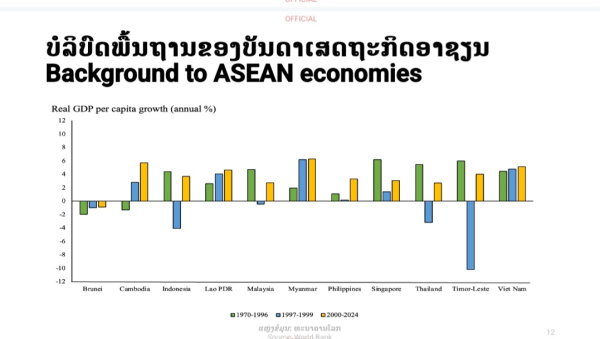
Speaking at the seminar “Strengthening Economic Resilience amid Geoeconomic Challenges,” jointly organized by the Australian Embassy in Laos and the Lao Academy of Social and Economic Sciences (LASES) in Vientiane on June 17, 2026, Professor Warr said prolonged disruptions to global oil supplies have driven crude prices from around US$60 to more than US$100 per barrel, creating significant challenges for oil-importing countries.
He noted that approximately 20 percent of the world’s oil supply normally passes through the Strait of Hormuz, making any sustained disruption a major risk to global energy markets. Higher fuel prices, he said, are expected to increase transportation costs and place additional upward pressure on inflation across the region.
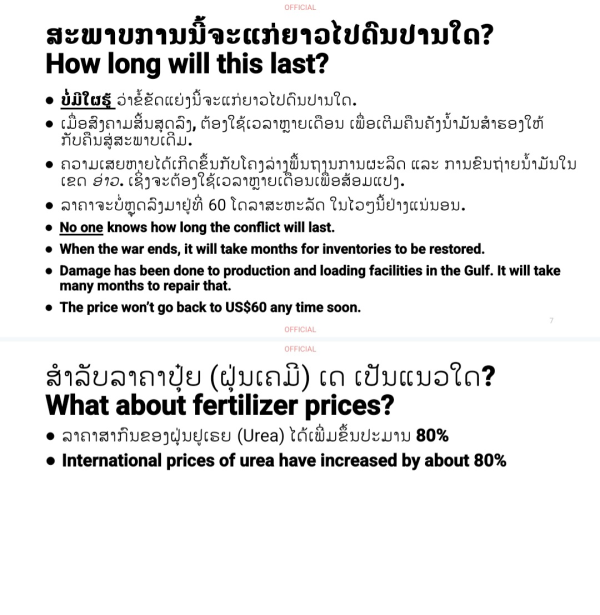
Professor Warr also highlighted the impact on agriculture, explaining that rising energy costs have pushed international urea fertilizer prices up by about 80 percent, increasing production costs for staple crops and potentially leading to further rises in global food prices.
For Laos, he said, the situation is particularly challenging because of the country’s limited fiscal space and high external debt burden, which constrain the government’s ability to cushion rising import costs through subsidies or other support measures.
The presentation also reviewed policy responses across ASEAN, noting that while some countries have introduced fuel subsidies or price stabilization measures, others have relied on more limited tax relief. Professor Warr cautioned that broad-based subsidies can become fiscally burdensome and argued that any government assistance should be carefully targeted.
Looking ahead, he said the crisis underscores the importance of strengthening economic resilience and energy security, while noting that the transition to renewable energy is unlikely to eliminate global dependence on petroleum in the near future.
KPL

