KPL
In the mountainous province of Oudomxay in northern Laos, a simple daily meal is making a powerful difference in the lives of schoolchildren.
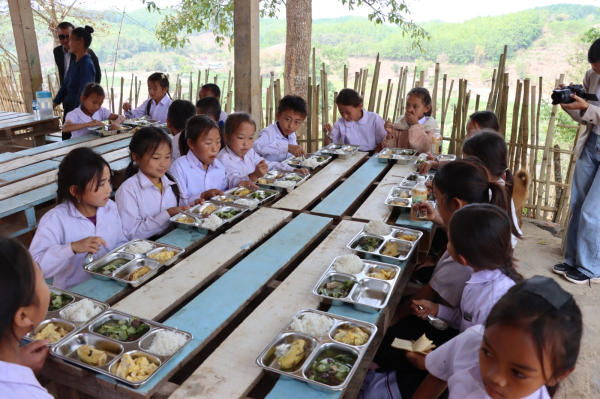
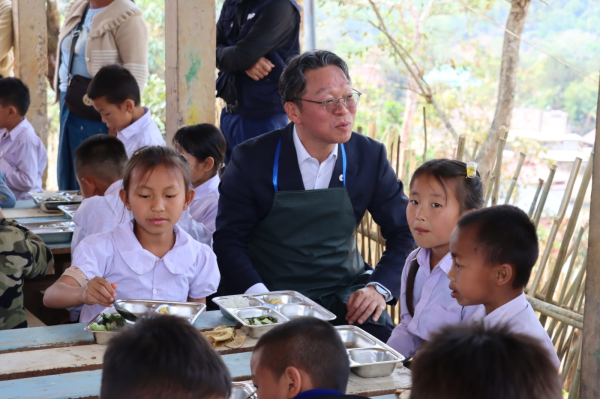
Huanambak Primary School and Huaytong Primary School in Xay district are among the schools benefiting from the school lunch programme implemented by the World Food Programme (WFP), and co-financed by the Government of the Republic of Korea and the Government of Switzerland.
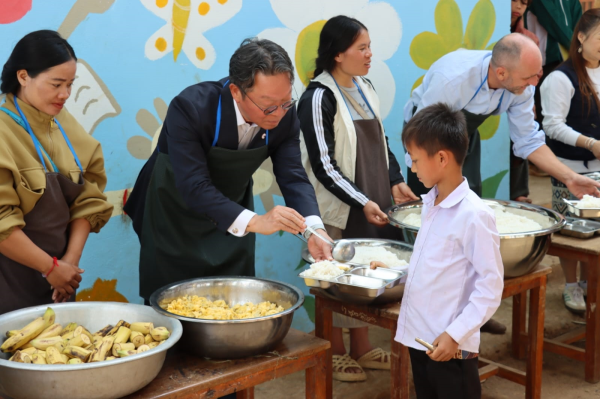
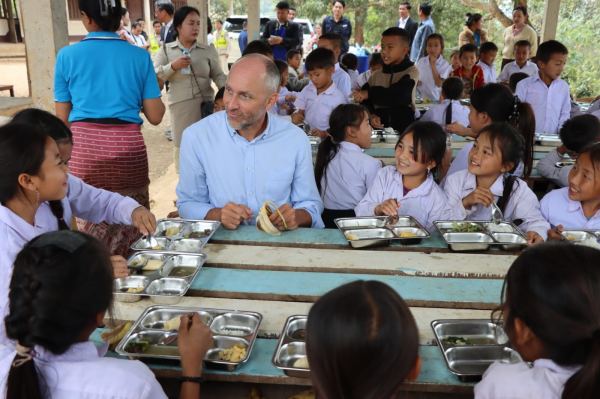
During a recent visit to the schools, a high-level delegation observed how the programme is improving both education and nutrition. The mission was led by Jung Yung-soo, Ambassador of the R. Korea to Laos; Jean-Gabriel Duss, Regional Director of the Swiss Agency for Development and Cooperation (SDC); Björn Schranz, Head of Programme for Climate Change and Natural Environment; and Marc-André Prost, WFP Representative and Country Director in Laos.
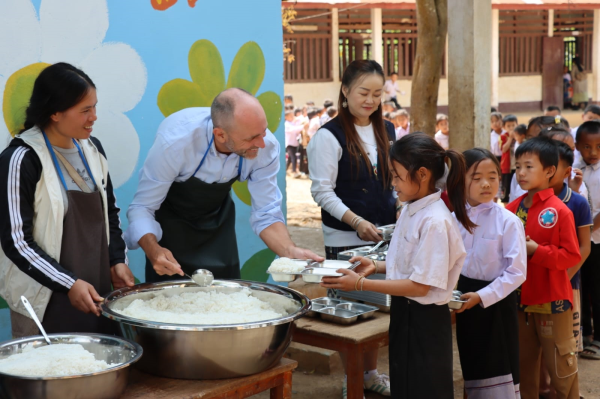
At Huanambak Primary School, Deputy Director Xay Ounthachan highlighted the programme’s positive impact since it began in 2008. “The number of students has increased every year,” he said, noting that the school now has 276 students, including 127 girls, in the 2025–2026 academic year—an increase of 70 students compared to last year, including more than 30 girls.
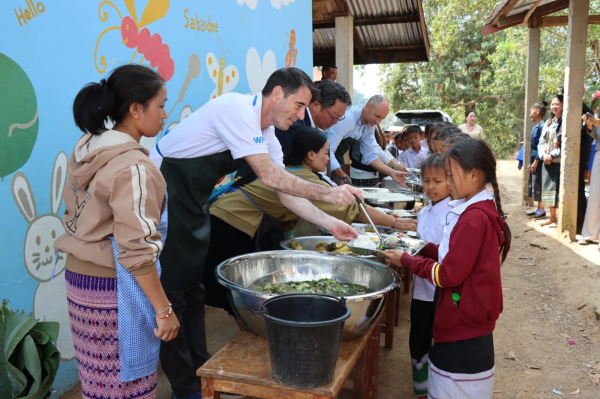
According to school leaders, students are more motivated to attend classes, academic performance has improved, and dropout rates have fallen significantly.
The delegation also visited nearby farms in Huanambak village where local farmers grow vegetables and raise egg-laying chickens to supply ingredients for school meals. The farmers’ group, led by its leader Mr Phonkham Phonmaly, provides fresh produce for the programme.
These agricultural activities receive technical support from the World Food Programme, which provides seeds, greenhouses, and other farming equipment to strengthen local food production.
At Huaytong Primary School, the benefits are equally clear. The school now has 187 students, including 97 girls. Before the programme began, enrollment—especially among girls—was low, and absenteeism and dropout rates were high.
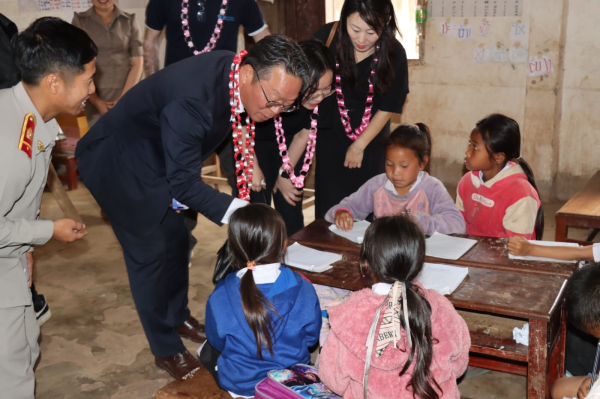
Since 2008, the school has received support from WFP, initially through snacks and supplementary food before transitioning to school lunches in 2015.
The programme was transferred to the Lao government in 2019, and the Ministry of Education now provides 5,000 kip per student per meal, up from the previous 1,000 kip.
In Oudomxay—home to more than 300,000 people and 14 ethnic groups, many living in remote areas—the initiative plays a vital role. By strengthening school meal systems, supporting local farmers, improving child nutrition, and promoting climate-resilient agriculture, the programme is helping build healthier communities and brighter futures for thousands of children.
KPL

